
Two Popular Aquatic Pets, Very Different Needs
Axolotls and betta fish are two of the most popular aquatic pets for beginners. Both are visually striking, relatively low-maintenance, and widely available. But they have very different needs, and choosing the right one depends on your space, budget, and how hands-on you want to be.
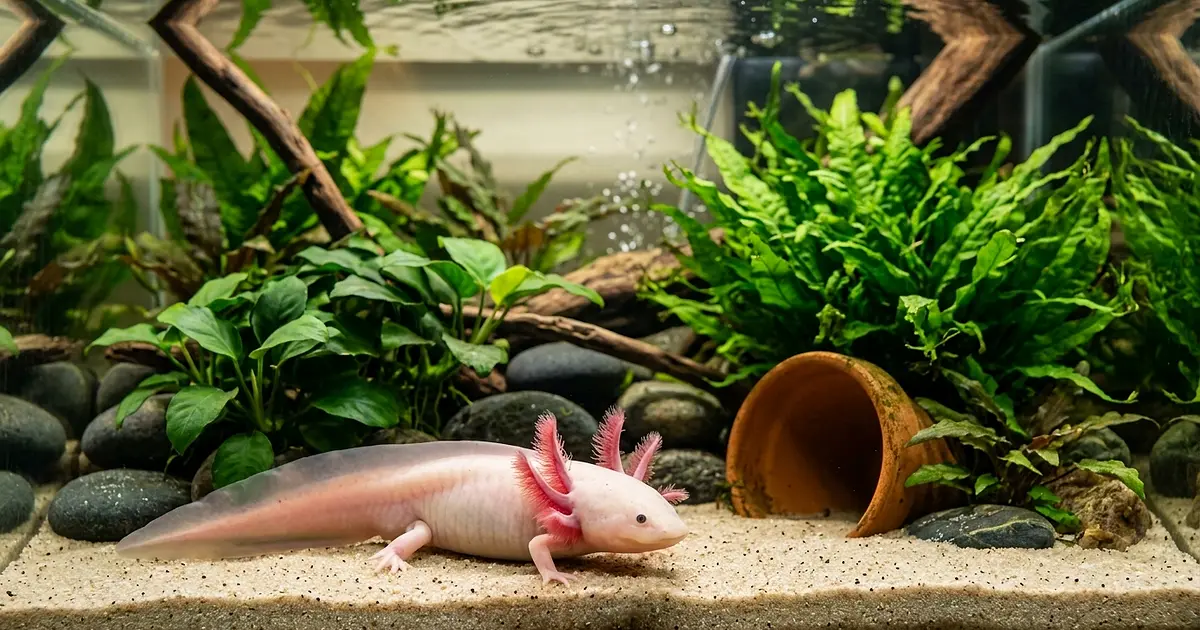
Side-by-Side Comparison
| Feature | Axolotl | Betta Fish |
|---|---|---|
| Type | Amphibian (neotenic salamander) | Freshwater fish |
| Lifespan | 10-15 years | 3-5 years |
| Tank size | 75L (20 gal) minimum | 20L (5 gal) minimum |
| Temperature | 16-20°C (60-68°F) | 24-28°C (75-82°F) |
| Filtration | Gentle sponge filter | Low-flow filter |
| Diet | Worms, pellets, shrimp | Pellets, freeze-dried food |
| Handling | Should not be handled | Should not be handled |
| Colors | 20+ morphs | Many fin types and colors |
| Social | Can live in pairs (same size) | Solitary (males are aggressive) |
| Cost (animal) | $30-100+ | $5-30 |
| Cost (setup) | $200-400 | $50-100 |
Type
Axolotl : Amphibian (neotenic salamander)
Betta Fish : Freshwater fish
Temperature
Axolotl : 16-20°C (60-68°F)
Betta Fish : 24-28°C (75-82°F)
Social
Axolotl : Can live in pairs (same size)
Betta Fish : Solitary (males are aggressive)
Cost (animal)
Axolotl : $30-100+
Betta Fish : $5-30
Cost (setup)
Axolotl : $200-400
Betta Fish : $50-100
Axolotl Advantages
Long lifespan
10-15 years of companionship, three to five times longer than a betta fish.
Fascinating biology
External gills, permanent 'smile', and remarkable regeneration abilities make them endlessly interesting.
Color variety
Over 20 morphs from leucistic white to melanoid black, GFP glowing variants, and more.
Social potential
Can coexist with another axolotl of similar size, unlike male bettas which must live alone.
Betta Advantages
Small footprint
Only 20L (5 gallon) minimum, fitting easily on a desk, dorm room, or apartment shelf.
Affordable setup
Total cost of $50-100 including tank, heater, filter, and the fish itself.
Simple temperature
A heater maintains stable temperature with little effort. No chiller or fan needed.
Easy feeding
Commercial pellets are the main diet. No need to handle live worms.
Care Difficulty
Both animals are considered beginner-friendly, but with different challenges.
Bettas are forgiving on tank size and easy to feed. The main requirement is keeping water warm and clean. A heater, a small filter, and weekly partial water changes cover the basics.
Axolotls demand more attention to temperature. Their water must stay below 20°C, which can be difficult in warm climates without a fan or aquarium chiller. They also produce more waste, so water parameters need regular monitoring. On the other hand, their feeding schedule is simple: earthworms or pellets every 2-3 days.
Interaction and Personality
Choose an Axolotl If...
Choose a Betta If...
Can They Live Together?
No. Never house an axolotl and a betta together. Their temperature requirements are incompatible: bettas need warm water that would cause heat stress in axolotls. Bettas are also aggressive and will attack axolotl gills. This combination is harmful to both animals.
Decided on an axolotl?
Start with the right setup to give your new pet the best possible home.
Frequently Asked Questions
Frequently Asked Questions
Can an axolotl live with a betta fish?
Are axolotls harder to care for than bettas?
Which is cheaper to keep, an axolotl or a betta?
Related Articles
What Is an Axolotl? Facts, Origin & Why They're Special
The axolotl (Ambystoma mexicanum) is a fully aquatic neotenic salamander from Mexico. Species classification, anatomy, cultural significance, and basic facts.
Read more
Axolotl Facts: Biology, Habitat & Abilities
Key axolotl facts covering biology, regeneration, Aztec origins, diet, conservation status, and what makes these aquatic salamanders unique among amphibians.
Read more
How Long Do Axolotls Live? Lifespan Guide
Axolotl lifespan in captivity averages 10-15 years. Learn what affects their longevity and how to maximize your axolotl's life expectancy.
Read more