
Not Just Any Filter Will Do
Filtration is essential in an axolotl tank, but axolotls need a very specific combination: strong biological filtration with minimal water flow. This rules out many popular aquarium filters.
Axolotls are poor swimmers and evolved in still water. Strong currents stress them, force their gills flat, and make them constantly fight the flow. At the same time, they produce a lot of waste, so biological filtration is critical to break down ammonia and nitrite into less harmful nitrate.
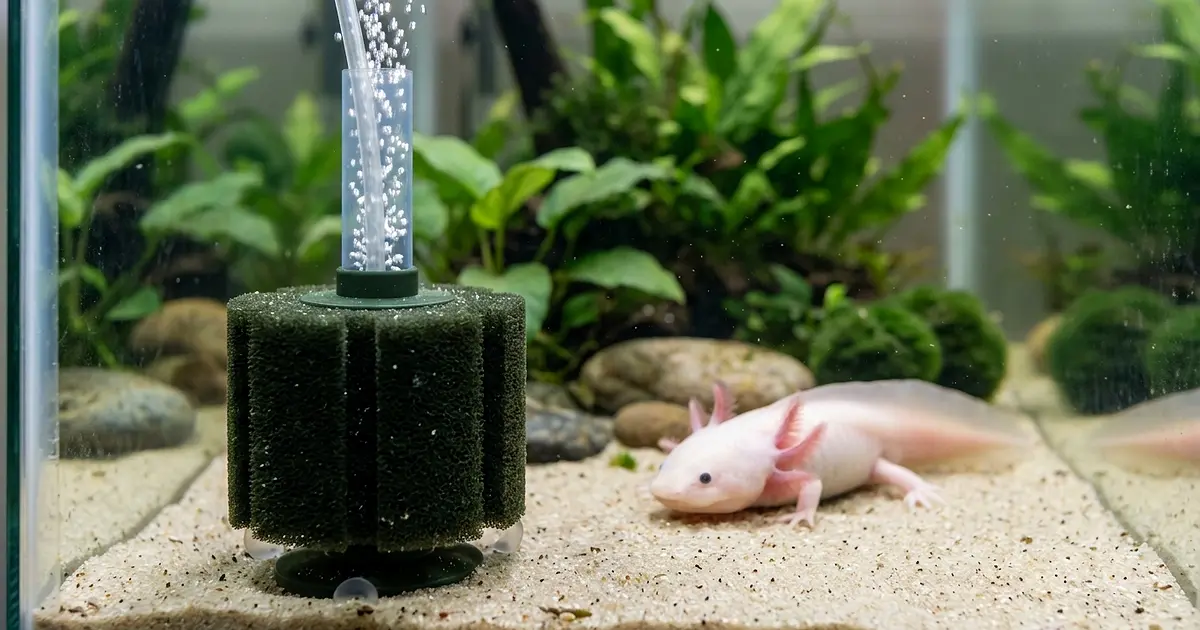
Filter Type Comparison
| Filter Type | Flow | Bio Filtration | Cost | Best For |
|---|---|---|---|---|
| Sponge filter | Very gentle | Excellent | $10-25 | All axolotl tanks |
| HOB (hang-on-back) | Moderate (baffled) | Good | $20-50 | Larger tanks |
| Canister filter | Adjustable | Excellent | $60-200 | 40+ gallon tanks |
| Internal power filter | Often too strong | Moderate | $15-30 | Not recommended |
| Undergravel filter | N/A | Poor with sand | $15-25 | Not recommended |
Sponge filter
Flow : Very gentle
Bio Filtration : Excellent
Cost : $10-25
Best For : All axolotl tanks
HOB (hang-on-back)
Flow : Moderate (baffled)
Bio Filtration : Good
Cost : $20-50
Best For : Larger tanks
Canister filter
Flow : Adjustable
Bio Filtration : Excellent
Cost : $60-200
Best For : 40+ gallon tanks
Internal power filter
Flow : Often too strong
Bio Filtration : Moderate
Cost : $15-30
Best For : Not recommended
Undergravel filter
Flow : N/A
Bio Filtration : Poor with sand
Cost : $15-25
Best For : Not recommended
Top Recommendation: Sponge Filter
Why Sponge Filters Win
Ultra-Gentle Flow
Air-powered sponge filters create the gentlest water movement of any filter type, perfect for axolotls.
Excellent Bio Filtration
The large sponge surface area hosts massive colonies of beneficial bacteria that break down ammonia and nitrite.
Zero Injury Risk
No exposed intakes, no mechanical parts, nothing that can trap or damage axolotl gills, toes, or skin.
Easy Maintenance
Simply squeeze the sponge in old tank water during water changes. No cartridges to buy, no parts to replace.
HOB Filters vs Canister Filters (for Larger Tanks)
HOB Filters (Hang-On-Back)
- ✓Work well for larger tanks if output is baffled
- ✓Attach a filter sponge over the output to reduce flow
- ✓Point the output toward the glass wall
- ✓Popular choices: AquaClear 20/30, Fluval C series
- ✓Always use the lowest flow setting
Canister Filters
- →Best for tanks 40 gallons and above
- →Excellent filtration capacity and media options
- →Use a spray bar to distribute output gently
- →Eliminates strong point-source flow
- →Higher cost but very reliable long-term
Filters and Features to Avoid
Pre-Filter Sponges Save Lives
If you use a HOB or canister filter, always cover the intake with a sponge pre-filter. Axolotl gills and tiny toes can get sucked into unprotected intakes, causing serious injury. A simple sponge over the intake prevents this completely.
Setting Up a Sponge Filter
Choose a sponge filter rated for your tank size or one size larger
Connect to an air pump with airline tubing (air pump sits outside the tank)
Place the sponge filter on the tank bottom, away from hides
Adjust airflow with a valve on the airline to keep bubbling gentle
Allow 4-6 weeks for beneficial bacteria to colonize the sponge (the cycling process)
Complete Tank Setup Guide
Filtration is one key piece of the axolotl tank puzzle. Learn about tank size, substrate, temperature, and everything else you need.
Frequently Asked Questions
Frequently Asked Questions
Do axolotls need a filter?
Why do axolotls need gentle flow?
Related Articles
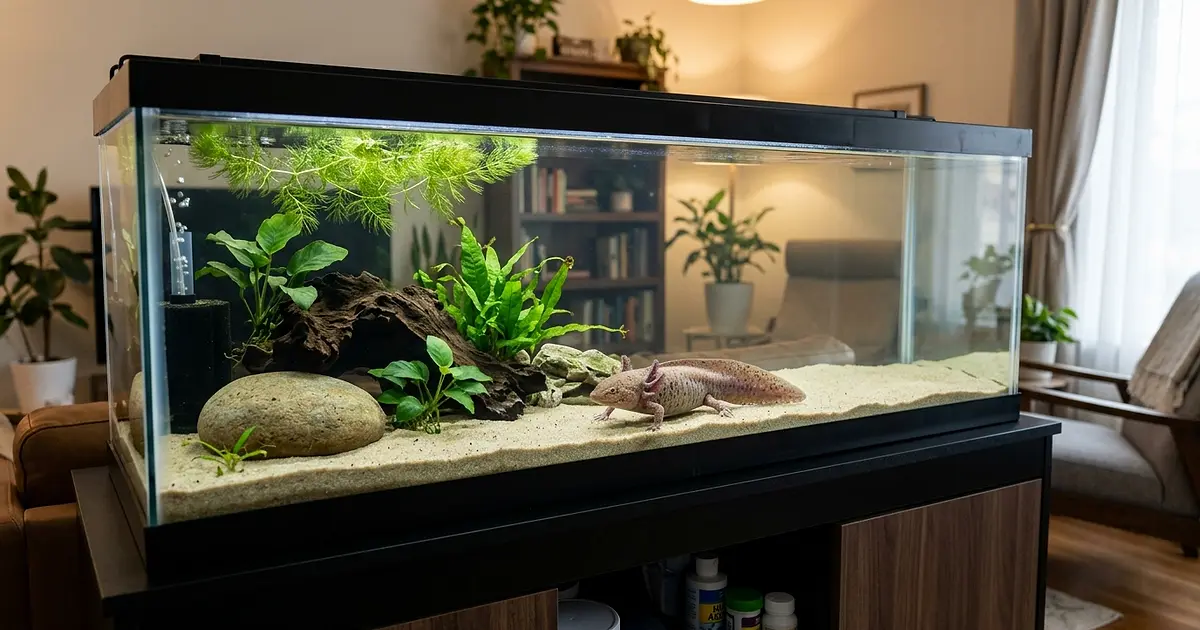
What Size Tank Does an Axolotl Need?
Minimum tank size for axolotls is 20 gallons (75L) for one. Learn the ideal dimensions, why bigger is better, and how to choose the right tank.
Read more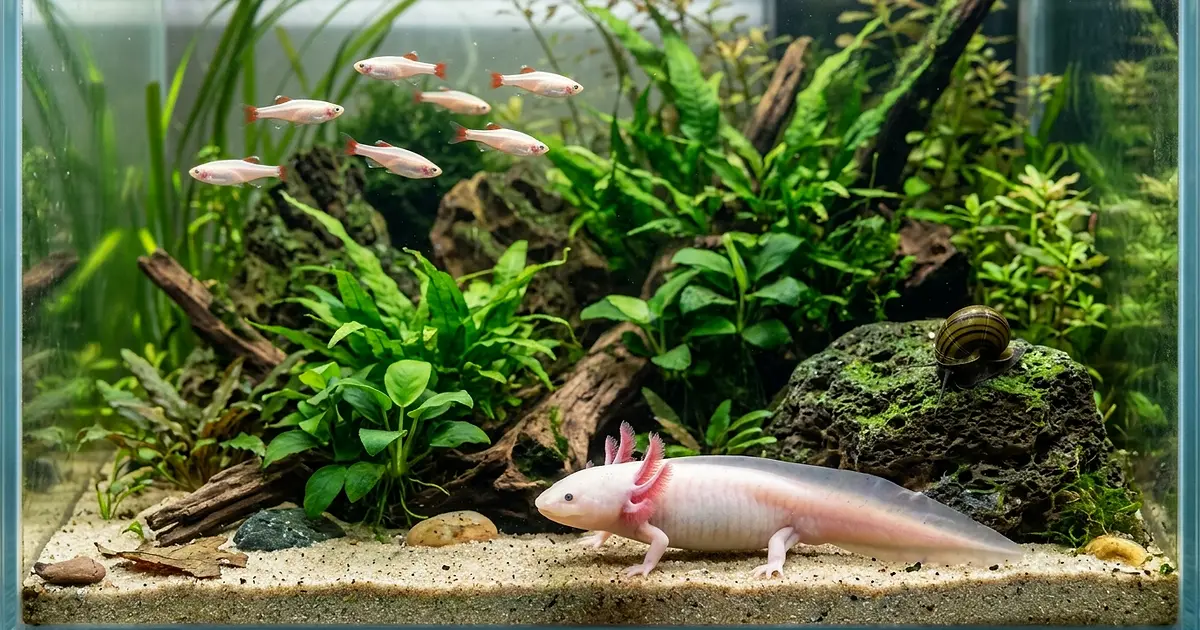
Axolotl Tank Mates: What Can Live With Axolotls?
Can axolotls live with fish? Learn which tank mates are safe, which to avoid, and why most axolotls are best kept with their own kind.
Read more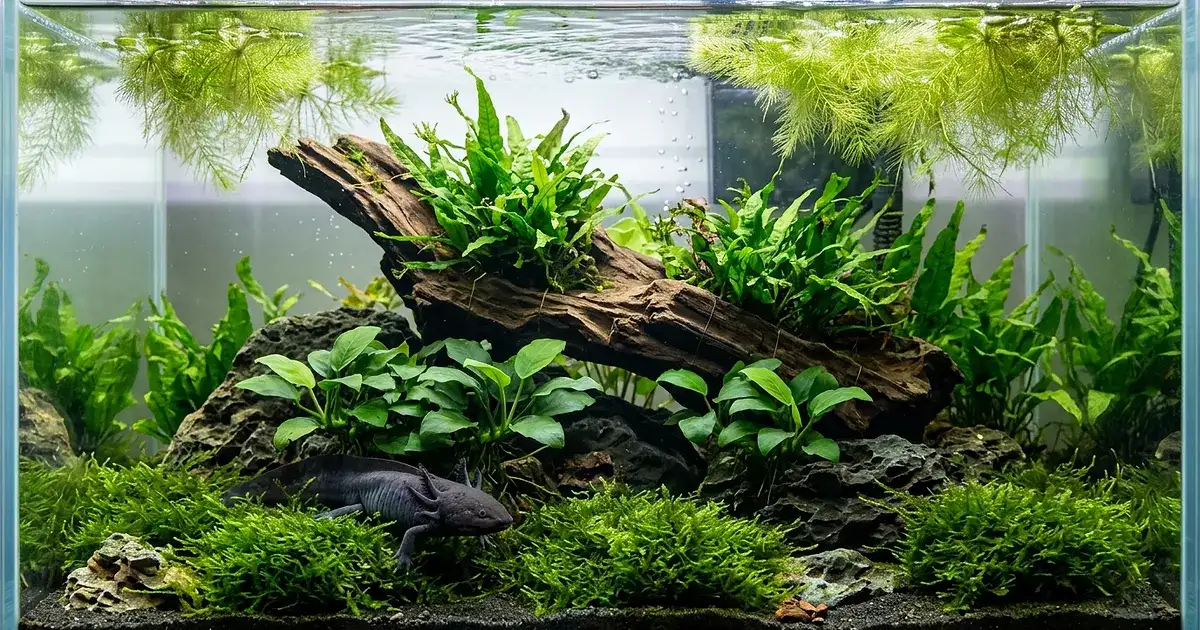
Best Plants for Axolotl Tanks
Top aquatic plants safe for axolotl tanks: java fern, anubias, java moss, and more. Low-light, axolotl-proof plants that improve water quality.
Read more