
Getting the Feeding Schedule Right
Getting the feeding frequency right is one of the most important aspects of axolotl care. Too much food leads to obesity and water quality problems. Too little leads to malnutrition and stunted growth.
The schedule changes significantly with age: babies need daily feeding, while adults thrive on just 2-3 meals per week.
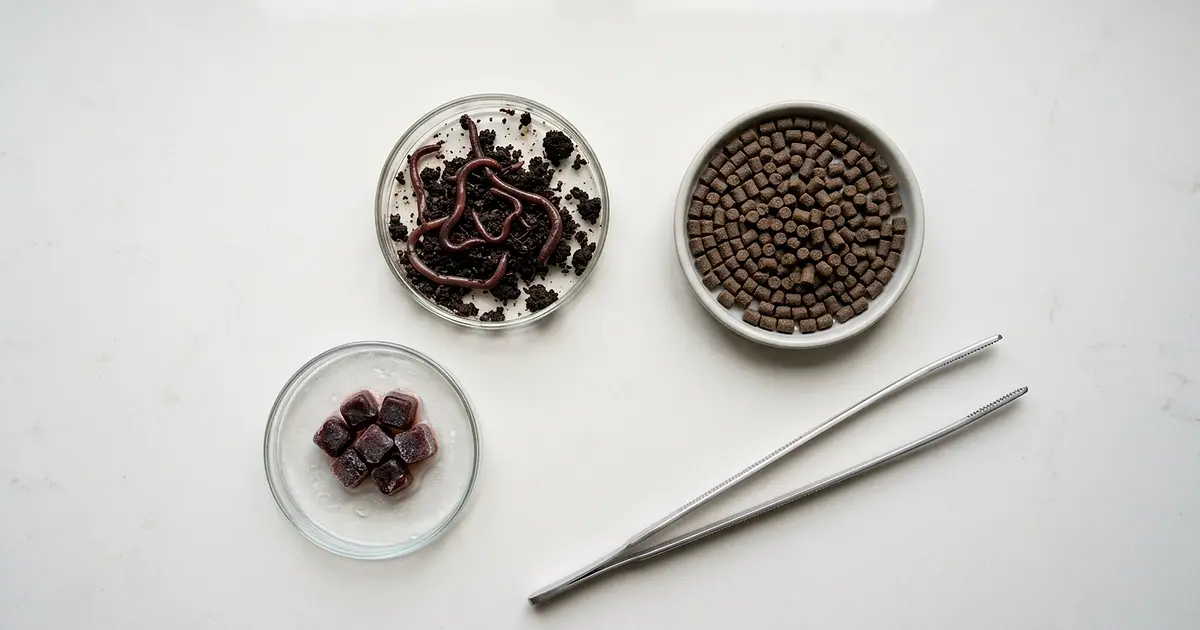
Feeding Schedule by Age
| Age | Frequency | Portion Size | Best Foods |
|---|---|---|---|
| 0-2 months | Twice daily | As much as eaten in 5 min | Live baby brine shrimp |
| 2-4 months | Once daily | 2-3 small pieces | Bloodworms, mini pellets |
| 4-6 months | Once daily | 3-4 pieces or 1 small earthworm | Earthworm pieces, pellets |
| 6-12 months | Every other day | 1 earthworm or 4-5 pellets | Earthworms, pellets |
| 12+ months | 2-3x per week | 1-2 earthworms or 5-6 pellets | Earthworms, pellets |
0-2 months
Frequency : Twice daily
Portion Size : As much as eaten in 5 min
Best Foods : Live baby brine shrimp
2-4 months
Frequency : Once daily
Portion Size : 2-3 small pieces
Best Foods : Bloodworms, mini pellets
4-6 months
Frequency : Once daily
Portion Size : 3-4 pieces or 1 small earthworm
Best Foods : Earthworm pieces, pellets
6-12 months
Frequency : Every other day
Portion Size : 1 earthworm or 4-5 pellets
Best Foods : Earthworms, pellets
12+ months
Frequency : 2-3x per week
Portion Size : 1-2 earthworms or 5-6 pellets
Best Foods : Earthworms, pellets
Signs of Correct Feeding
Well-Fed
- ✓Body width equals or slightly exceeds head width
- ✓Gills are full and fluffy
- ✓Active and responsive at feeding time
- ✓Regular waste production
Underfed
- →Head visibly wider than body
- →Thin limbs and shrunken gills
- →Constantly searching for food
- →Lethargy and slow growth
Signs of Overfeeding
An overfed axolotl shows: body much wider than head (obese), bloating, floating, regurgitating food, and lethargy after meals. Overfeeding is a common beginner mistake and the leading cause of water quality problems.
Best Feeding Times
Evening (Best)
After lights dim. Axolotls are crepuscular (most active at dusk). This is when they have the best feeding response.
Early Morning
Secondary active period. Good alternative if evening feeding is not convenient.
Midday (Avoid)
Brightest part of the day. Axolotls prefer to rest in their hides and have low appetite.
Why Fasting Days Matter
Vacation Feeding
A healthy adult axolotl can safely go 1-2 weeks without food if necessary (vacation, illness). This should not be routine, but there is no need to panic if you miss a few feeding days. Their slow metabolism handles fasting well.
What Should You Feed?
Now that you know how often to feed, learn which foods are best for axolotls at every life stage.
Feeding Calculator
Select your axolotl's age for a custom schedule
Frequently Asked Questions
Frequently Asked Questions
Can you overfeed an axolotl?
Should I feed my axolotl every day?
Related Articles
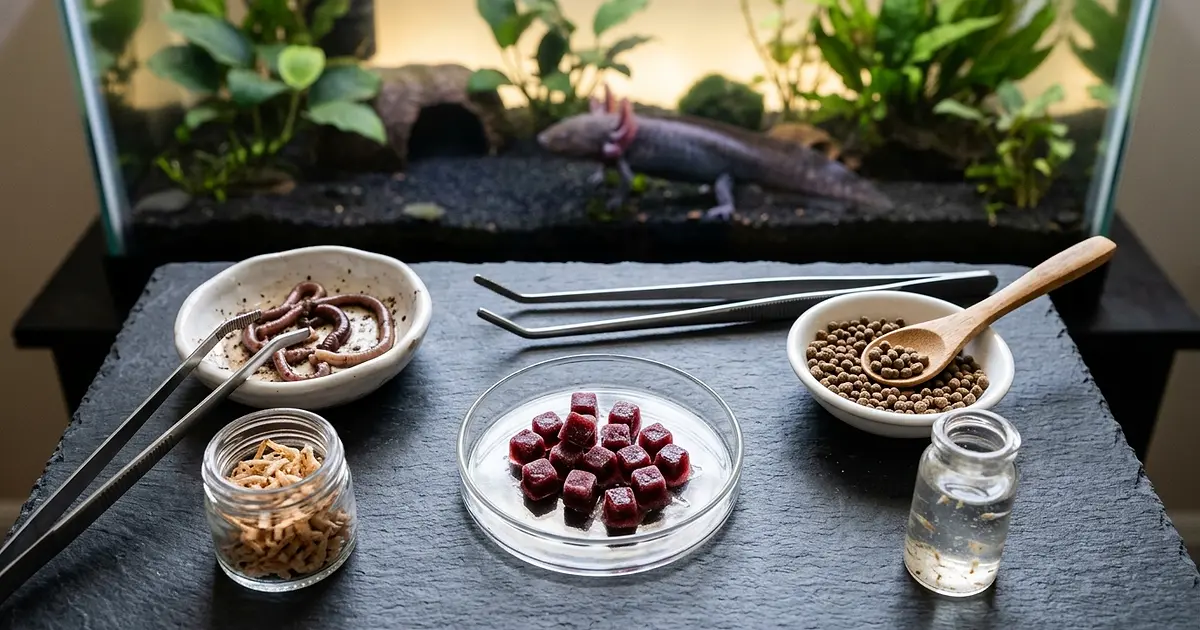
Best Axolotl Food: Pellets, Worms & Live Food Compared
Compare the best axolotl foods: earthworms, pellets, bloodworms, and live food. Nutritional value, pros, cons, and which to use as a staple diet.
Read more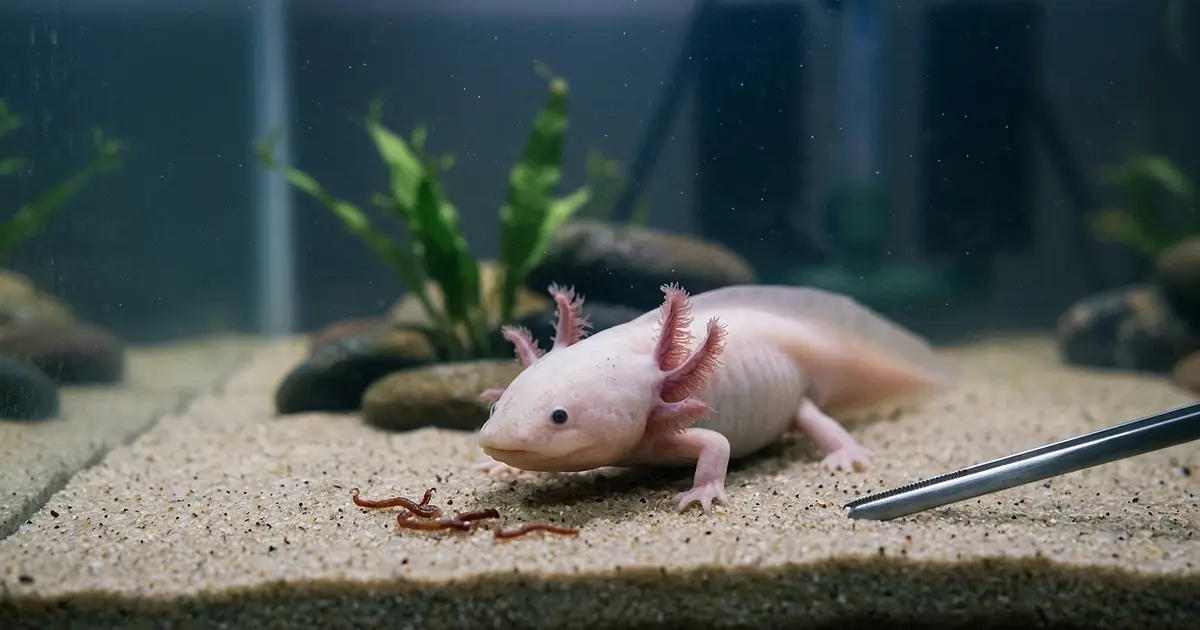
My Axolotl Won't Eat: Causes & Solutions
Why your axolotl refuses food and what to do about it. Common causes include water quality, temperature, stress, and illness. Step-by-step troubleshooting.
Read more