Reading Your Axolotl's Body Language
Axolotls cannot tell you when something is wrong, but they show it clearly through their body language. Learning to read these signs helps you catch and fix problems early.
Stress Signs to Watch For
| Sign | Severity | Most Common Cause |
|---|---|---|
| Curled gill tips | Moderate | Poor water quality, ammonia |
| Gill filaments shrink | Moderate-severe | Chronic bad water, high temperature |
| Forward-folded gills | Moderate | Sudden water changes, chemicals |
| Pale/washed-out color | Mild-moderate | Stress, bright light |
| Frantic swimming | Moderate | Chemical irritant, temperature shock |
| Loss of appetite | Variable | Temperature, water quality, illness |
| Hiding constantly | Mild | New environment, bright lights |
| Floating | Moderate-severe | Gas, impaction, infection |
Curled gill tips
Severity : Moderate
Most Common Cause : Poor water quality, ammonia
Gill filaments shrink
Severity : Moderate-severe
Most Common Cause : Chronic bad water, high temperature
Forward-folded gills
Severity : Moderate
Most Common Cause : Sudden water changes, chemicals
Pale/washed-out color
Severity : Mild-moderate
Most Common Cause : Stress, bright light
Frantic swimming
Severity : Moderate
Most Common Cause : Chemical irritant, temperature shock
Loss of appetite
Severity : Variable
Most Common Cause : Temperature, water quality, illness
Hiding constantly
Severity : Mild
Most Common Cause : New environment, bright lights
The Top Stressors
Poor Water Quality (#1 Cause)
Ammonia and nitrite are toxic even at low levels. Test your water parameters immediately if you notice any stress signs.
Water Too Warm
Temperatures above 22°C cause metabolic stress. Axolotls become lethargic, stop eating, and are more susceptible to fungal infections.
Bright Lighting
Axolotls have no eyelids. Bright lights cause them to hide and remain stressed. Keep lighting dim or provide ample shade.
Strong Water Flow
Axolotls are adapted to still water. A powerful filter output forces constant swimming against the current.
Incompatible Tank Mates
Fish that nip at gills, overcrowding, or mismatched sizes between axolotls cause chronic stress.
Handling
Physical handling strips the slime coat and triggers acute stress. Minimize handling to medical necessities only.
How to Reduce Stress
🧪Test and fix water quality
This is the answer 80% of the time. Check ammonia, nitrite, nitrate, and pH.
🌡️Lower temperature
Cool to 16-18°C if currently above 20°C.
🌑Dim the lights
Add floating plants for shade or reduce lighting duration.
🔇Baffle the filter
Reduce flow to create a calm water surface.
🪨Add more hides
At least 1 hide per axolotl for security.
🚫Remove aggressive tank mates
Separate any animals causing disturbance.
🤫Minimize disturbance
No tapping glass, no loud vibrations nearby.
🕐Maintain a routine
Consistent feeding times and consistent light schedule.
Recovery Timeline
| Sign | Recovery Time |
|---|---|
| Color returns to normal | 2-12 hours |
| Appetite returns | 24-48 hours |
| Gills unfurl | 24-72 hours |
| Gill filaments regrow (if lost) | 2-6 weeks |
| Full behavioral recovery | 1-7 days |
Color returns to normal
Recovery Time : 2-12 hours
Appetite returns
Recovery Time : 24-48 hours
Gills unfurl
Recovery Time : 24-72 hours
Gill filaments regrow (if lost)
Recovery Time : 2-6 weeks
Full behavioral recovery
Recovery Time : 1-7 days
Diagnose the Problem
If stress signs persist after fixing water quality and temperature, your axolotl may be sick.
Diagnose the Problem
Use our symptom checker to find the cause
Frequently Asked Questions
Frequently Asked Questions
What do curled axolotl gills mean?
How long does it take for a stressed axolotl to recover?
Related Articles
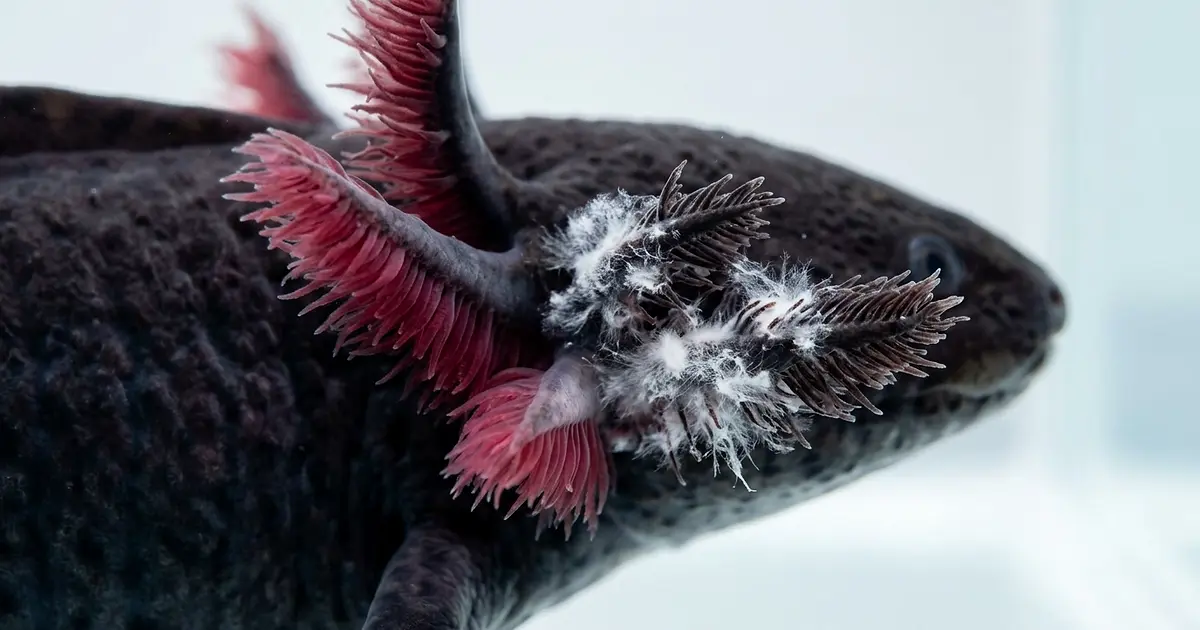
Axolotl Fungus: How to Identify & Treat It
White cotton-like growths on your axolotl? Learn to identify fungal infections, treat with salt baths and methylene blue, and prevent recurrence.
Read more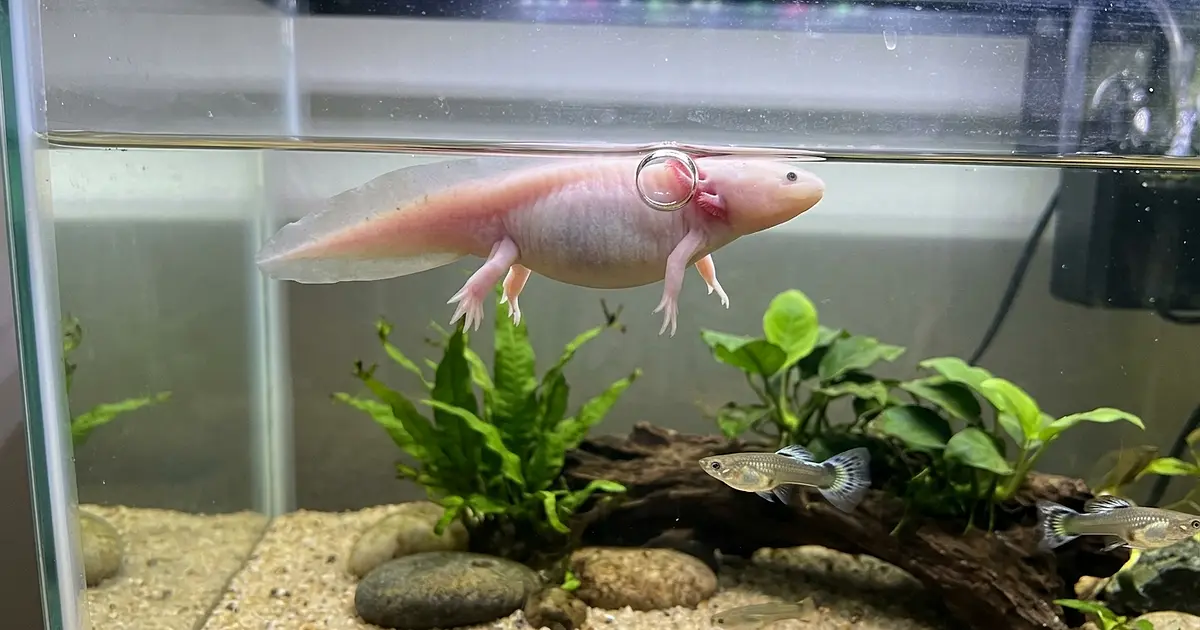
Why Is My Axolotl Floating? Causes & Solutions
Your axolotl is floating and cannot sink? Learn the common causes (air, constipation, infection) and step-by-step solutions to fix buoyancy problems.
Read more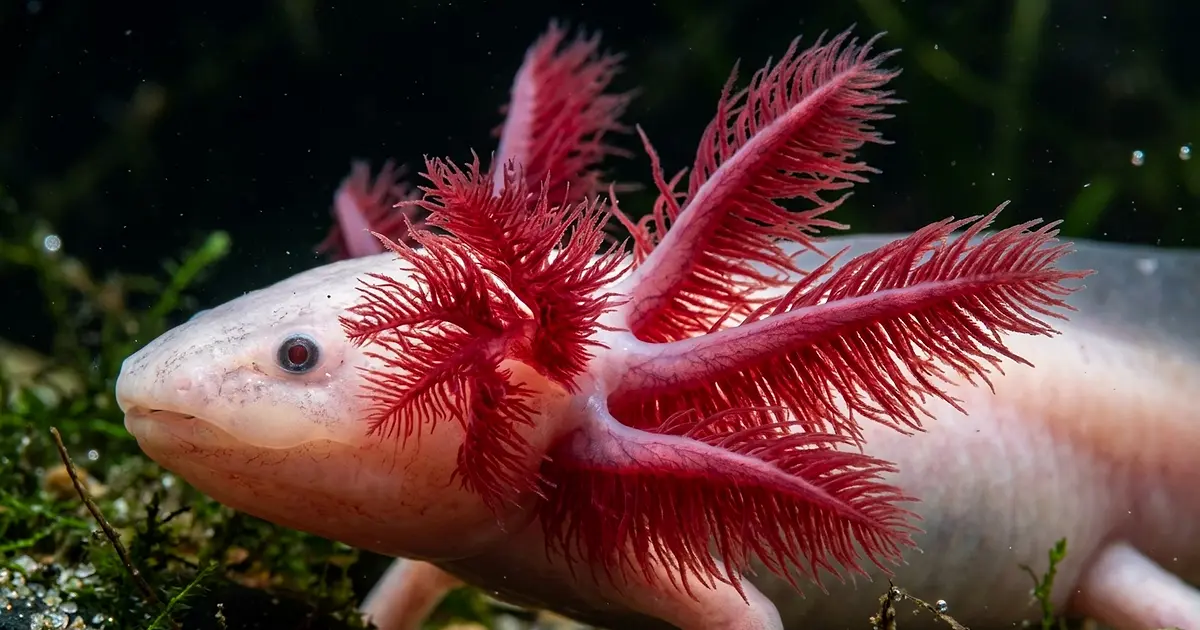
Healthy vs Unhealthy Axolotl Gills (Visual Guide)
How to read your axolotl's gills: what healthy gills look like, warning signs of disease, and how gills change with water quality and stress.
Read more