
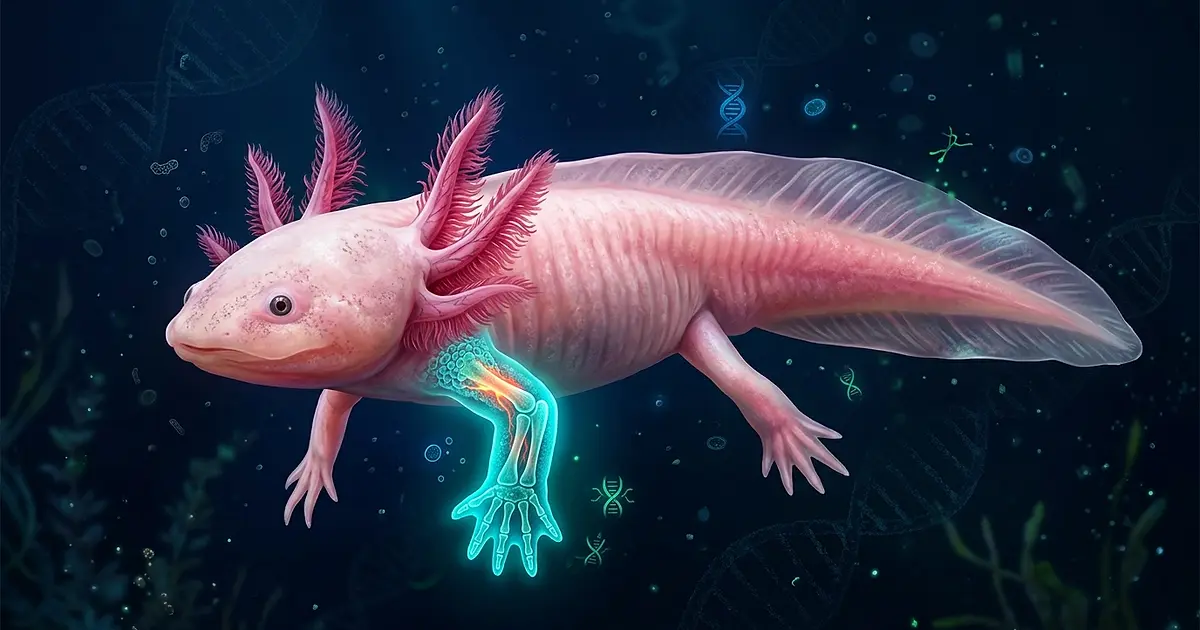
The Most Remarkable Regeneration in Nature
The axolotl's ability to regenerate is one of the most remarkable phenomena in the animal kingdom. No other vertebrate can regrow complex body structures as completely and perfectly as the axolotl. This ability is closely linked to their unique anatomy and their neotenic biology, which also prevents metamorphosis.
What Can Axolotls Regenerate?
Perfect Copies, Not Scar Tissue
How Regeneration Works
🩹Wound Healing (Hours)
Within hours of injury, skin cells migrate to cover the wound. Unlike humans, axolotls do not form scar tissue at this stage.
🔬Blastema Formation (Days 1-5)
A mass of dedifferentiated cells called a blastema forms at the wound site. These are mature cells that have reverted to a stem cell-like state, capable of becoming any cell type.
📐Growth and Patterning (Days 5-30)
The blastema grows rapidly. Cells receive positional information telling them where they are on the body, ensuring the new structure forms in the correct shape and orientation.
🧫Differentiation (Days 20-60)
Blastema cells differentiate into the specific cell types needed: bone, muscle, nerve, blood vessel, and skin. The new structure connects to existing tissues.
✅Maturation (Days 40-90)
The regenerated structure reaches full size and becomes fully functional.
Why Axolotls Can Regenerate But Humans Cannot
| Factor | Axolotl | Human |
|---|---|---|
| Immune response | Permissive, minimal scarring | Aggressive inflammation triggers scarring |
| Cell dedifferentiation | Cells easily revert to stem-like states | Cells resist reverting |
| Tumor suppression | Massive cell division without cancer | Rapid division risks tumor formation |
Immune response
Axolotl : Permissive, minimal scarring
Human : Aggressive inflammation triggers scarring
Cell dedifferentiation
Axolotl : Cells easily revert to stem-like states
Human : Cells resist reverting
Tumor suppression
Axolotl : Massive cell division without cancer
Human : Rapid division risks tumor formation
Axolotls in Medical Research
Wound Healing
Understanding how axolotls heal without scarring could transform treatment of burns, surgical wounds, and skin injuries.
Spinal Cord Repair
Studying how the severed spinal cord reconnects could lead to treatments for paralysis.
Heart Regeneration
Applying lessons to human cardiac repair after heart attacks.
Cancer Resistance
Investigating why rapid cell division in regeneration does not lead to tumors.
Organ Transplantation
Understanding immune tolerance during regeneration. The axolotl genome (32 billion base pairs) was fully sequenced in 2018, opening new research avenues.
Regeneration as a Pet Owner
If your axolotl loses a limb or gill filament due to a tank mate nip or injury, there is no need to panic. With clean water and proper nutrition, the structure will regrow completely within weeks to months. Ensure excellent water quality during regeneration to prevent infection at the wound site.
Explore Axolotl Biology
Learn about the neoteny that makes regeneration possible and what happens when it fails.
What Axolotls Can Regrow
Limbs
Full legs with bones & nerves
40-60 days
CompleteGills
External gill filaments
2-4 weeks
Brain Tissue
Parts of the brain
Unique among vertebrates
RemarkableHeart Tissue
Cardiac muscle cells
Under research
Eyes
Lens and retina
Partial regeneration
Spinal Cord
Full functional recovery
No scarring
Key researchArticles in This Section
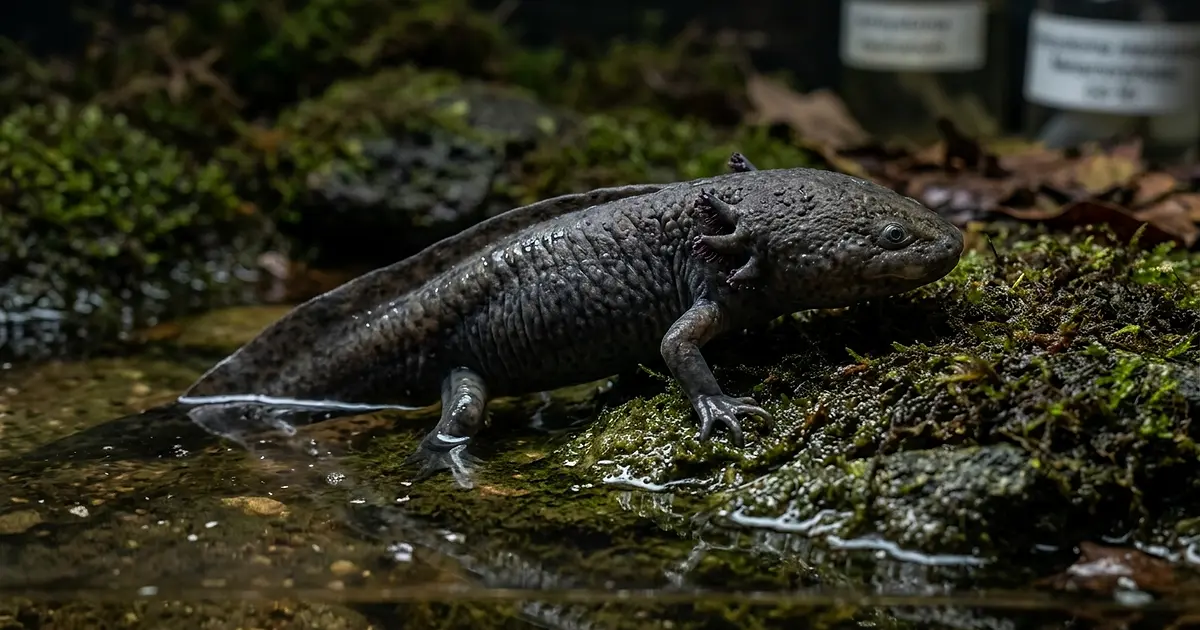
Axolotl Metamorphosis: When Axolotls Turn Into Salamanders
Can axolotls transform into land salamanders? What triggers metamorphosis, why it is dangerous, and what a morphed axolotl looks like.
Read more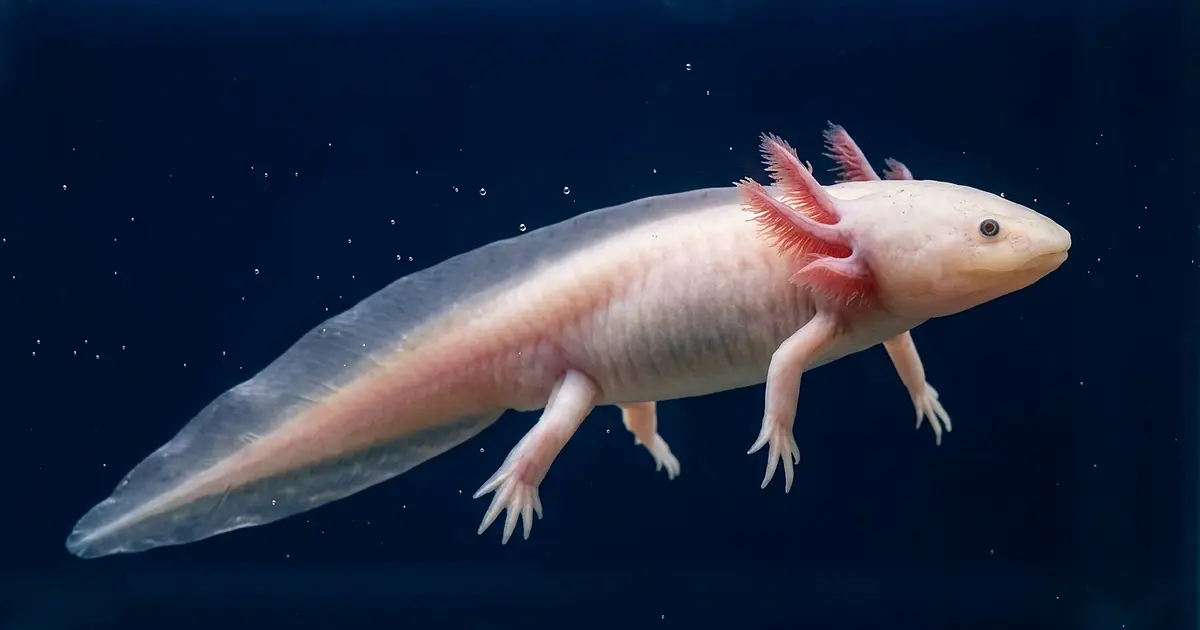
Axolotl Anatomy: Gills, Teeth, Eyes & Body Parts
Detailed look at axolotl anatomy: external gills, teeth, eyes without eyelids, limbs, skin, and internal organs. How their body works.
Read more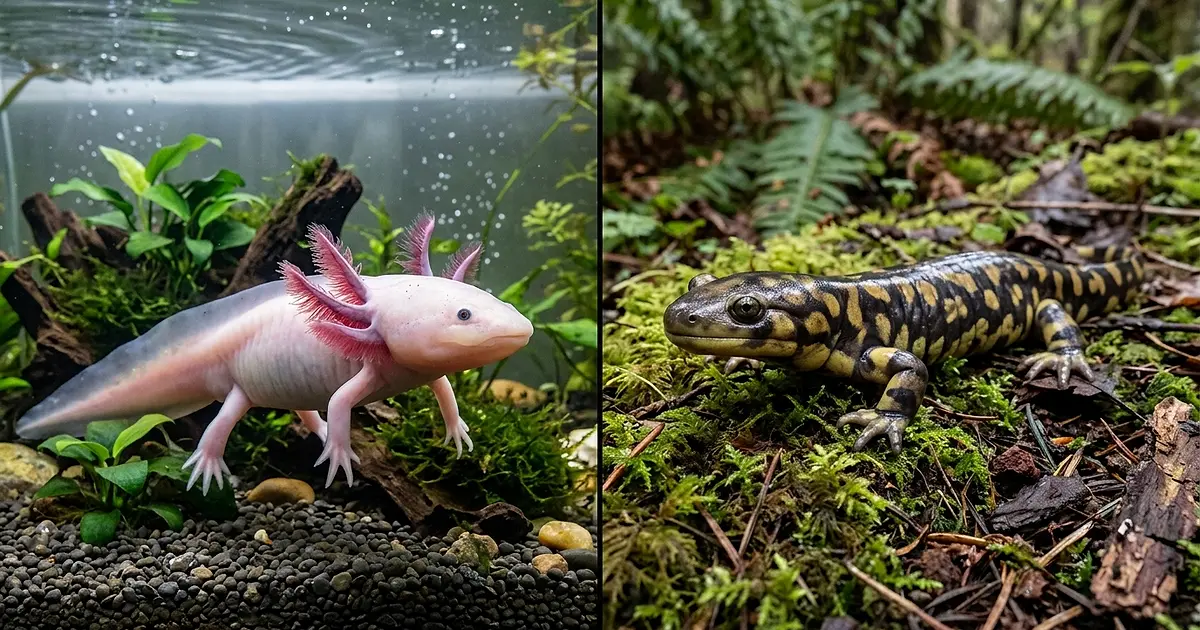
Axolotl vs Salamander: Key Differences Explained
Axolotl vs salamander vs newt: the key differences in anatomy, habitat, lifecycle, and care. Why axolotls are unique among amphibians.
Read more