
Water Quality Is the #1 Health Factor
Water quality is the single most important factor in axolotl health. Understanding and maintaining proper parameters prevents the vast majority of health problems. An axolotl in clean, cool water with stable chemistry will be healthy, active, and long-lived.
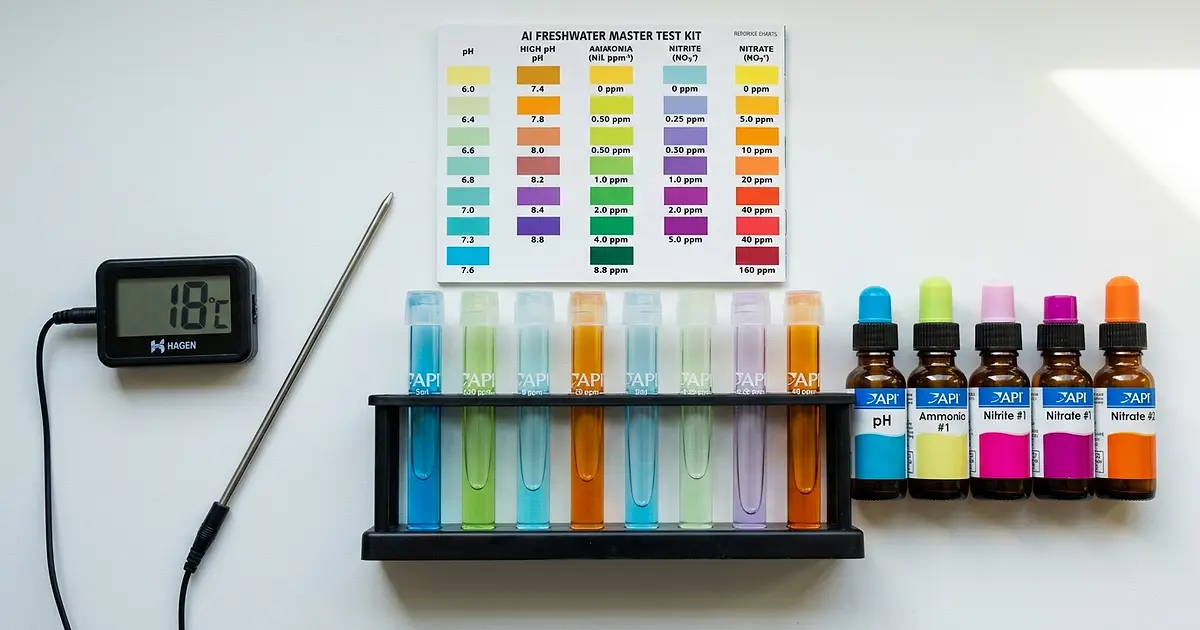
The Complete Parameter Chart
| Parameter | Ideal Range | Danger Zone |
|---|---|---|
| Temperature | 16-20°C (60-68°F) | Above 23°C / below 5°C |
| pH | 6.5-8.0 | Below 6.0 / above 8.5 |
| Ammonia (NH3) | 0 ppm | Any detectable amount |
| Nitrite (NO2) | 0 ppm | Any detectable amount |
| Nitrate (NO3) | Below 20 ppm | Above 40 ppm |
| GH (General Hardness) | 7-14 dGH (125-250 ppm) | Below 4 dGH |
| KH (Carbonate Hardness) | 3-8 dKH (53-143 ppm) | Below 2 dKH |
| Chlorine / Chloramine | 0 ppm | Any detectable amount |
Temperature
Ideal Range : 16-20°C (60-68°F)
Danger Zone : Above 23°C / below 5°C
pH
Ideal Range : 6.5-8.0
Danger Zone : Below 6.0 / above 8.5
Ammonia (NH3)
Ideal Range : 0 ppm
Danger Zone : Any detectable amount
Nitrite (NO2)
Ideal Range : 0 ppm
Danger Zone : Any detectable amount
Nitrate (NO3)
Ideal Range : Below 20 ppm
Danger Zone : Above 40 ppm
GH (General Hardness)
Ideal Range : 7-14 dGH (125-250 ppm)
Danger Zone : Below 4 dGH
KH (Carbonate Hardness)
Ideal Range : 3-8 dKH (53-143 ppm)
Danger Zone : Below 2 dKH
Chlorine / Chloramine
Ideal Range : 0 ppm
Danger Zone : Any detectable amount
Temperature Zones and Their Effects
| Temperature | Effect on Your Axolotl |
|---|---|
| 16-18°C | Optimal for longevity and health |
| 18-20°C | Acceptable, slightly higher metabolism |
| 20-22°C | Risky zone, increased disease susceptibility |
| 22-23°C | Danger zone, heat stress begins |
| Above 23°C | Emergency, immediate cooling needed |
16-18°C
Effect on Your Axolotl : Optimal for longevity and health
18-20°C
Effect on Your Axolotl : Acceptable, slightly higher metabolism
20-22°C
Effect on Your Axolotl : Risky zone, increased disease susceptibility
22-23°C
Effect on Your Axolotl : Danger zone, heat stress begins
Above 23°C
Effect on Your Axolotl : Emergency, immediate cooling needed
How to Keep Water Cool
Room air conditioning
The simplest method. Keep the room below 22°C and the tank will follow.
Aquarium chiller
Most reliable option but expensive ($100-300). Thermostatically controlled for precise temperature.
Clip-on fans
Blow air across the water surface. Can lower temperature 2-4°C through evaporative cooling.
Frozen water bottles
Temporary solution. Float sealed bottles in the tank during heat spikes.
Tank location
Keep the tank in the coolest room, away from windows, direct sunlight, and heat sources.
The Nitrogen Cycle Explained
⚠️Stage 1: Ammonia (NH3)
Produced by axolotl waste, uneaten food, and decaying matter. Highly toxic even at low levels. Burns gills and skin.
🔄Stage 2: Nitrite (NO2)
Beneficial bacteria convert ammonia to nitrite. Still very toxic to axolotls. Must reach 0 ppm.
✅Stage 3: Nitrate (NO3)
Bacteria convert nitrite to nitrate. Mildly toxic at high levels, removed by water changes and live plants.
Never Add an Axolotl to an Uncycled Tank
A properly cycled tank has established colonies of beneficial bacteria that rapidly convert ammonia to nitrite to nitrate. This process takes 4-6 weeks to establish in a new tank. A good filter is essential for supporting this bacterial colony. The ammonia and nitrite spikes in an uncycled tank cause severe burns, gill damage, and death.
Recommended Test Kit
Testing Schedule
| Situation | How Often to Test |
|---|---|
| New tank (cycling) | Test daily |
| First month with axolotl | Every 2-3 days |
| Established tank | Once per week |
| After unusual behavior | Test immediately |
New tank (cycling)
How Often to Test : Test daily
First month with axolotl
How Often to Test : Every 2-3 days
Established tank
How Often to Test : Once per week
After unusual behavior
How Often to Test : Test immediately
Water Changes
Perform 20-30% water changes weekly for established tanks. Use a gravel vacuum/siphon to remove waste from the bottom. New water must be within 1-2°C of tank water. Always dechlorinate using a water conditioner (Seachem Prime is the most popular choice) before adding tap water to the tank.
Setting up a new tank?
Our complete setup guide covers tank size, filtration, substrate, plants, and the cycling process.
Diagnose Your Tank
Enter your NH3 / NO2 / NO3 readings and get a clear cycle diagnosis
Frequently Asked Questions
Frequently Asked Questions
What temperature should axolotl water be?
How often should I test axolotl water?
Related Articles
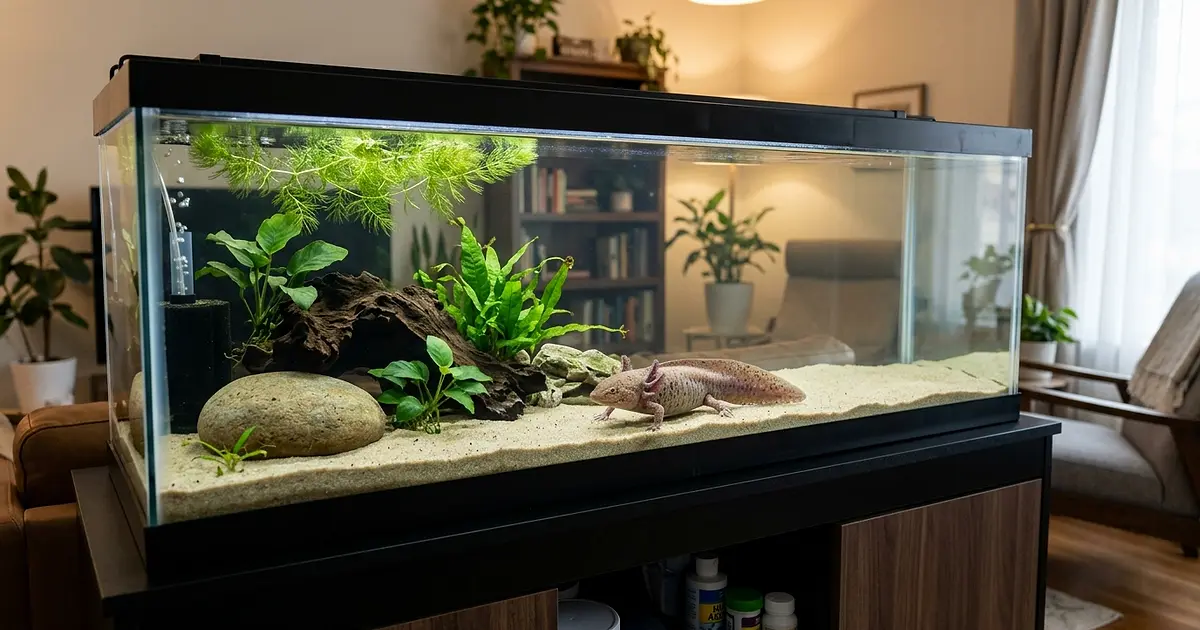
What Size Tank Does an Axolotl Need?
Minimum tank size for axolotls is 20 gallons (75L) for one. Learn the ideal dimensions, why bigger is better, and how to choose the right tank.
Read more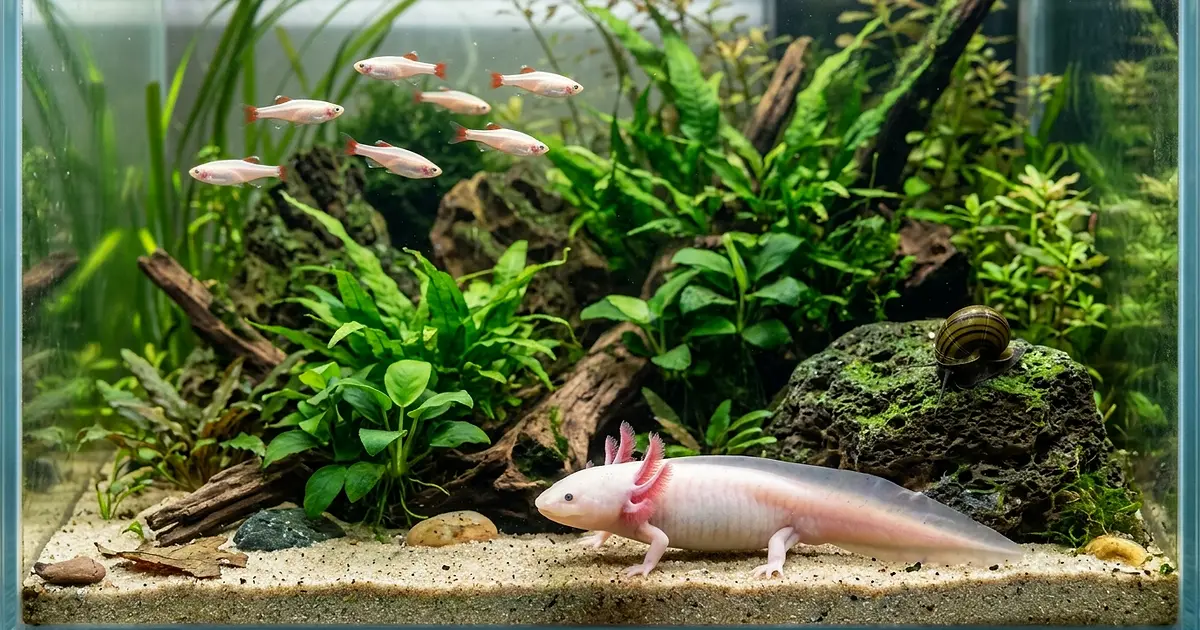
Axolotl Tank Mates: What Can Live With Axolotls?
Can axolotls live with fish? Learn which tank mates are safe, which to avoid, and why most axolotls are best kept with their own kind.
Read more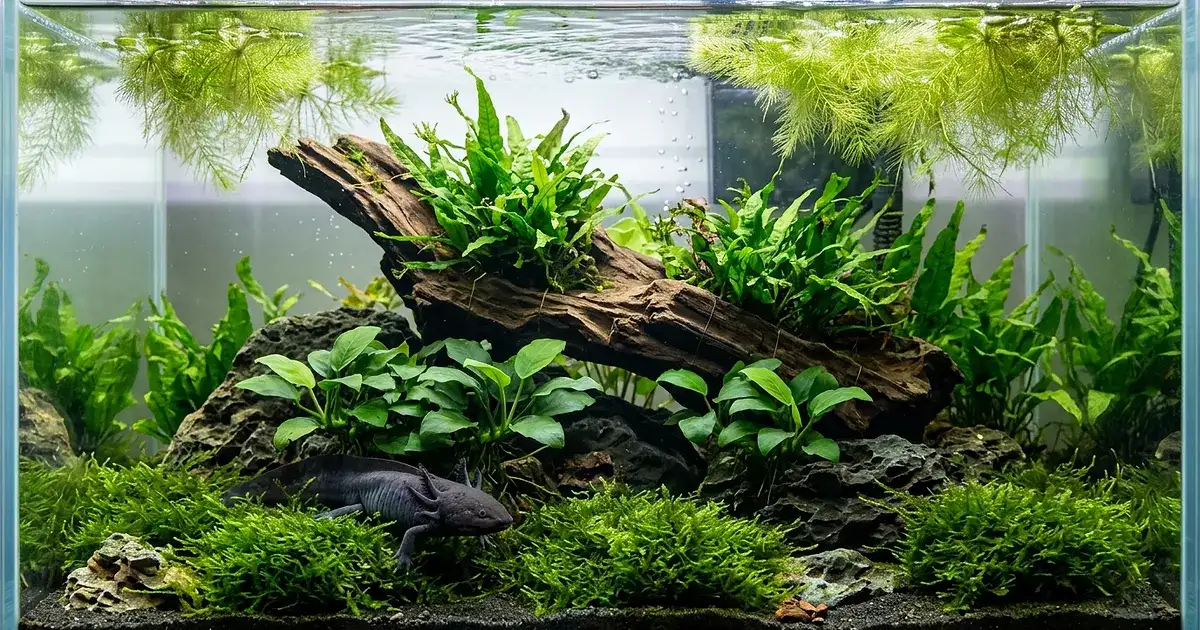
Best Plants for Axolotl Tanks
Top aquatic plants safe for axolotl tanks: java fern, anubias, java moss, and more. Low-light, axolotl-proof plants that improve water quality.
Read more