
50 Facts About Axolotls
Axolotls are full of surprises. From their Aztec origins to their mind-blowing regeneration abilities, these aquatic salamanders are unlike any other animal on Earth. Here are 50 facts that showcase just how extraordinary they are.
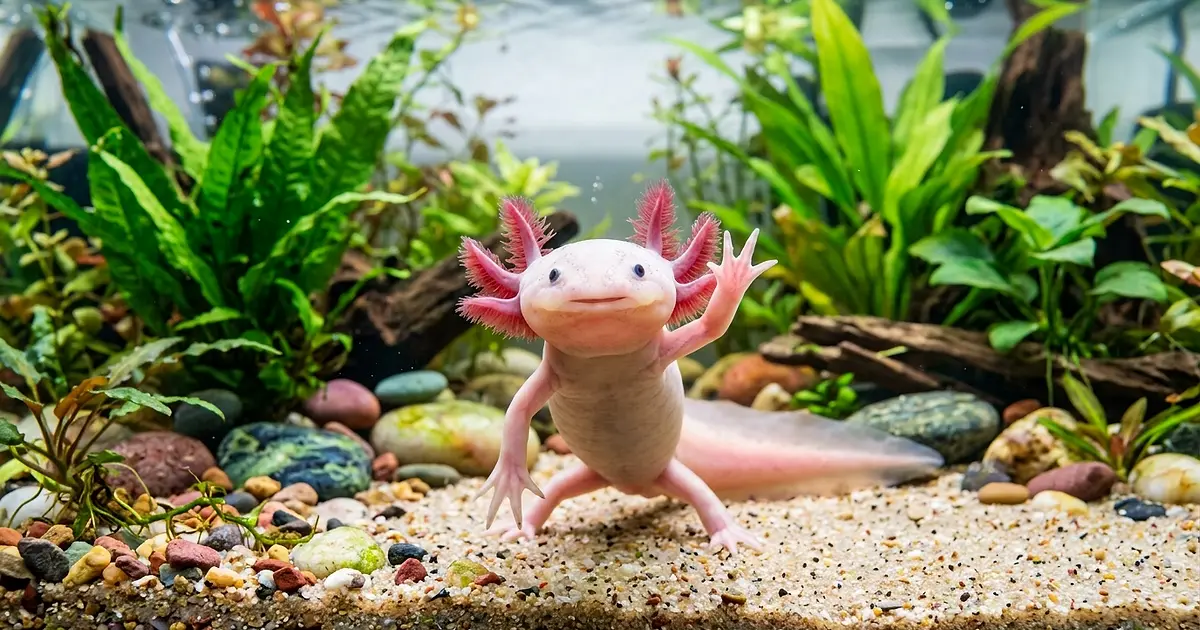
Biology & Anatomy
Regeneration Superpowers
Full Limb Regrowth
They regrow entire limbs including bones, muscles, nerves, and blood vessels in 40-60 days.
Brain Regeneration
They can regenerate parts of their brain and spinal cord, unique among vertebrates.
Heart Repair
A damaged heart regenerates without scarring, something humans cannot do.
Multiple Regrowth
Scientists have observed axolotls regenerate the same limb multiple times with perfect copies.
Cancer Resistance
Despite massive cell division during regeneration, axolotls rarely develop cancer.
Dedifferentiation
During regeneration, mature cells revert back into stem-like cells to rebuild tissue.
Origin & History
Conservation Facts
| Fact | Detail |
|---|---|
| IUCN status | Critically Endangered |
| Wild population decline | Over 99% since the 1990s |
| Wild individuals remaining | Fewer than 1,000 |
| Main threats | Urbanization, pollution, invasive fish species |
| Most damaging threat | Invasive tilapia and carp eat eggs and compete for food |
| Captive population | Millions exist worldwide |
| Conservation | Mexico has established breeding programs |
IUCN status
Detail : Critically Endangered
Wild population decline
Detail : Over 99% since the 1990s
Wild individuals remaining
Detail : Fewer than 1,000
Main threats
Detail : Urbanization, pollution, invasive fish species
Most damaging threat
Detail : Invasive tilapia and carp eat eggs and compete for food
Captive population
Detail : Millions exist worldwide
Conservation
Detail : Mexico has established breeding programs
Pet Keeping Facts
Color & Morph Facts
Most Popular
The leucistic (pink/white with dark eyes) is the most popular pet morph worldwide.
GFP Glow
GFP axolotls glow green under ultraviolet light thanks to a jellyfish gene.
Rarest Morph
Chimera axolotls, split down the middle with two colors, are among the rarest.
Blue Axolotl Myth
Ready to Keep an Axolotl?
Now that you know the facts, learn everything about setting up the perfect tank and caring for your axolotl.
Related Articles
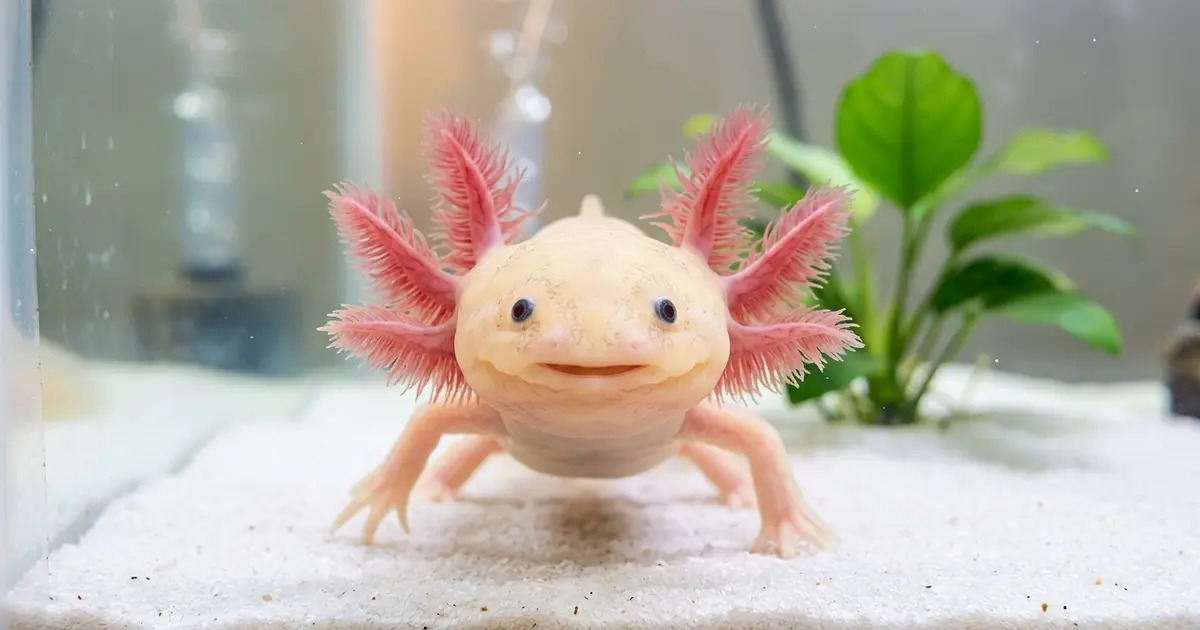
What Is an Axolotl? Facts, Origin & Why They're Special
The axolotl (Ambystoma mexicanum) is a fully aquatic neotenic salamander from Mexico. Species classification, anatomy, cultural significance, and basic facts.
Read more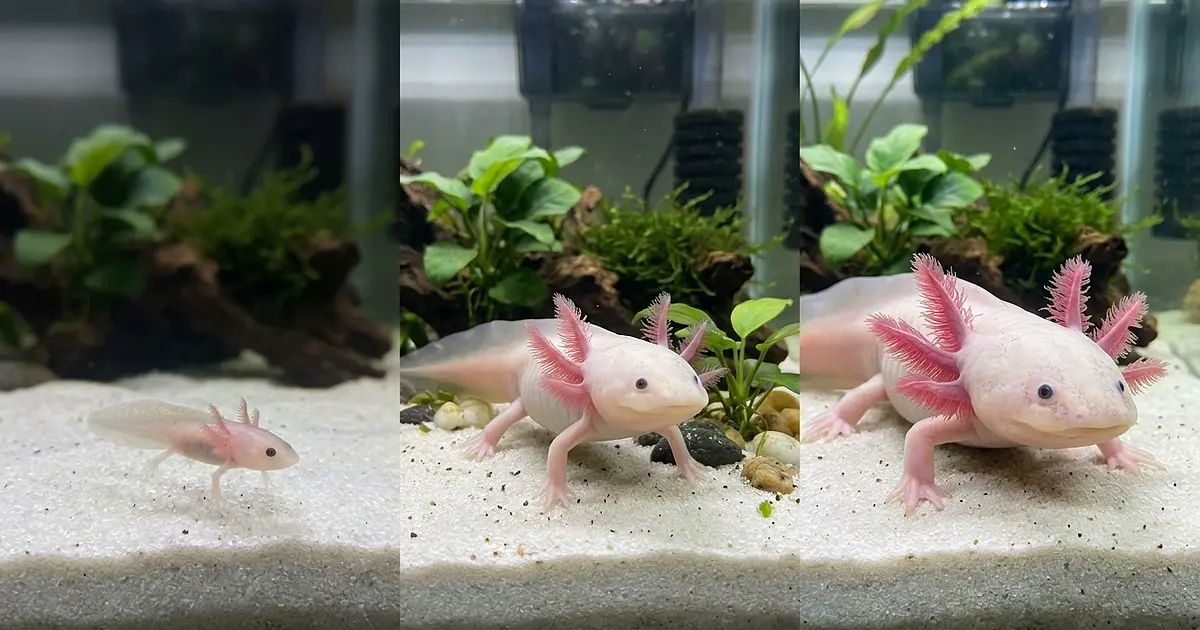
How Long Do Axolotls Live? Lifespan Guide
Axolotl lifespan in captivity averages 10-15 years. Learn what affects their longevity and how to maximize your axolotl's life expectancy.
Read more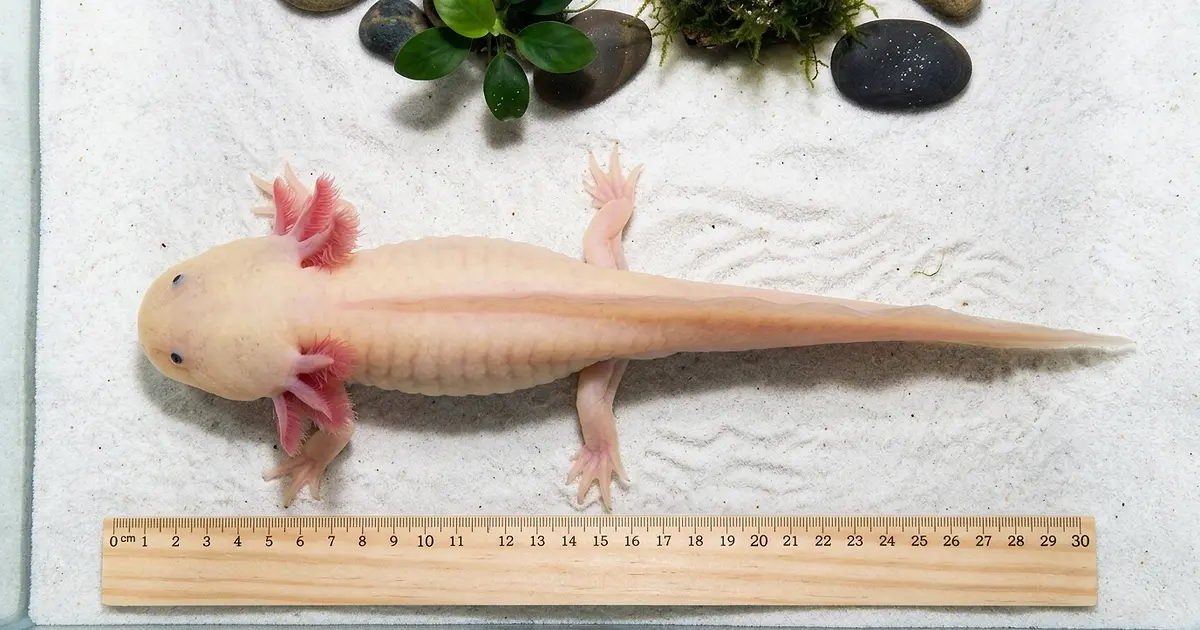
How Big Do Axolotls Get? Size & Growth Chart
Axolotls grow to 15-30 cm (6-12 inches) as adults. Complete growth chart from baby to adult with factors that affect size.
Read more