Getting the Setup Right From the Start
A properly set up tank is the foundation of axolotl health. Axolotls have specific requirements that differ significantly from tropical fish, so getting the setup right from the start is essential.
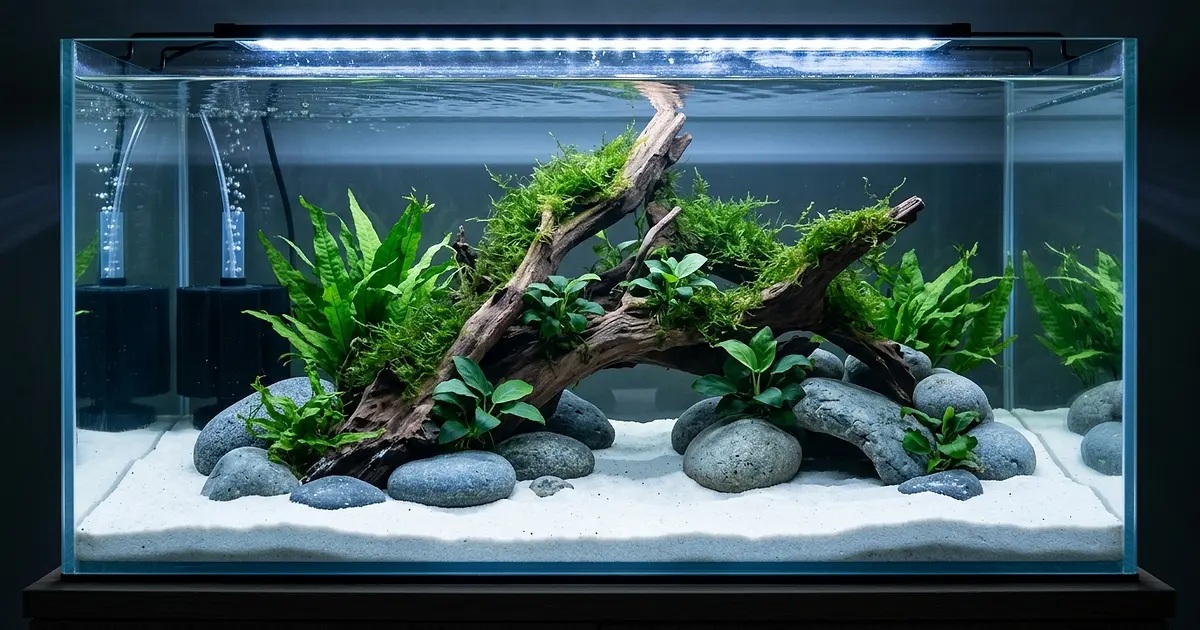
Choose a long tank over a tall one. Axolotls live on the bottom and rarely swim to the surface. A 20-gallon long tank provides more floor space than a standard 20-gallon, which is exactly what your axolotl needs.
Tank Size Requirements
| Number of Axolotls | Minimum Tank Size |
|---|---|
| 1 | 75L / 20 gallons |
| 2 | 115L / 30 gallons |
| 3 | 150L / 40 gallons |
1
Minimum Tank Size : 75L / 20 gallons
2
Minimum Tank Size : 115L / 30 gallons
3
Minimum Tank Size : 150L / 40 gallons
Essential Equipment Checklist
Substrate Options: What Is Safe?
| Substrate | Safe? | Notes |
|---|---|---|
| Fine sand (grain < 1 mm) | Yes | Natural look, axolotls can pass it safely if swallowed |
| Bare bottom | Yes | Easiest to clean, best for hospital and quarantine tanks |
| Gravel | No | Causes intestinal impaction, potentially fatal |
| Large river rocks | Caution | Must be too large to fit in the axolotl's mouth |
| Soil / plant substrate | No | Toxic and impossible to clean properly |
Fine sand (grain < 1 mm)
Safe? : Yes
Notes : Natural look, axolotls can pass it safely if swallowed
Bare bottom
Safe? : Yes
Notes : Easiest to clean, best for hospital and quarantine tanks
Gravel
Safe? : No
Notes : Causes intestinal impaction, potentially fatal
Large river rocks
Safe? : Caution
Notes : Must be too large to fit in the axolotl's mouth
Soil / plant substrate
Safe? : No
Notes : Toxic and impossible to clean properly
Best Filter Types for Axolotls
Sponge filter (gold standard)
Gentle flow, excellent biological filtration, cheap, and easy to maintain. See our filter comparison guide for detailed recommendations.
Hang-on-back (HOB)
Works well if you baffle the output to reduce flow. AquaClear 20/30 on the lowest setting is a popular choice.
Canister filter
Excellent for larger tanks (40+ gallons), but must use a spray bar for gentle output distribution.
Target Water Parameters
| Parameter | Ideal Range |
|---|---|
| Temperature | 16-20°C (60-68°F) |
| pH | 6.5-8.0 |
| Ammonia | 0 ppm |
| Nitrite | 0 ppm |
| Nitrate | < 40 ppm |
| GH (hardness) | 7-14 dGH |
Temperature
Ideal Range : 16-20°C (60-68°F)
pH
Ideal Range : 6.5-8.0
Ammonia
Ideal Range : 0 ppm
Nitrite
Ideal Range : 0 ppm
Nitrate
Ideal Range : < 40 ppm
GH (hardness)
Ideal Range : 7-14 dGH
Never Skip the Nitrogen Cycle
The nitrogen cycle must be completed before adding your axolotl. This typically takes 4-6 weeks. Never add an axolotl to an uncycled tank. Ammonia and nitrite spikes in uncycled tanks cause severe gill damage and can be fatal. See our water parameters guide for detailed testing advice.
Safe Live Plants for Axolotl Tanks
Lighting
Axolotls have no eyelids and are sensitive to bright light. Keep lighting dim or provide plenty of shaded hiding areas. If you grow live plants, use a low-intensity LED on a timer (8-10 hours max). Many keepers use no artificial lighting at all, and their axolotls thrive.
Step-by-Step Tank Setup
1️⃣Rinse tank and substrate
Rinse the tank and fine sand thoroughly with water only. Never use soap.
2️⃣Place substrate and decorations
Add 2-3 cm of sand (or leave bare bottom). Install smooth hides and rocks.
3️⃣Install filtration
Set up sponge filter with air pump. Add a chiller or fan if needed for summer.
4️⃣Fill with dechlorinated water
Treat tap water with Seachem Prime or equivalent conditioner before adding.
5️⃣Add live plants
Attach java fern and anubias to rocks. Scatter java moss and marimo balls.
6️⃣Cycle for 4-6 weeks
Add ammonia source, test daily. Wait until ammonia and nitrite read 0 ppm consistently.
7️⃣Add your axolotl
Perform a large water change, then acclimate your axolotl slowly over 30-60 minutes.
Need help with water chemistry?
Our water parameters guide covers temperature, pH, ammonia, nitrite, and nitrate in detail.
What You Need
Tank
Long shape preferred
Min. 75 L / 20 gal
RequiredSponge Filter
Gentle biological filtration
Low flow essential
RequiredThermometer
Digital recommended
Monitor 16-20 °C daily
RequiredFine Sand
Or bare bottom
Never gravel
RequiredHides
PVC pipes, terracotta pots
1-2 per axolotl
Live Plants
Anubias, Java Fern, Elodea
Low-light species
Secure Lid
Prevents escapes
Mesh or glass cover
SafetyWater Test Kit
API Master Kit
Ammonia, Nitrite, Nitrate, pH
Ideal Water Conditions
Temperature
16-20 °C (60-68 °F)
CriticalpH
7.4 - 7.6
Ammonia
0 ppm (always)
ToxicNitrite
0 ppm (always)
ToxicNitrate
Below 20 ppm
MonitorGH / KH
7-14 dGH / 3-8 dKH
Articles in This Section
What Size Tank Does an Axolotl Need?
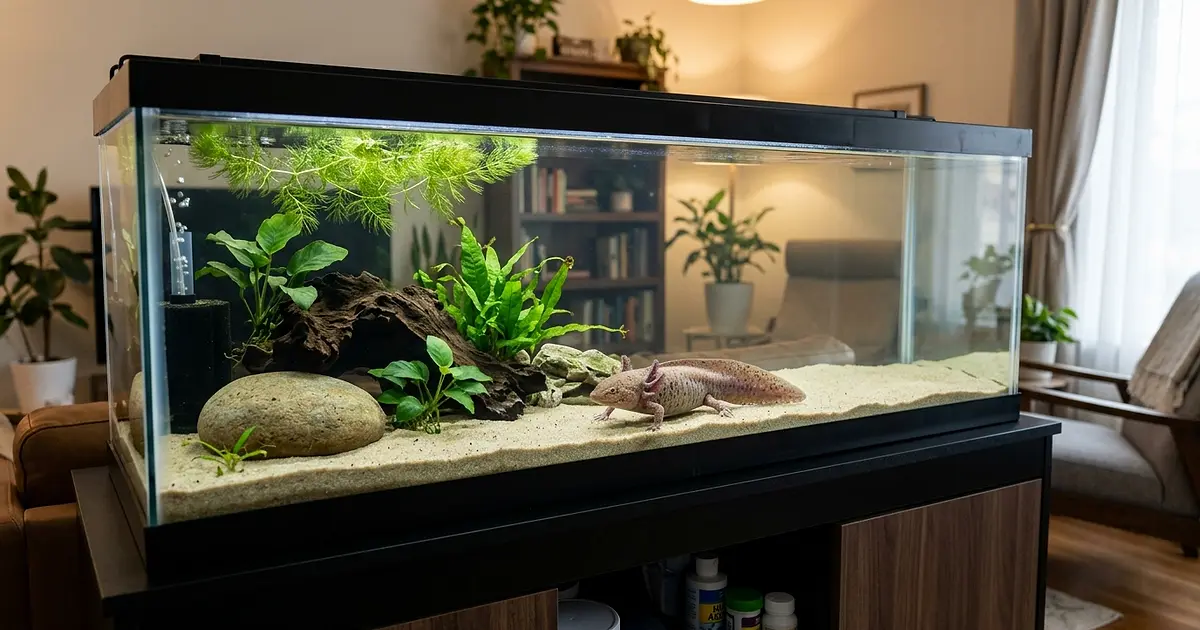
Minimum tank size for axolotls is 20 gallons (75L) for one. Learn the ideal dimensions, why bigger is better, and how to choose the right tank.
Read more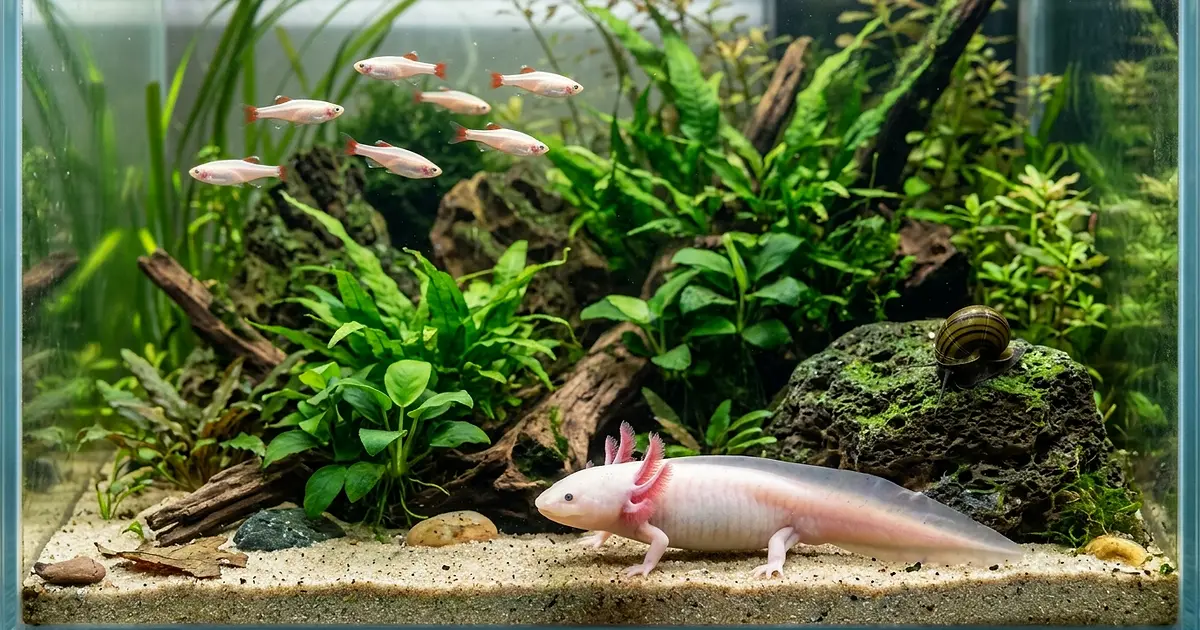
Axolotl Tank Mates: What Can Live With Axolotls?
Can axolotls live with fish? Learn which tank mates are safe, which to avoid, and why most axolotls are best kept with their own kind.
Read more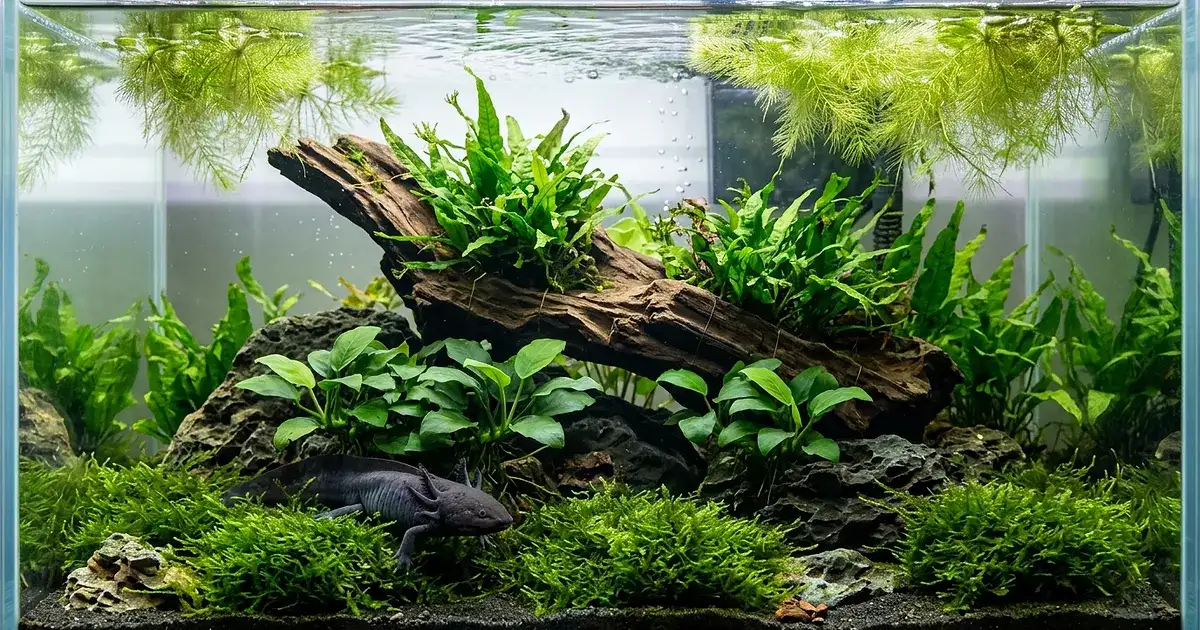
Best Plants for Axolotl Tanks
Top aquatic plants safe for axolotl tanks: java fern, anubias, java moss, and more. Low-light, axolotl-proof plants that improve water quality.
Read more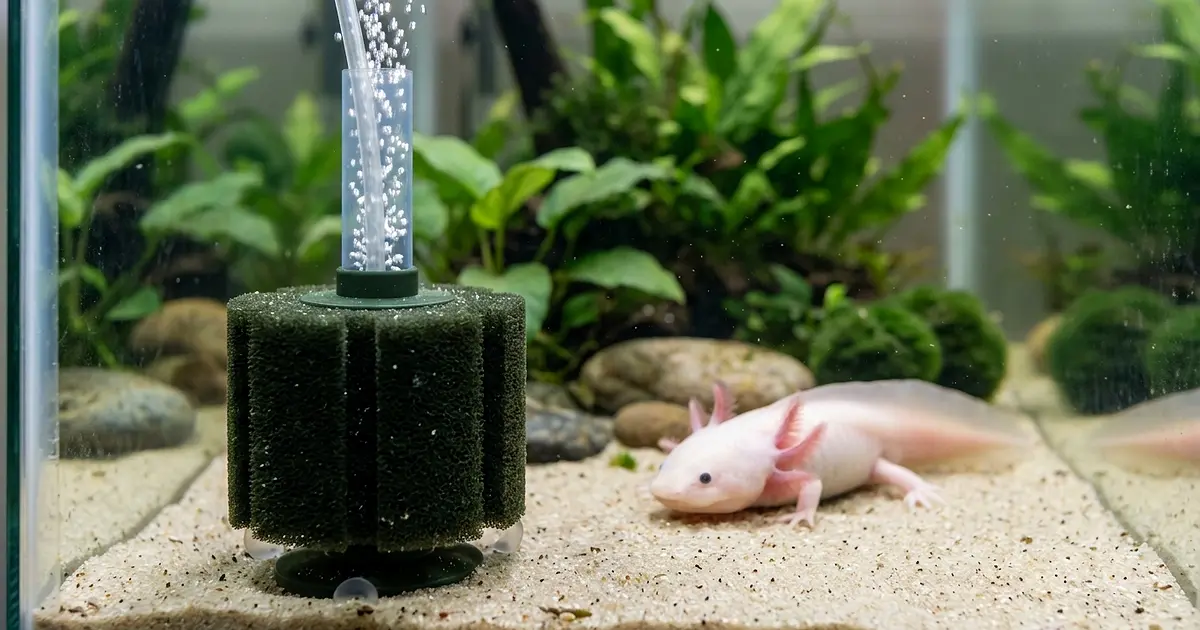
Best Filters for Axolotl Tanks
Which filter is best for axolotls? Sponge filters, HOB, and canister filters compared. Why gentle flow matters and what to avoid.
Read more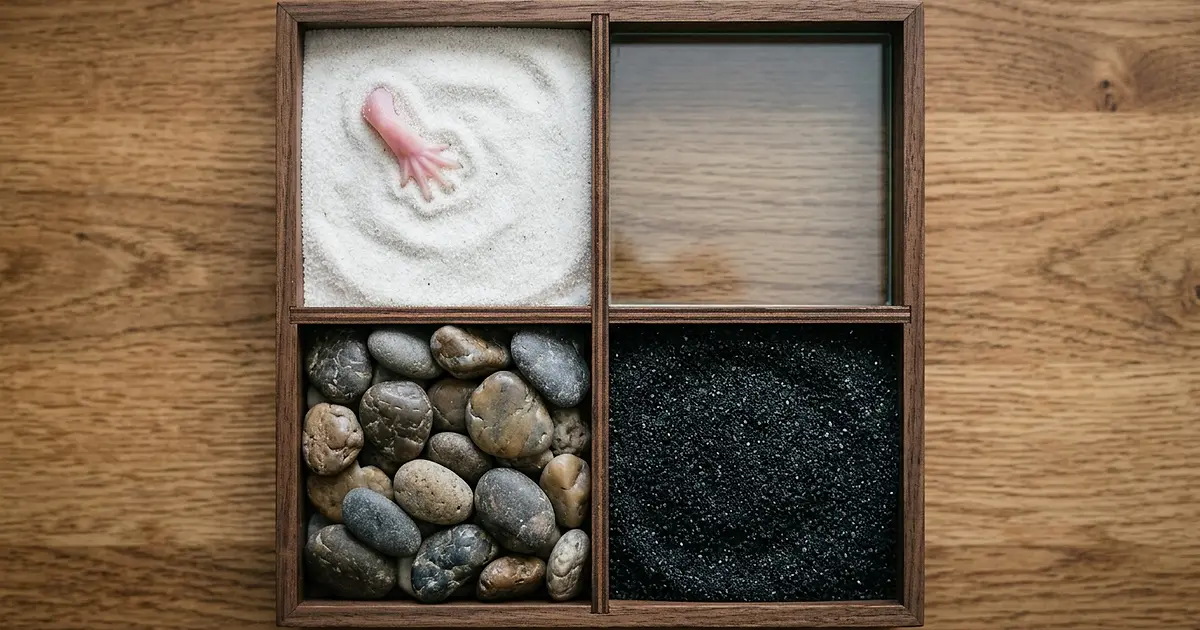
Best Substrate for Axolotls: Sand vs Bare Bottom
Sand, bare bottom, or large rocks? Compare axolotl substrate options. Why gravel is dangerous and which sand grain size is safe.
Read more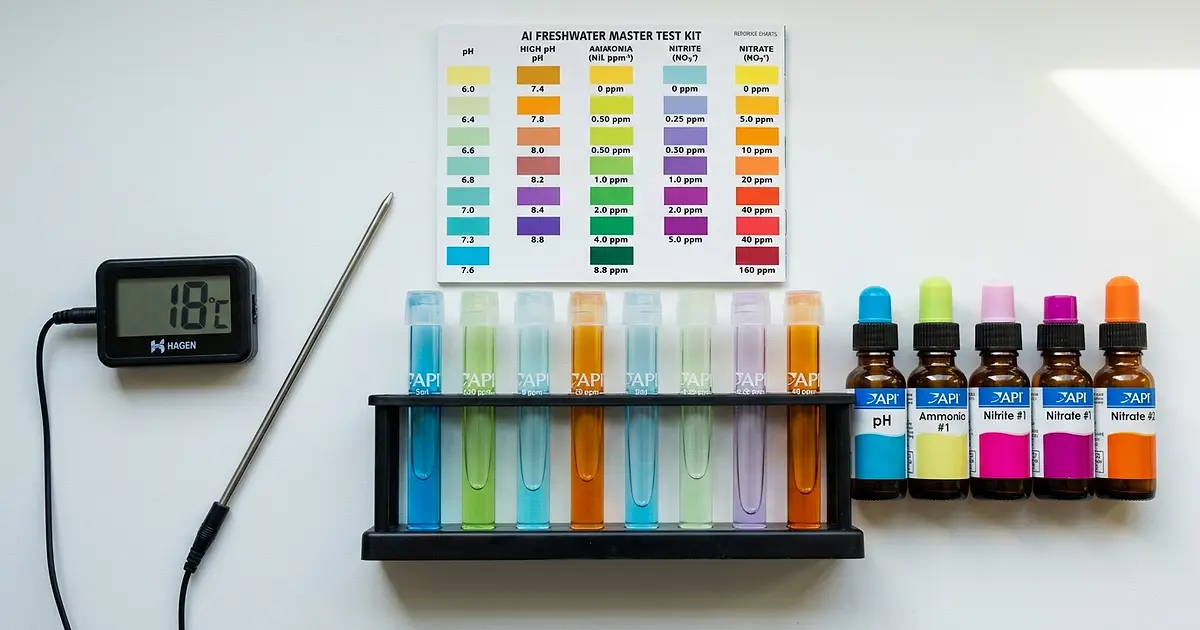
Axolotl Water Parameters: Temperature, pH & More
Ideal water parameters for axolotls: temperature, pH, ammonia, nitrite, nitrate, and hardness. Includes a reference chart and testing guide.
Read more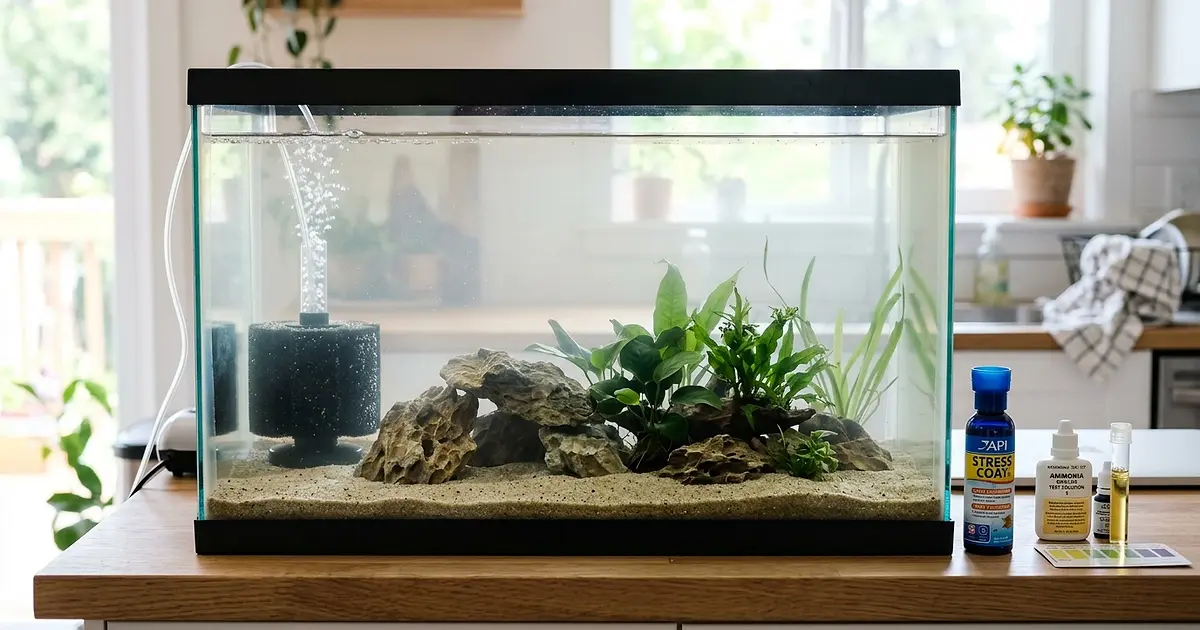
How to Cycle an Axolotl Tank Before Adding Your Pet
Fishless cycling for axolotl tanks: ammonia dosing, daily testing schedule, expected timeline of 4-6 weeks, and how to confirm the cycle is complete.
Read moreCalculate Your Setup
Get a personalized equipment list and cost estimate