Average Axolotl Lifespan by Environment
| Environment | Lifespan |
|---|---|
| Wild (Lake Xochimilco) | 5-10 years (declining due to habitat loss) |
| Captivity (average care) | 8-12 years |
| Captivity (excellent care) | 12-15 years |
| Laboratory conditions | Up to 20+ years |
Wild (Lake Xochimilco)
Lifespan : 5-10 years (declining due to habitat loss)
Captivity (average care)
Lifespan : 8-12 years
Captivity (excellent care)
Lifespan : 12-15 years
Laboratory conditions
Lifespan : Up to 20+ years
What Makes the Biggest Difference
The difference between "average" and "excellent" care can add 3-5 years to your axolotl's life. Axolotls are long-lived pets that can be part of your life for well over a decade. Understanding what affects their lifespan helps you provide the best possible care.
Key Factors Affecting Lifespan
Water Temperature (#1 Factor)
Consistently warm water above 22°C accelerates metabolism, increases stress, and dramatically shortens lifespan. Optimal: 16-18°C. Axolotls kept at 16°C consistently live longer than those at 20°C. Every degree matters.
Water Quality
Poor water quality (high ammonia, nitrite, or nitrate) causes chronic stress that wears down the immune system. Weekly 20-30% water changes and regular parameter testing are essential.
Diet
A balanced diet supports longevity. Earthworms are the best staple food. Overfeeding leads to obesity; underfeeding leads to malnutrition and weakened immunity.
Genetics
Inbred individuals (common in the pet trade) may have reduced lifespans. Choose from reputable breeders who maintain genetic diversity in their breeding colonies.
Stress Levels
Chronic stress from bright lighting, aggressive tank mates, strong water flow, or frequent handling weakens the immune system. A calm, stable environment is key.
Axolotl Life Stages
| Stage | Age | Characteristics |
|---|---|---|
| Egg | 0-3 weeks | Transparent egg with visible embryo |
| Larva | 0-2 months | Tiny (1-2 cm), requires live food |
| Juvenile | 2-12 months | Rapid growth, developing adult features |
| Sub-adult | 12-18 months | Near adult size, approaching sexual maturity |
| Adult | 18 months+ | Full size (15-30 cm), sexually mature |
| Senior | 10+ years | May slow down, eat less frequently |
Egg
Age : 0-3 weeks
Characteristics : Transparent egg with visible embryo
Larva
Age : 0-2 months
Characteristics : Tiny (1-2 cm), requires live food
Juvenile
Age : 2-12 months
Characteristics : Rapid growth, developing adult features
Sub-adult
Age : 12-18 months
Characteristics : Near adult size, approaching sexual maturity
Adult
Age : 18 months+
Characteristics : Full size (15-30 cm), sexually mature
Senior
Age : 10+ years
Characteristics : May slow down, eat less frequently
Signs of Aging in Axolotls
Normal Aging Is Not a Problem
These age-related changes are normal and not cause for concern if water parameters remain good and the axolotl still eats regularly, even if less frequently.
How to Maximize Your Axolotl's Lifespan
🌡️Keep water cool
Maintain 16-18°C consistently. This is the single most impactful factor.
🧪Test water weekly
Maintain 0 ammonia and 0 nitrite at all times.
🪱Feed quality food
Earthworms as the primary diet, supplemented with pellets.
🐟Do not overstock
Adequate space reduces stress and maintains water quality.
🌑Minimize stress
Dim light, gentle flow, plenty of hides.
🤚Avoid handling
Only handle when medically necessary.
🧬Buy from reputable breeders
Better genetics means better baseline longevity.
Complete Care for a Long Life
For a full overview of daily and weekly maintenance that keeps your axolotl thriving for years.
Frequently Asked Questions
Frequently Asked Questions
What is the oldest axolotl ever recorded?
Do different axolotl colors live longer?
Related Articles
What Is an Axolotl? Facts, Origin & Why They're Special
The axolotl (Ambystoma mexicanum) is a fully aquatic neotenic salamander from Mexico. Species classification, anatomy, cultural significance, and basic facts.
Read more
Axolotl Facts: Biology, Habitat & Abilities
Key axolotl facts covering biology, regeneration, Aztec origins, diet, conservation status, and what makes these aquatic salamanders unique among amphibians.
Read more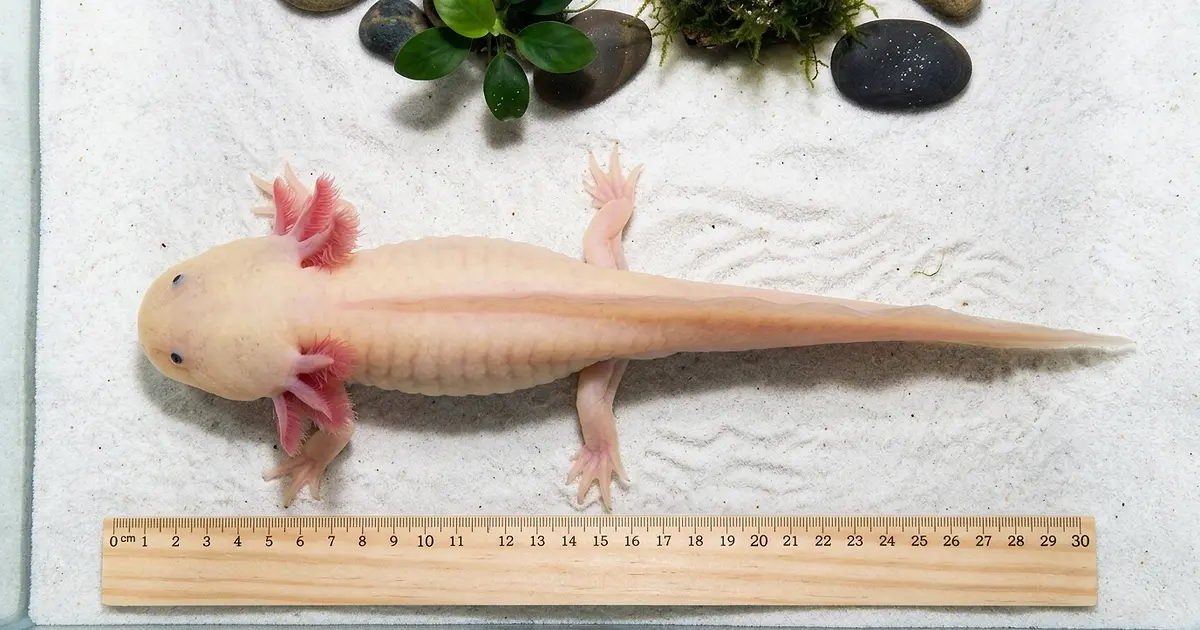
How Big Do Axolotls Get? Size & Growth Chart
Axolotls grow to 15-30 cm (6-12 inches) as adults. Complete growth chart from baby to adult with factors that affect size.
Read more