
Axolotls Handle Short Absences Well
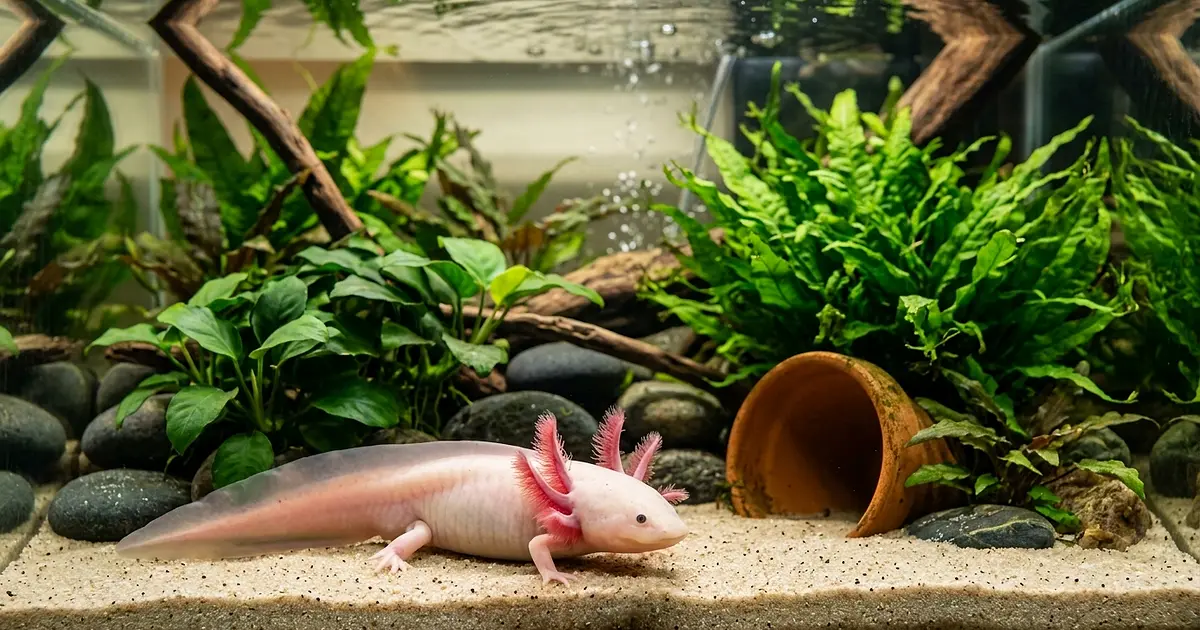
Leaving your axolotl behind when you travel can feel stressful, but axolotls are actually one of the easier aquatic pets to leave for short periods. They do not need daily interaction or daily feeding.
Healthy adult axolotls can safely fast for 7-10 days without any health consequences. In the wild, axolotls go through periods of food scarcity. A week without food is well within their natural tolerance. With proper preparation, your axolotl can stay healthy and comfortable while you enjoy your trip.
Trip Length Feasibility Guide
| Trip Length | Feasibility | Requirements |
|---|---|---|
| 1-3 days | Easy, no special prep | Normal tank maintenance before leaving |
| 4-7 days | Safe for healthy adults | Water change before departure, no feeding needed |
| 1-2 weeks | Possible with help | Pet sitter for one feeding + water check mid-trip |
| 2-4 weeks | Requires a caretaker | Regular visits every 3-4 days for feeding and water changes |
| 1+ month | Difficult | Move axolotl to caretaker's home or arrange frequent visits |
1-3 days
Feasibility : Easy, no special prep
Requirements : Normal tank maintenance before leaving
4-7 days
Feasibility : Safe for healthy adults
Requirements : Water change before departure, no feeding needed
1-2 weeks
Feasibility : Possible with help
Requirements : Pet sitter for one feeding + water check mid-trip
2-4 weeks
Feasibility : Requires a caretaker
Requirements : Regular visits every 3-4 days for feeding and water changes
1+ month
Feasibility : Difficult
Requirements : Move axolotl to caretaker's home or arrange frequent visits
Pre-Vacation Checklist
💧Water quality
Perform a 30-40% water change. Test all water parameters: ammonia (0 ppm), nitrite (0 ppm), nitrate (below 20 ppm). Top off to maximum safe level for evaporation.
⚙️Equipment check
Clean or replace filter media if due. Verify the filter runs smoothly. Check air pump output. Confirm thermometer accuracy. Test chiller or fan if summer.
🧹Tank maintenance
Remove uneaten food and visible waste. Siphon debris from the substrate. Trim overgrown plants. Confirm hides are stable and will not collapse.
🔒Safety
Secure the tank lid. Unplug unnecessary equipment (decorative lights). Keep tank away from direct sunlight. Set AC or leave a window cracked if traveling in summer.
What Not to Do Before Leaving
Do not dump extra food in the tank thinking it will last them longer. Excess food pollutes the water. Do not leave live feeder fish in the tank (they nip gills and die, polluting water). Do not use vacation feeder blocks designed for fish (they dissolve and foul the water). Feed a normal meal 1-2 days before departure.
Pet Sitter Instructions (Print and Leave by Tank)
Supplies to Leave Out for Your Sitter
Prepare a kit near the tank: dechlorinator (with dosage written on a note), pre-portioned food in labeled bags (e.g., 'Monday', 'Thursday'), a clean bucket labeled 'axolotl only', your phone number, and a link to an axolotl care guide. Keep instructions short and simple.
Summer Vacations: Extra Precautions
Common Risks and Prevention
| Risk | Prevention |
|---|---|
| Power outage (filter stops) | Battery-powered air pump as backup ($10-15) |
| Temperature spike | AC set, fans running, sitter alerted |
| Water evaporation | Top off before leaving, sitter adds water if needed |
| Filter clog | Clean filter before departure |
| Overfeeding by sitter | Pre-portion food into labeled bags |
| Axolotl escape | Secure the lid, lower water level by 3-5 cm |
Power outage (filter stops)
Prevention : Battery-powered air pump as backup ($10-15)
Temperature spike
Prevention : AC set, fans running, sitter alerted
Water evaporation
Prevention : Top off before leaving, sitter adds water if needed
Filter clog
Prevention : Clean filter before departure
Overfeeding by sitter
Prevention : Pre-portion food into labeled bags
Axolotl escape
Prevention : Secure the lid, lower water level by 3-5 cm
When You Return
1️⃣Check temperature
Read the thermometer immediately upon arrival.
2️⃣Test water parameters
Check ammonia, nitrite, and nitrate levels.
3️⃣Water change
Perform a 20-30% water change with dechlorinated, temperature-matched water.
5️⃣Resume normal feeding
Return to your regular feeding schedule. Do not overfeed to 'make up' for missed meals.
Need the full care routine?
Our complete care guide covers feeding, water changes, temperature management, and health monitoring.
Frequently Asked Questions
Frequently Asked Questions
How long can an axolotl be left alone?
Can I use an automatic feeder for my axolotl?
Should I do a water change before going on vacation?
Related Articles
What Is an Axolotl? Facts, Origin & Why They're Special
The axolotl (Ambystoma mexicanum) is a fully aquatic neotenic salamander from Mexico. Species classification, anatomy, cultural significance, and basic facts.
Read more
Axolotl Facts: Biology, Habitat & Abilities
Key axolotl facts covering biology, regeneration, Aztec origins, diet, conservation status, and what makes these aquatic salamanders unique among amphibians.
Read more
How Long Do Axolotls Live? Lifespan Guide
Axolotl lifespan in captivity averages 10-15 years. Learn what affects their longevity and how to maximize your axolotl's life expectancy.
Read more