
Summer Is the Most Dangerous Season for Axolotl Owners
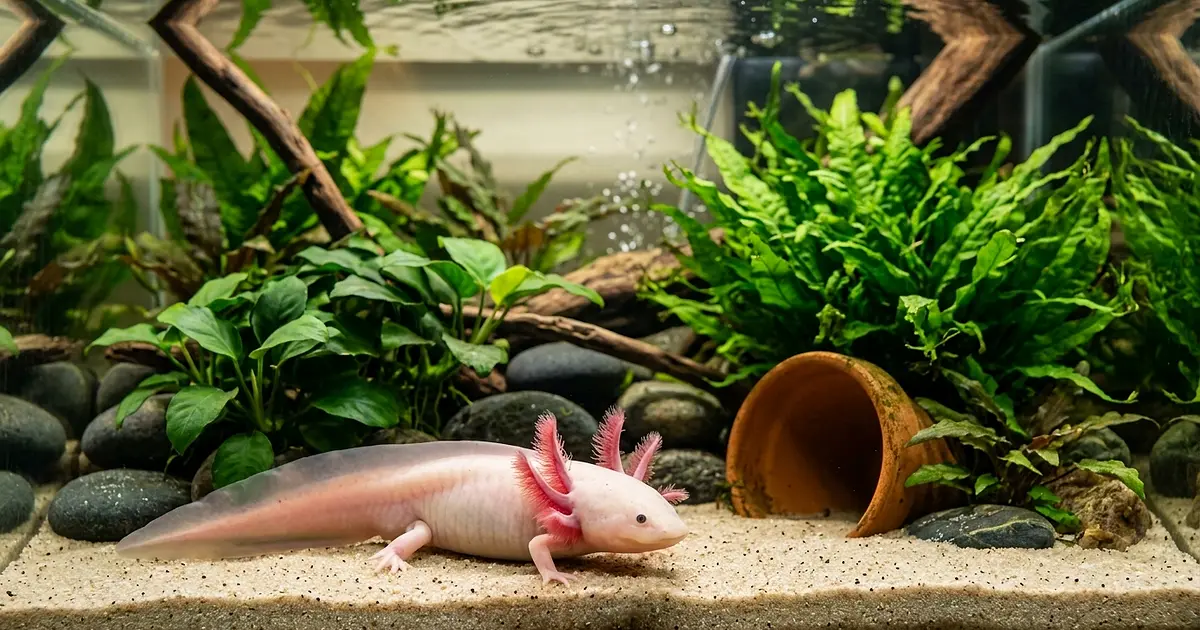
Axolotls evolved in the cool, deep waters of Lake Xochimilco in Mexico, where water temperatures stay naturally cool year-round. Their metabolism, immune system, and organ function are all optimized for cold water between 16-20°C (60-68°F).
Even a few days above 22°C can trigger serious health problems. When water temperature rises, metabolism accelerates, dissolved oxygen drops, the immune system weakens, and bacterial and fungal infections become much more likely. Above 24°C, these problems become acute and prolonged exposure can be fatal.
Signs of Heat Stress
Act Immediately
If you notice any of these symptoms, act immediately to lower the water temperature and check for illness. Do not wait to see if symptoms resolve on their own.
Cooling Methods Compared
Budget Solutions
- ✓Clip-on aquarium fans ($15-30): blow air across the water surface, cooling through evaporation by 2-4°C. Effective when room temperature stays below 28°C.
- ✓Frozen water bottles (free): fill plastic bottles 3/4 full, freeze, and float in the tank. Rotate every 4-6 hours. Lower temp by no more than 1-2°C per hour. Temporary fix only.
- ✓Tank relocation: move the tank away from windows, to the lowest floor, away from heat-generating appliances.
Premium Solutions
- →Room air conditioning: set the room to 20-22°C. Simplest permanent solution if available.
- →Aquarium chiller ($150-400): actively refrigerates water to a set temperature. Choose a chiller rated for your tank volume, set to 18°C. Most reliable option for hot climates.
Emergency Protocol: Heat Wave Above 23°C
Float frozen bottles immediately (2-3 bottles for a 75L tank)
Increase aeration: add an air stone to boost dissolved oxygen
Reduce feeding: a fasting axolotl produces less waste and handles stress better
Partial water change with cooler dechlorinated water (18-19°C)
Consider tubbing: move the axolotl to a clean plastic tub with cool, dechlorinated water in the coolest room. Change water every 12-24 hours.
Do not feed until temperature is back below 20°C for at least 24 hours
Summer Maintenance Schedule Adjustments
| Task | Normal Schedule | Summer Schedule |
|---|---|---|
| Temperature check | Once daily | 2-3 times daily |
| Water changes | 20-30% weekly | 20-30% twice weekly |
| Water testing | Weekly | Twice weekly |
| Feeding | Every 2-3 days | Every 3-4 days if temp > 20°C |
| Tank observation | Daily | Multiple times daily |
Temperature check
Normal Schedule : Once daily
Summer Schedule : 2-3 times daily
Water changes
Normal Schedule : 20-30% weekly
Summer Schedule : 20-30% twice weekly
Feeding
Normal Schedule : Every 2-3 days
Summer Schedule : Every 3-4 days if temp > 20°C
Tank observation
Normal Schedule : Daily
Summer Schedule : Multiple times daily
Frozen Bottle Safety
Long-Term Summer Preparation
Budget for Cooling
If your area regularly exceeds 25°C indoors, invest in a chiller or room air conditioning before summer arrives.
Stock Supplies
Stock up on frozen bottles, dechlorinator, and have a spare air pump with air stone ready.
Emergency Tub
Keep a clean plastic tub ready for emergency tubbing. This is the safest short-term measure during extreme heat.
Calibrate Equipment
Test your thermometer for accuracy. A misreading of even 2°C can mean the difference between safe and dangerous.
Complete Care Guide
Summer care is part of responsible axolotl ownership. Learn about all aspects of keeping your axolotl healthy year-round.
Frequently Asked Questions
Frequently Asked Questions
What temperature is too hot for an axolotl?
Can I put ice cubes in my axolotl tank?
Do I need an aquarium chiller for my axolotl?
Related Articles
What Is an Axolotl? Facts, Origin & Why They're Special
The axolotl (Ambystoma mexicanum) is a fully aquatic neotenic salamander from Mexico. Species classification, anatomy, cultural significance, and basic facts.
Read more
Axolotl Facts: Biology, Habitat & Abilities
Key axolotl facts covering biology, regeneration, Aztec origins, diet, conservation status, and what makes these aquatic salamanders unique among amphibians.
Read more
How Long Do Axolotls Live? Lifespan Guide
Axolotl lifespan in captivity averages 10-15 years. Learn what affects their longevity and how to maximize your axolotl's life expectancy.
Read more