
Winter Is the Easy Season
Winter is generally the easiest season for axolotl owners. While summer brings the stress of cooling, winter aligns with the cool temperatures axolotls naturally prefer.
Cool temperatures strengthen the immune system, promote gill health, and reduce the risk of bacterial infections. Many experienced keepers consider 16-18°C the sweet spot for year-round health. However, there are still adjustments to make and risks to watch for.
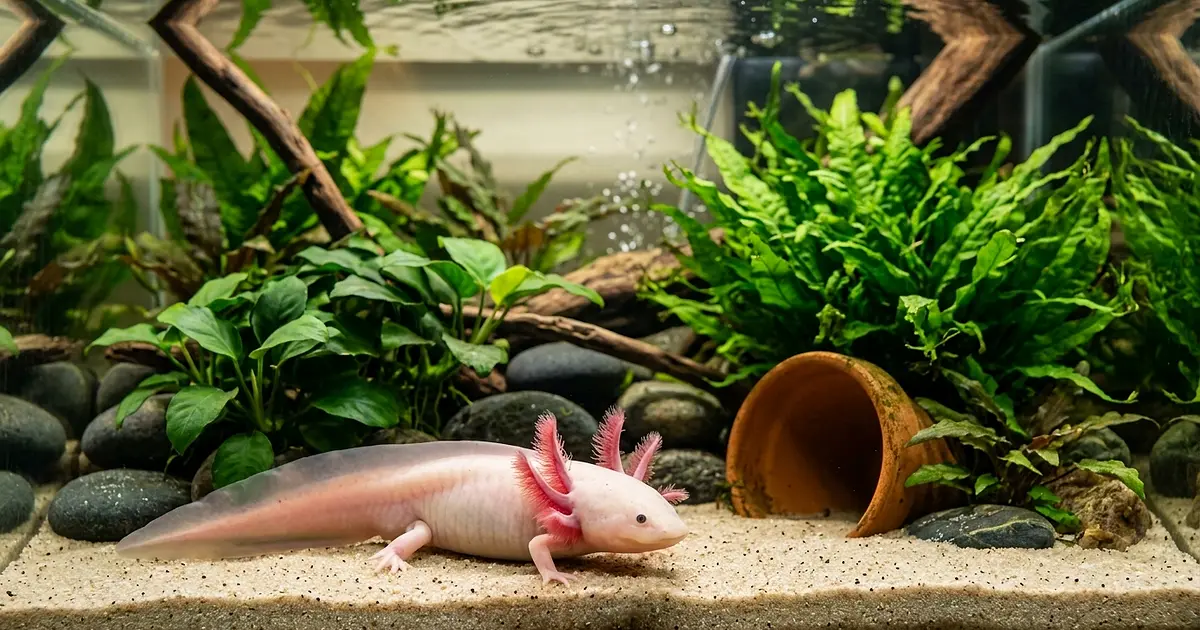
Temperature Effects on Your Axolotl
| Temperature | Effect |
|---|---|
| 16-20°C | Ideal range. Active, healthy appetite, normal behavior |
| 14-16°C | Comfortable. Slightly slower metabolism, still eating well |
| 10-14°C | Cool. Reduced appetite, less movement, slower digestion |
| 5-10°C | Cold. Very slow metabolism, minimal eating, mostly resting |
| Below 5°C | Dangerous. Risk of organ stress and tissue damage |
16-20°C
Effect : Ideal range. Active, healthy appetite, normal behavior
14-16°C
Effect : Comfortable. Slightly slower metabolism, still eating well
10-14°C
Effect : Cool. Reduced appetite, less movement, slower digestion
5-10°C
Effect : Cold. Very slow metabolism, minimal eating, mostly resting
Below 5°C
Effect : Dangerous. Risk of organ stress and tissue damage
Normal Behavioral Changes in Cold Water
Winter Feeding Adjustments
| Water Temperature | Feeding Frequency | Notes |
|---|---|---|
| 16-20°C | Every 2-3 days | Normal feeding schedule |
| 14-16°C | Every 3-4 days | Reduce portion slightly |
| 10-14°C | Every 5-7 days | Small portions only |
| Below 10°C | Once weekly or less | Only if the axolotl shows interest |
14-16°C
Feeding Frequency : Every 3-4 days
Notes : Reduce portion slightly
10-14°C
Feeding Frequency : Every 5-7 days
Notes : Small portions only
Below 10°C
Feeding Frequency : Once weekly or less
Notes : Only if the axolotl shows interest
Winter Feeding Rules
Remove uneaten food after 30 minutes. Do not overfeed: an axolotl that refuses food in cold water is behaving normally. Continue offering high-quality food (earthworms are the best staple year-round). Watch for bloating, which can indicate food is not being digested before the next meal.
When You Need a Heater
Winter Water Quality Benefits
Higher dissolved oxygen
Cold water holds more O2, which supports gill function and overall health.
Slower bacterial growth
Beneficial bacteria work slower, but harmful bacteria are also less active.
Less waste production
A slower metabolism means the axolotl produces less ammonia and waste.
Prevent Rapid Temperature Swings
The biggest winter risk is not cold itself but rapid temperature changes. These occur when heating is turned off at night, a window is left open near the tank, or hot water is used during water changes. Axolotls tolerate gradual shifts well but become stressed by rapid swings of more than 2°C. Keep the tank away from windows, doors, and radiators. Match water change water to the current tank temperature.
Winter Maintenance Checklist
Need the full care routine?
Our complete care guide covers every season, from summer heat management to winter adjustments.
Frequently Asked Questions
Frequently Asked Questions
Can axolotl water be too cold?
Do axolotls hibernate in winter?
Should I heat my axolotl tank in winter?
Related Articles
What Is an Axolotl? Facts, Origin & Why They're Special
The axolotl (Ambystoma mexicanum) is a fully aquatic neotenic salamander from Mexico. Species classification, anatomy, cultural significance, and basic facts.
Read more
Axolotl Facts: Biology, Habitat & Abilities
Key axolotl facts covering biology, regeneration, Aztec origins, diet, conservation status, and what makes these aquatic salamanders unique among amphibians.
Read more
How Long Do Axolotls Live? Lifespan Guide
Axolotl lifespan in captivity averages 10-15 years. Learn what affects their longevity and how to maximize your axolotl's life expectancy.
Read more