
Not All Axolotl Foods Are Equal
Choosing the right food for your axolotl directly affects its health, coloration, gill condition, and lifespan. Earthworms are the gold standard, but a varied diet including quality pellets and occasional treats produces the best results.
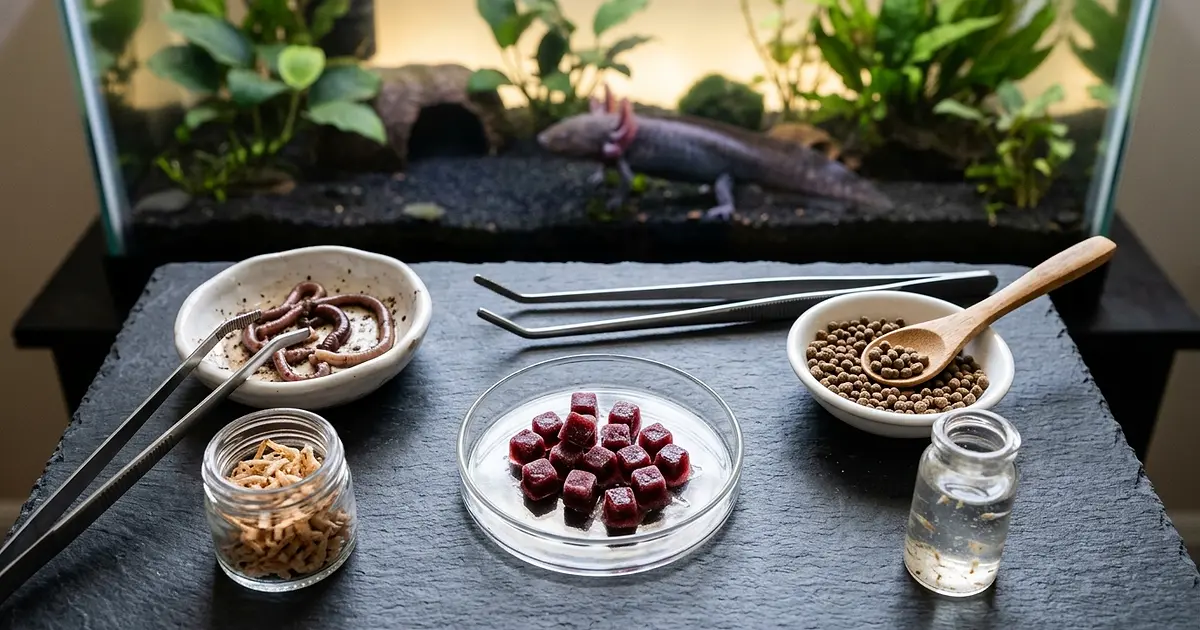
Complete Food Comparison
| Food | Nutrition | Cost | Convenience | Best For |
|---|---|---|---|---|
| Earthworms | Excellent (complete) | Low | Medium | All adults |
| Sinking pellets | Good | Low | High | Daily staple |
| Frozen bloodworms | Good (not complete) | Medium | High | Juveniles, treats |
| Live blackworms | Excellent | High | Low | Juveniles, picky eaters |
| Live daphnia | Moderate | Medium | Low | Baby axolotls |
| Baby brine shrimp | Moderate | Low (DIY) | Medium | Newborns |
| Raw shrimp | Good | Medium | High | Occasional treat |
Earthworms
Nutrition : Excellent (complete)
Cost : Low
Convenience : Medium
Best For : All adults
Sinking pellets
Nutrition : Good
Cost : Low
Convenience : High
Best For : Daily staple
Frozen bloodworms
Nutrition : Good (not complete)
Cost : Medium
Convenience : High
Best For : Juveniles, treats
Live blackworms
Nutrition : Excellent
Cost : High
Convenience : Low
Best For : Juveniles, picky eaters
Live daphnia
Nutrition : Moderate
Cost : Medium
Convenience : Low
Best For : Baby axolotls
Raw shrimp
Nutrition : Good
Cost : Medium
Convenience : High
Best For : Occasional treat
Tier 1: Staple Foods
Earthworms (Nightcrawlers)
The gold standard. Complete protein, fats, and minerals. Buy from a bait shop or garden (pesticide-free). Cut into pieces for juveniles, offer whole to adults. Store in the fridge in damp soil or newspaper. Rinse before feeding.
Sinking Pellets
Convenient daily food when worms are not available. Look for high protein (40%+), sinking formula, and quality ingredients. Recommended: Hikari Sinking Carnivore Pellets, Rangen Salmon Pellets.
Tier 2: Supplementary Foods
Frozen Bloodworms
Good protein source loved by all axolotls. Thaw a cube in tank water before feeding. Not nutritionally complete on their own, so alternate with earthworms or pellets.
Live Blackworms
Excellent live food that triggers strong feeding behavior. More nutritious than bloodworms but harder to find. Keep refrigerated in shallow water, change water daily.
Foods to Avoid
Mealworms: hard chitin exoskeleton causes digestive issues. Feeder fish: risk of parasites, disease, and impaction. Waxworms: too high in fat for regular use. Processed human food: never feed bread, meat, cheese, or anything cooked. Freeze-dried anything: low moisture content can cause constipation.
Sample Weekly Feeding Rotation (Adult)
| Day | Food |
|---|---|
| Monday | 1-2 earthworms |
| Tuesday | Fast (no food) |
| Wednesday | 4-5 pellets |
| Thursday | Fast (no food) |
| Friday | 1-2 earthworms |
| Saturday | Fast (no food) |
| Sunday | Bloodworm treat |
Monday
Food : 1-2 earthworms
Tuesday
Food : Fast (no food)
Wednesday
Food : 4-5 pellets
Thursday
Food : Fast (no food)
Friday
Food : 1-2 earthworms
Saturday
Food : Fast (no food)
Sunday
Food : Bloodworm treat
Feeding Tips
Remove uneaten food after 30 minutes to prevent water pollution. Feed in the evening when axolotls are most active. Use feeding tongs for earthworms to control placement and avoid substrate ingestion. Fasting days (2-3 per week) are healthy and mimic natural feeding patterns.
Raising baby axolotls?
Babies need different food at each growth stage. Our guide covers hatching to juvenile feeding.
Build a Meal Plan
Our calculator creates a weekly rotation for you
Frequently Asked Questions
Frequently Asked Questions
What is the single best food for axolotls?
Are axolotl pellets good enough as the only food?
Related Articles
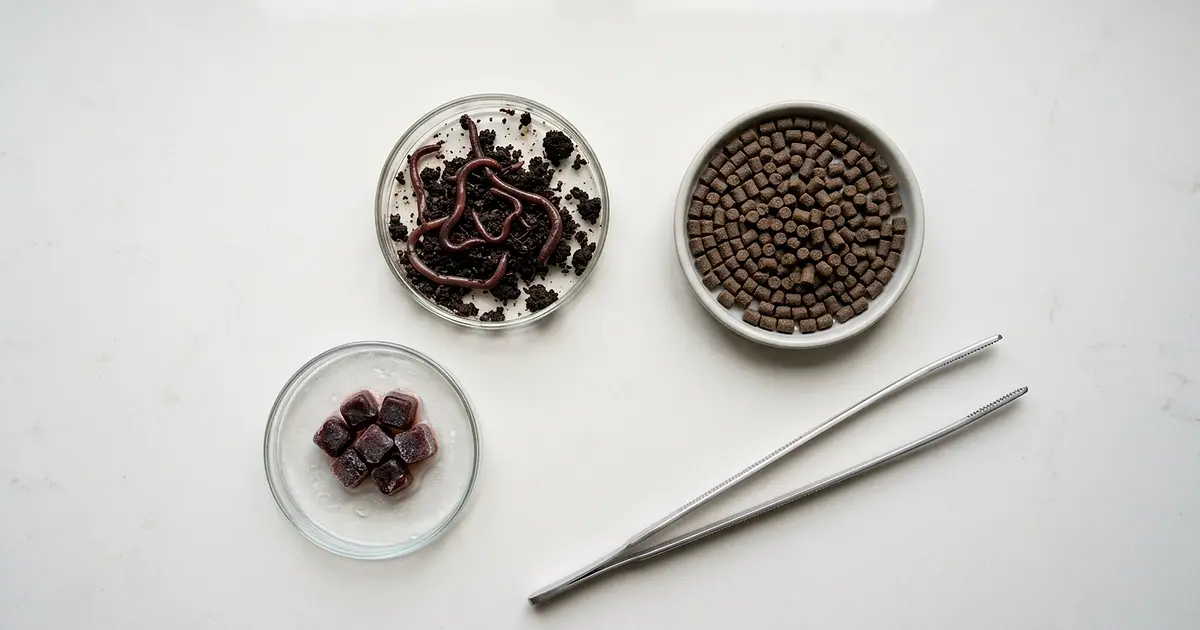
Axolotl Feeding Schedule: How Often & How Much
How often to feed your axolotl by age. Feeding charts for babies, juveniles, and adults. Signs of overfeeding and underfeeding explained.
Read more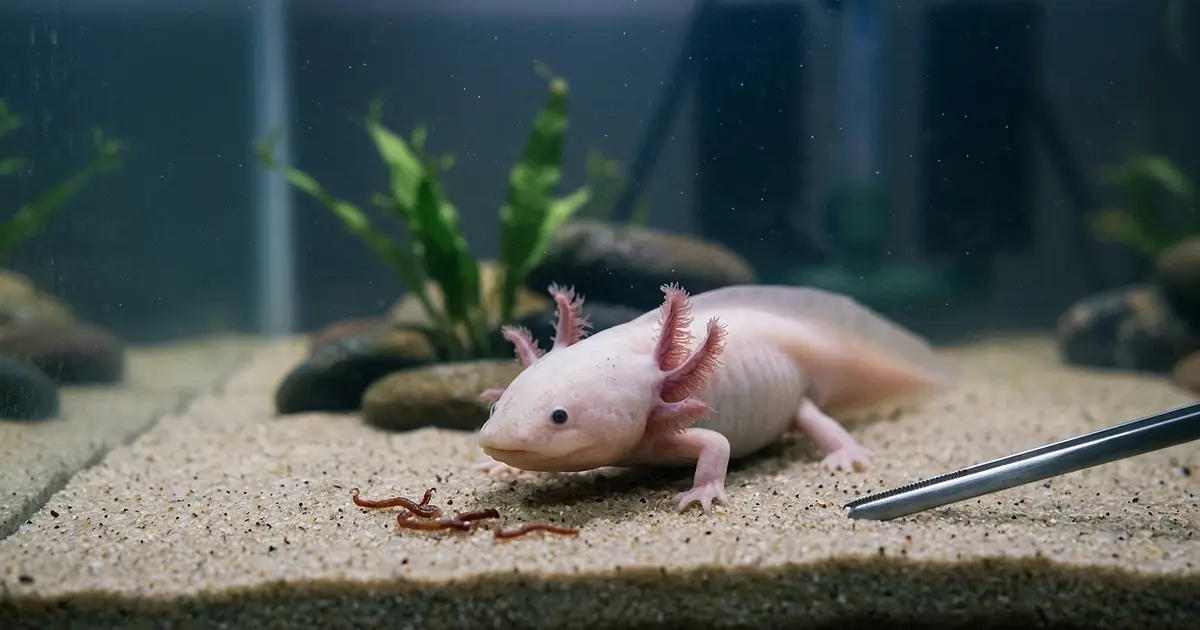
My Axolotl Won't Eat: Causes & Solutions
Why your axolotl refuses food and what to do about it. Common causes include water quality, temperature, stress, and illness. Step-by-step troubleshooting.
Read more