
Normal or Concerning?
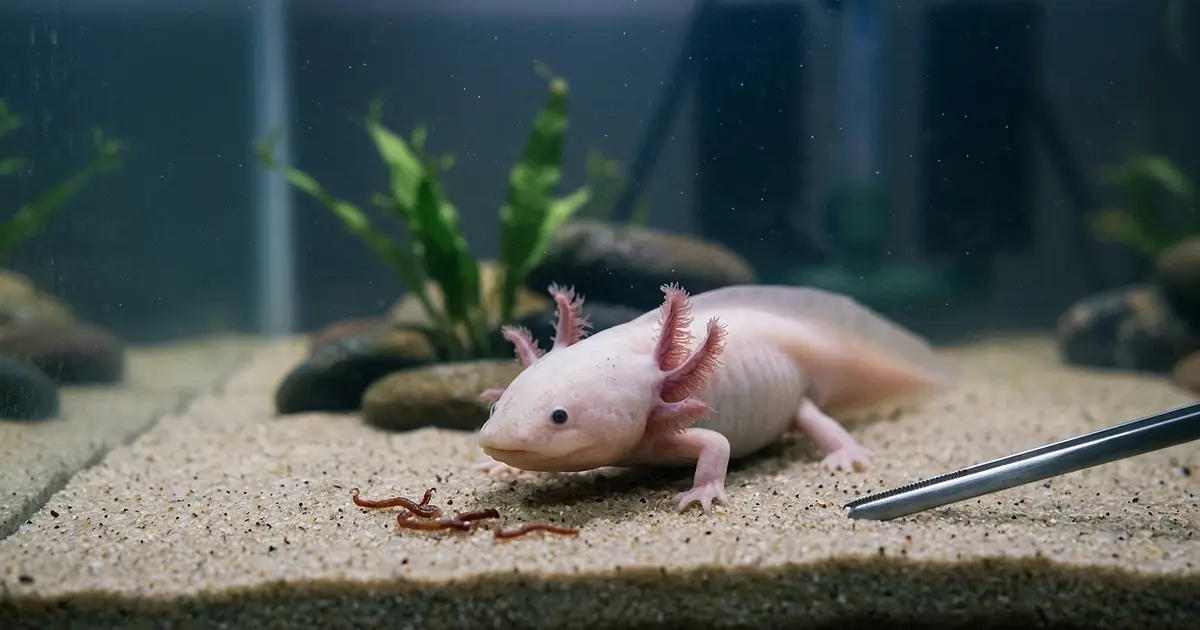
An axolotl refusing food is one of the most common concerns for owners. It can be completely normal or a sign of a problem. The key is identifying the cause and acting quickly when needed.
Most Common Causes
Water Temperature Too High (#1 Cause)
Axolotls lose their appetite when water exceeds 20°C and may stop eating entirely above 22°C. Check your thermometer and cool the water with proper methods. Appetite usually returns within 24-48 hours of cooling.
Poor Water Quality
High ammonia, nitrite, or nitrate levels suppress appetite and cause stress. Test your water immediately. If ammonia or nitrite is above 0, do a 50% water change. If nitrate is above 40 ppm, do a 30% water change.
New Environment Stress
Axolotls commonly refuse food for 3-7 days after being moved to a new tank. This is normal. Provide hides, keep lights dim, minimize disturbance, and try offering food every other day.
Impaction
If your axolotl swallowed gravel, sand, or an oversized food item, it may be physically unable to eat. Signs: bloating, no poop for several days, lethargy. Move to a bare-bottom container with cool clean water (16°C).
Illness
Fungal infections, bacterial infections, or parasites can suppress appetite. Signs: white patches, curled gills, lethargy, abnormal skin, floating. Identify the specific issue using our health guide.
Overfeeding
If you fed too much at the last meal, your axolotl may simply not be hungry yet. Skip 2-3 days and try again. Adult axolotls do not need food daily.
Troubleshooting Flowchart
🌡️Check temperature
Is it above 20°C? Cool the water immediately.
🧪Test water parameters
Check ammonia, nitrite, nitrate, and pH. Do a water change if any values are off.
🔍Check for visible illness
Look for fungus, lesions, or swelling. Treat accordingly.
🏠New to the tank?
If less than 1 week in a new home, wait and try again in 2 days.
🔄Try different food
Switch from pellets to earthworms or vice versa.
🌙Try feeding at night
Axolotls are most active at dusk and during the night.
When to Worry
Seek veterinary help if: food refusal lasts more than 2 weeks in an adult; food refusal is combined with visible symptoms (fungus, bloating, floating); a juvenile refuses food for more than 3-4 days (they need food more urgently); or there is visible weight loss (head wider than body). If multiple red flags are present, consult an exotic veterinarian experienced with amphibians.
Learn What to Feed Your Axolotl
Make sure you are offering the right foods in the right amounts.
Frequently Asked Questions
Frequently Asked Questions
How long can an axolotl go without eating?
Why does my axolotl spit out food?
Related Articles
Axolotl Feeding Schedule: How Often & How Much
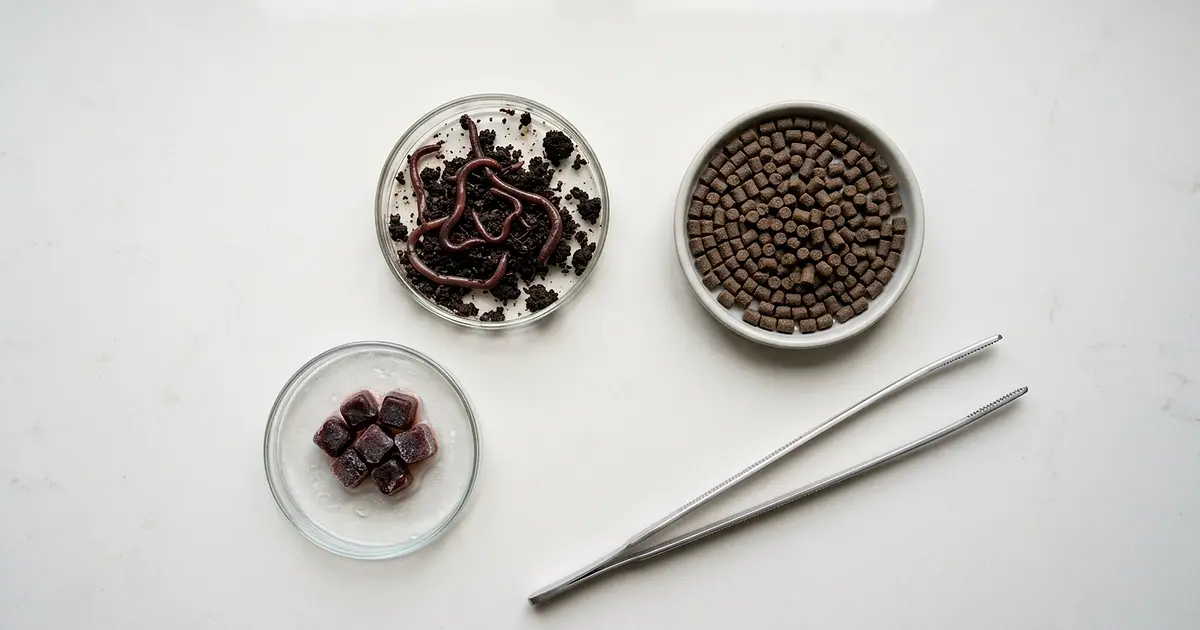
How often to feed your axolotl by age. Feeding charts for babies, juveniles, and adults. Signs of overfeeding and underfeeding explained.
Read more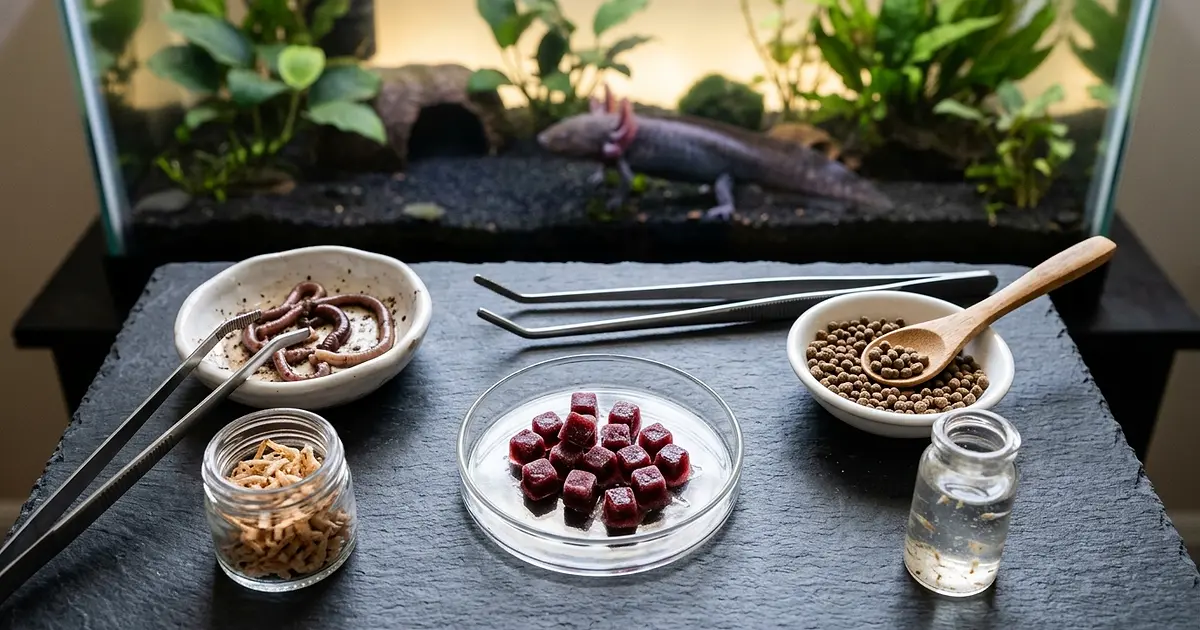
Best Axolotl Food: Pellets, Worms & Live Food Compared
Compare the best axolotl foods: earthworms, pellets, bloodworms, and live food. Nutritional value, pros, cons, and which to use as a staple diet.
Read more