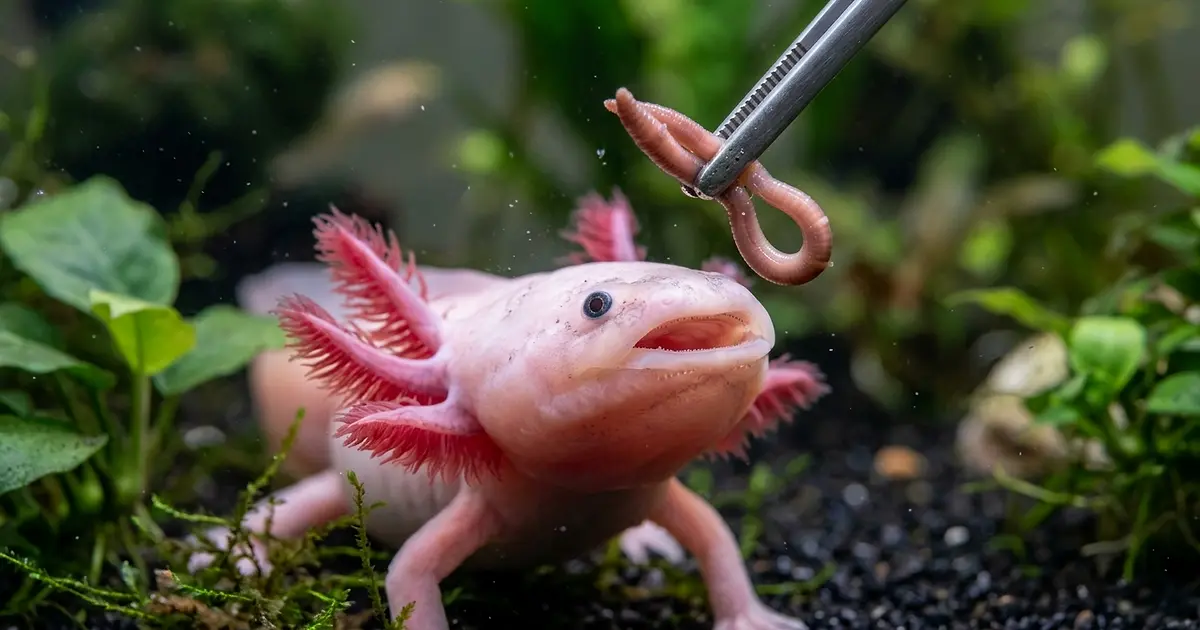
Axolotls are carnivorous animals that eat a protein-rich diet in the wild and in captivity. Understanding what, how much, and how often to feed your axolotl is essential for their health and longevity.
Axolotl Diet Overview
In the wild, axolotls eat small fish, worms, insect larvae, snails, and crustaceans. In captivity, their diet should mimic this with a focus on high-protein, easy-to-digest foods.
The golden rule: earthworms are the best staple food for axolotls of all ages.
Best Foods for Axolotls
Tier 1: Staple Foods (feed regularly)
- Earthworms / Nightcrawlers: the single best axolotl food. Nutritionally complete, cheap, and readily available. Cut into pieces for juveniles.
- Axolotl pellets: high-quality sinking pellets (Hikari, Rangen) are convenient and nutritionally balanced. Good for daily feeding.
Tier 2: Supplementary Foods (feed 1-2 times per week)
- Bloodworms (frozen): high in protein, loved by axolotls, but not nutritionally complete on their own
- Blackworms: excellent live food, highly nutritious
- Daphnia: good for baby and juvenile axolotls
- Brine shrimp: essential for newly hatched baby axolotls
Tier 3: Occasional Treats (once or twice a month)
- Lean raw shrimp (peeled, deshelled)
- Small pieces of lean fish (tilapia, salmon)
Foods to Avoid
- Mealworms: hard exoskeleton is difficult to digest
- Feeder fish: risk of parasites and disease transmission
- Processed human food: never feed bread, cheese, or cooked meat
- Waxworms: too high in fat for regular feeding
Feeding Schedule by Age
| Age | Food | Frequency | Amount |
|---|---|---|---|
| 0-2 months | Baby brine shrimp, daphnia | Twice daily | As much as they eat in 5 minutes |
| 2-6 months | Small earthworm pieces, bloodworms, small pellets | Daily | 2-3 small pieces |
| 6-12 months | Earthworms, pellets, bloodworms | Every other day | 1-2 earthworm pieces or 3-4 pellets |
| 12+ months (adult) | Earthworms, pellets | 2-3 times per week | 1-2 whole earthworms or 4-6 pellets |
How to Feed Your Axolotl
- Use feeding tongs or tweezers: hold the food in front of your axolotl’s face and wiggle it gently. They detect movement and will snap at it.
- Remove uneaten food: any food left after 15-20 minutes should be removed to prevent water quality issues.
- Feed in the evening: axolotls are most active at dusk and dawn.
- One axolotl at a time: if you have multiple axolotls, ensure each one gets their share. They may accidentally bite each other’s limbs during feeding.
Signs of Proper Nutrition
A well-fed axolotl has:
- A body slightly wider than the head
- Full, fluffy gills with good blood flow
- Active behavior and regular appetite
- Smooth, healthy skin
An underfed axolotl will have a head wider than its body, thin limbs, and shrunken gills. An overfed axolotl may float, appear bloated, or regurgitate food.
Best Food Options
Earthworms
Nightcrawlers, red wigglers
Best staple food
#1 ChoiceAxolotl Pellets
Hikari, Rangen
Good daily staple
ConvenientBloodworms
Frozen, not freeze-dried
Treat only, low nutrition
TreatBlackworms
Live, high protein
Great for juveniles
Brine Shrimp
Baby brine for larvae
Hatchlings only
BabiesDaphnia
Live or frozen
Good for juveniles
How Often to Feed
Hatchlings
0-2 cm
Daily, tiny live food
DailyJuveniles
2-15 cm
Daily, small worms/pellets
DailyAdults
15+ cm
Every 2-3 days
2-3 daysArticles in This Section
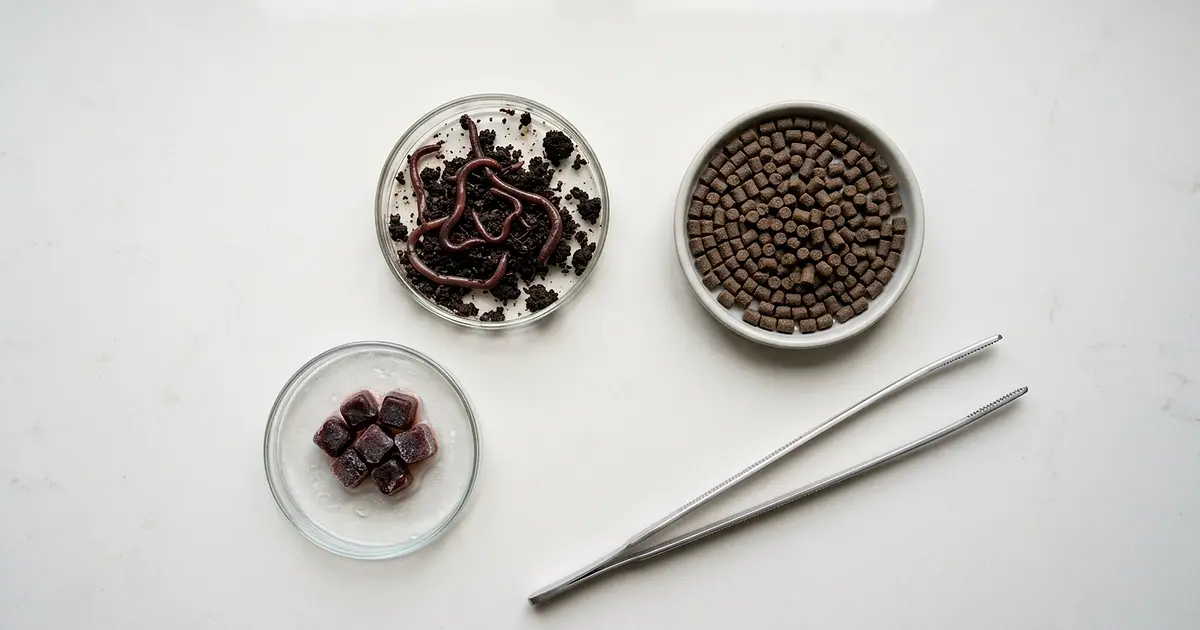
Axolotl Feeding Schedule: How Often & How Much
How often to feed your axolotl by age. Feeding charts for babies, juveniles, and adults. Signs of overfeeding and underfeeding explained.
Read more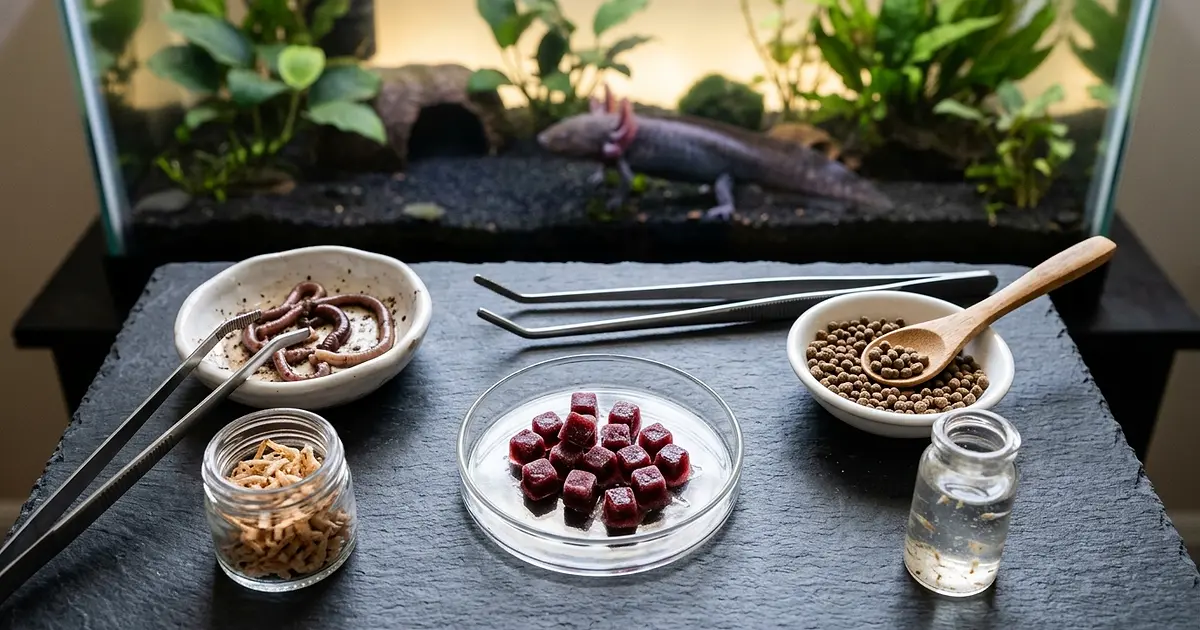
Best Axolotl Food: Pellets, Worms & Live Food Compared
Compare the best axolotl foods: earthworms, pellets, bloodworms, and live food. Nutritional value, pros, cons, and which to use as a staple diet.
Read more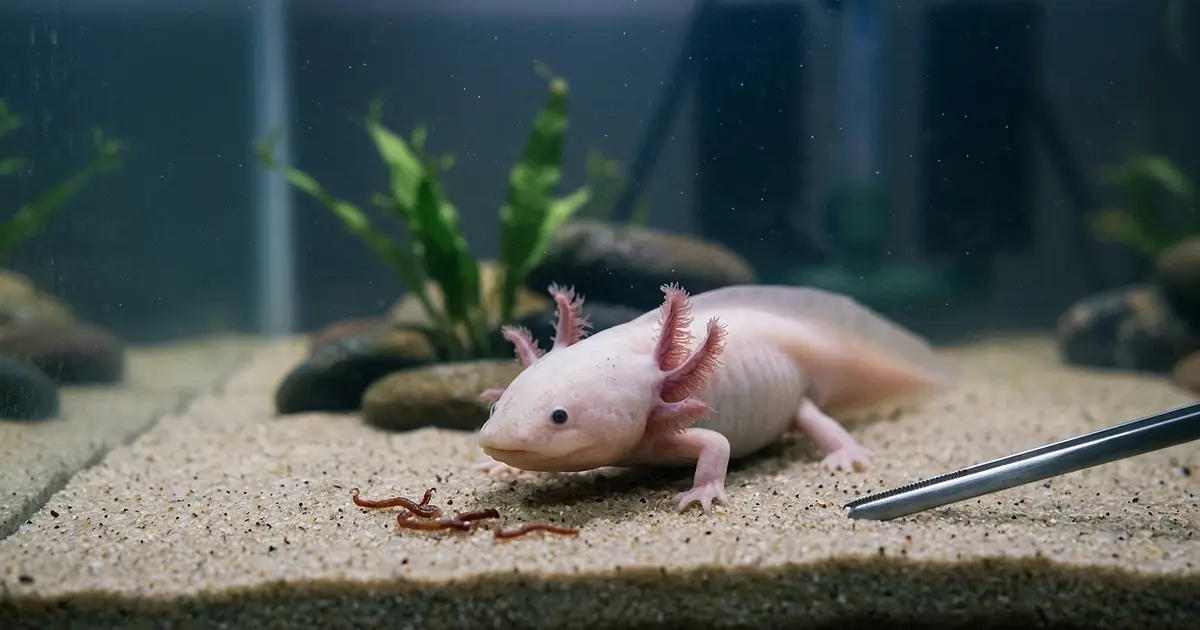
My Axolotl Won't Eat: Causes & Solutions
Why your axolotl refuses food and what to do about it. Common causes include water quality, temperature, stress, and illness. Step-by-step troubleshooting.
Read moreGet a Meal Plan
Personalized weekly feeding schedule by age