Rewarding but Demanding
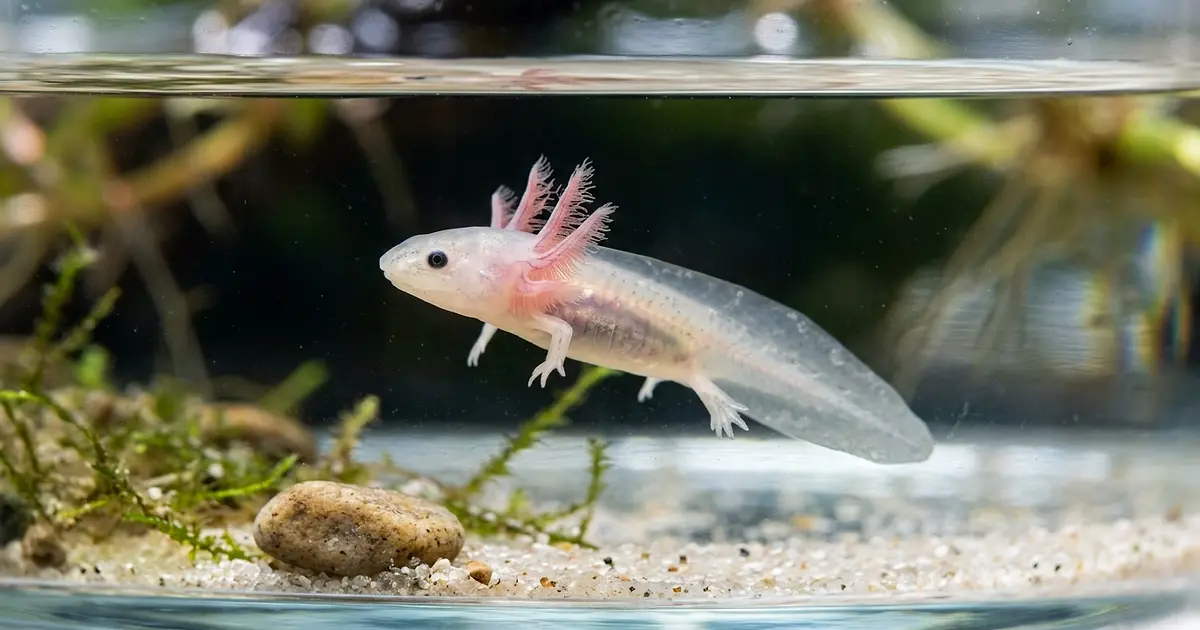
Raising baby axolotls (larvae) is one of the most rewarding but demanding aspects of axolotl keeping. The first few months require daily attention, specific food sources, and careful management.
Newly hatched axolotls are tiny, about 1 cm (0.4 inches) long. For the first 24-48 hours, they absorb their yolk sac and do not need any food. Keep them in clean, cool water (16-18°C) with no water flow, and do not disturb them.
Feeding Stages
🦐Week 1-4: Live baby brine shrimp
Newly hatched artemia nauplii are the ideal first food. They are small enough for tiny mouths, live and moving (triggers feeding response), and nutritious. Hatch brine shrimp daily. Feed 2 times per day. Alternative: live daphnia (water fleas).
🪱Month 2-3: Transition food
At about 2 cm, babies can start eating chopped frozen bloodworms (thawed), micro pellets (crushed into small pieces), and small blackworms. Offer food daily, once or twice.
🐛Month 4-6: Juvenile diet
At 5-8 cm, juveniles can eat small earthworm pieces, regular-sized pellets, and whole bloodworms. Feed daily until 6 months, then transition to the adult feeding schedule.
Housing Baby Axolotls
Cannibalism Is the #1 Risk
Baby axolotls are cannibalistic by instinct. They snap at anything that moves near their mouth, including siblings' limbs and gills. Size differences as small as 1-2 cm can result in larger babies biting smaller ones. While axolotls can regenerate, repeated injury is stressful and can be fatal for very young larvae. Solution: separate by size groups, feed frequently, and provide visual barriers between individuals.
Growth Milestones
| Week | Size | Key Milestone |
|---|---|---|
| 0 | 1 cm | Hatching, yolk absorption |
| 1 | 1.2 cm | First feeding (brine shrimp) |
| 2 | 1.5-2 cm | Front legs begin developing |
| 4 | 2-3 cm | All four legs visible |
| 6 | 3-4 cm | Can eat bloodworms |
| 8 | 4-5 cm | Can be grouped by size |
| 12 | 6-8 cm | Can eat small earthworm pieces |
| 16 | 8-12 cm | Approaching juvenile stage |
| 24 | 12-17 cm | Transition to adult feeding schedule |
0
Size : 1 cm
Key Milestone : Hatching, yolk absorption
1
Size : 1.2 cm
Key Milestone : First feeding (brine shrimp)
2
Size : 1.5-2 cm
Key Milestone : Front legs begin developing
4
Size : 2-3 cm
Key Milestone : All four legs visible
6
Size : 3-4 cm
Key Milestone : Can eat bloodworms
8
Size : 4-5 cm
Key Milestone : Can be grouped by size
12
Size : 6-8 cm
Key Milestone : Can eat small earthworm pieces
16
Size : 8-12 cm
Key Milestone : Approaching juvenile stage
24
Size : 12-17 cm
Key Milestone : Transition to adult feeding schedule
Common Problems and Solutions
Cannibalism
Separate by size groups, feed frequently, and provide visual barriers between individuals.
Curled gills
Usually caused by poor water quality in small containers. Increase water change frequency. Ensure water is dechlorinated and temperature-matched.
Refusal to eat
Water may be too warm, brine shrimp may not be fresh enough, or the baby just absorbed its yolk sac. Ensure 16-18°C water, hatch fresh brine shrimp, wait 48 hours after hatching.
Planning for Hundreds of Babies
A single breeding event can produce 200-600 viable eggs. You need to plan for: space (dozens of individual containers or several grow-out tanks), brine shrimp (daily hatching for weeks), time (daily water changes and feeding for 2-3 months minimum), and rehoming (start finding homes early, post on axolotl forums when babies reach 5-8 cm).
Need the adult feeding guide?
Learn what to feed your axolotl once it reaches adult size, including the best foods and a weekly rotation.
Frequently Asked Questions
Frequently Asked Questions
What do baby axolotls eat?
Do baby axolotls need a filter?
Why do baby axolotls eat each other?
Related Articles
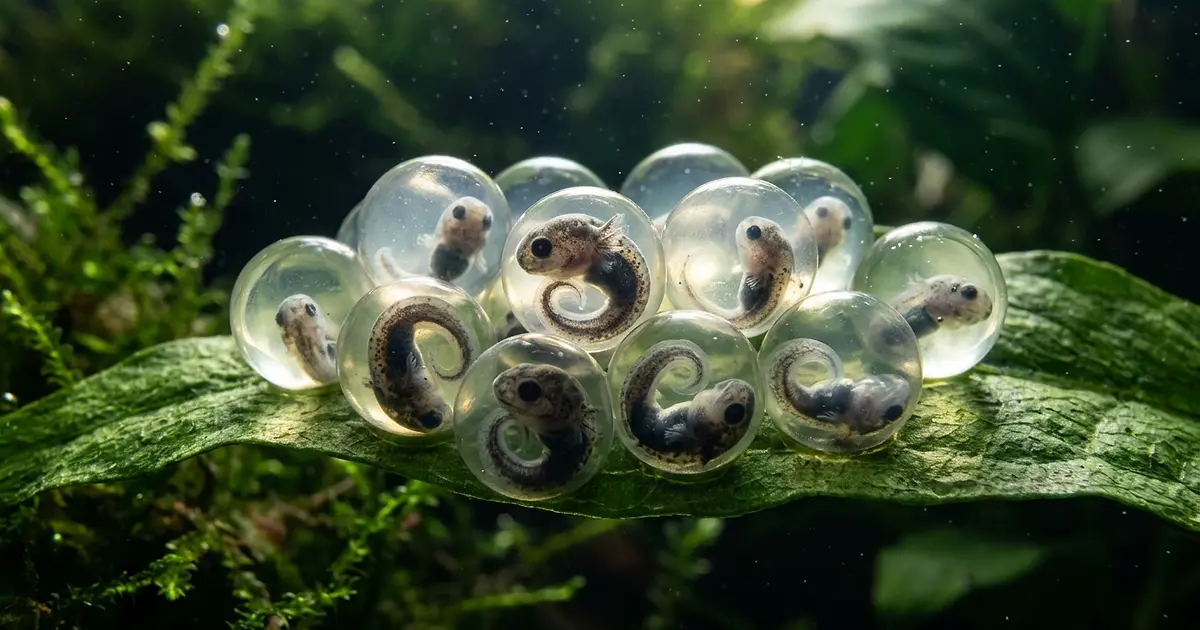
Axolotl Eggs: What to Expect & How to Care for Them
Your axolotl laid eggs? Step-by-step guide to egg care: identifying fertile vs infertile, water conditions, timeline to hatching, and what to do next.
Read more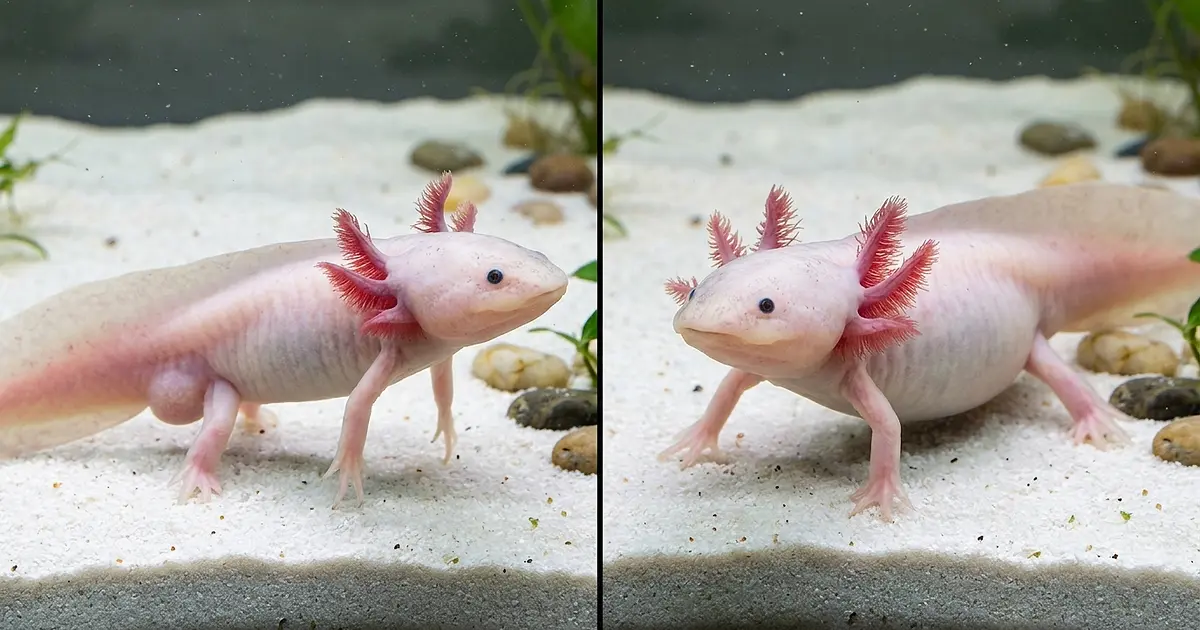
Male vs Female Axolotl: How to Tell the Difference
How to sex your axolotl: cloaca shape, body differences, and the minimum age for reliable identification. Visual comparison guide.
Read more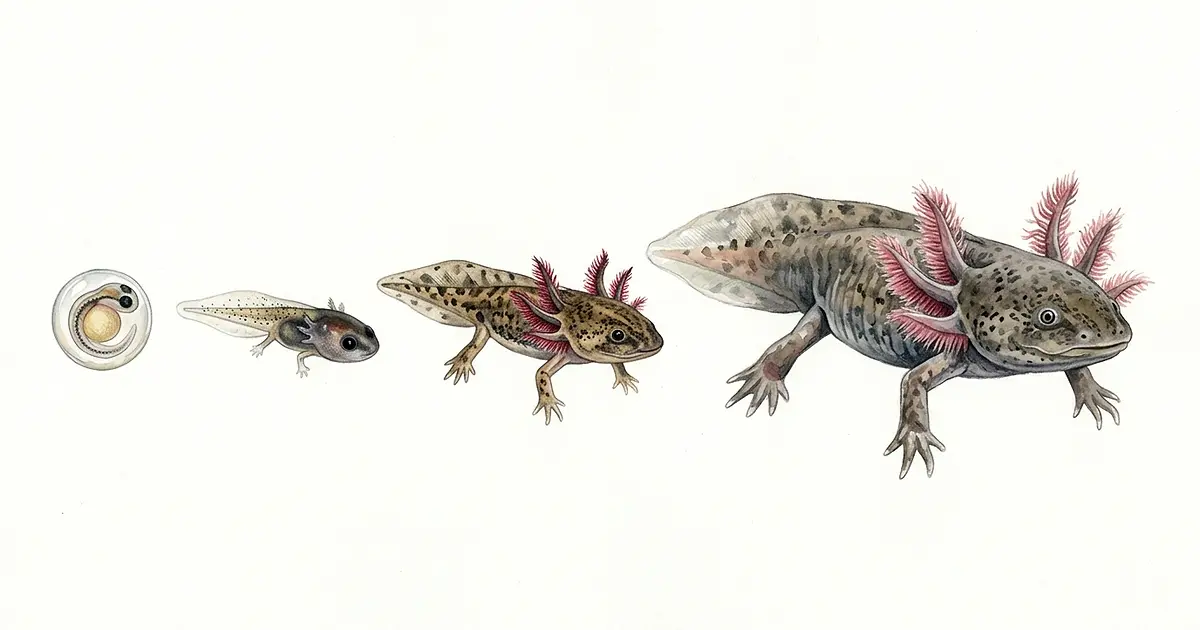
Axolotl Life Cycle: From Egg to Adult
Follow the axolotl life cycle stage by stage: egg, larva, juvenile, sub-adult, and adult. Growth timeline, milestones, and what to expect at each phase.
Read more