An axolotl's age appears on no sales document, and the animal has no scales or growth rings to count. To find out how old an axolotl is, the only reliable method is to cross-check its size, the state of its legs and its signs of sexual maturity, then place the animal in a growth stage rather than pinning it down to the month. Here is how to proceed, what a ruler is worth, and what a 10 cm axolotl really tells you about its age.
Why size alone doesn't tell you an axolotl's age
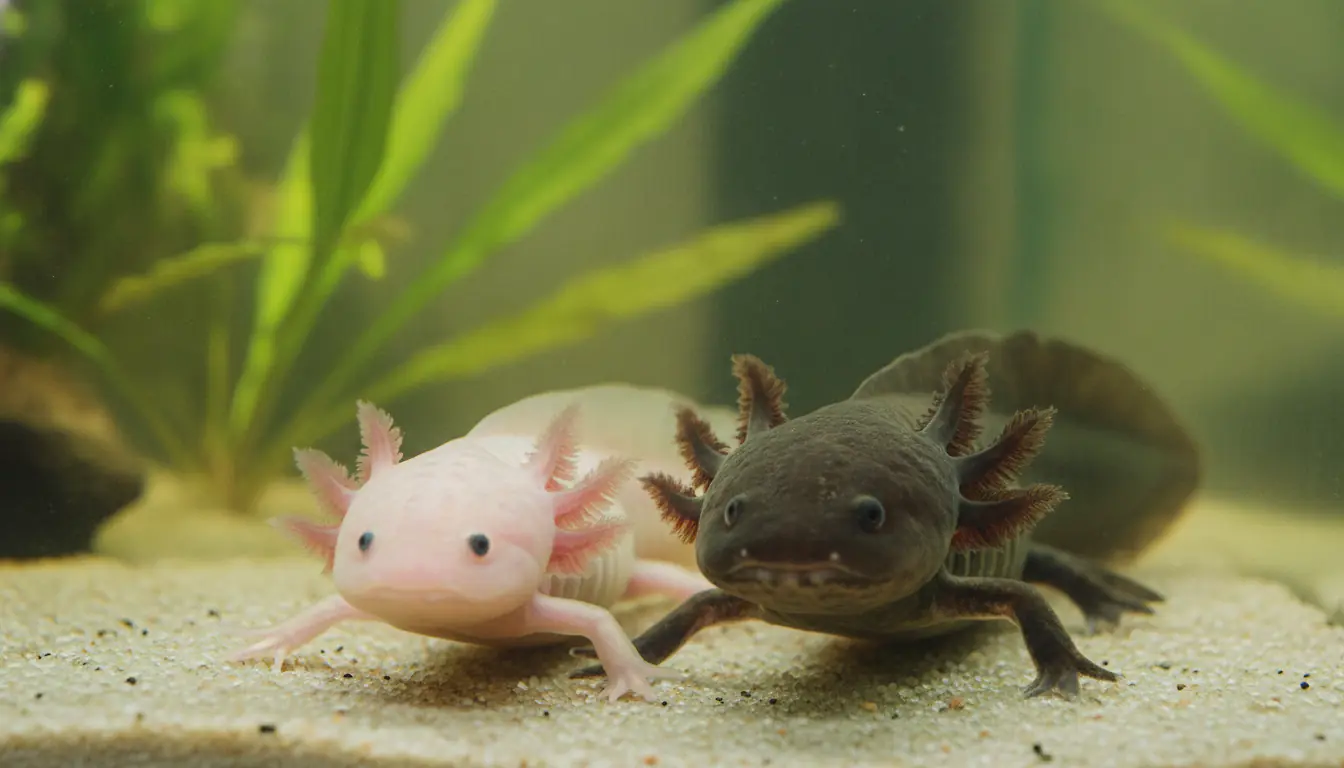
Two axolotls from the same clutch can end up very different sizes at the same age. The axolotl is a cold-blooded animal: its growth follows water temperature, the amount of food and the space available far more than a fixed calendar.
Measurement remains one clue among others: an animal far from adult size is necessarily young, but a large animal can be three years old or ten.
Water temperature
Cool water slows metabolism, and therefore growth. An axolotl kept in water that meets the recommended water parameters grows at a steady pace, whereas a tank that is too cold produces a smaller animal at the same age.
Feeding and density
Irregular or inadequate meals slow growth. In an overcrowded tank, the biggest animals eat more and the smallest fall behind.
Bloodline genetics
The parents' build influences final size, which skews any comparison between two animals from different bloodlines.
The 5 reference growth stages
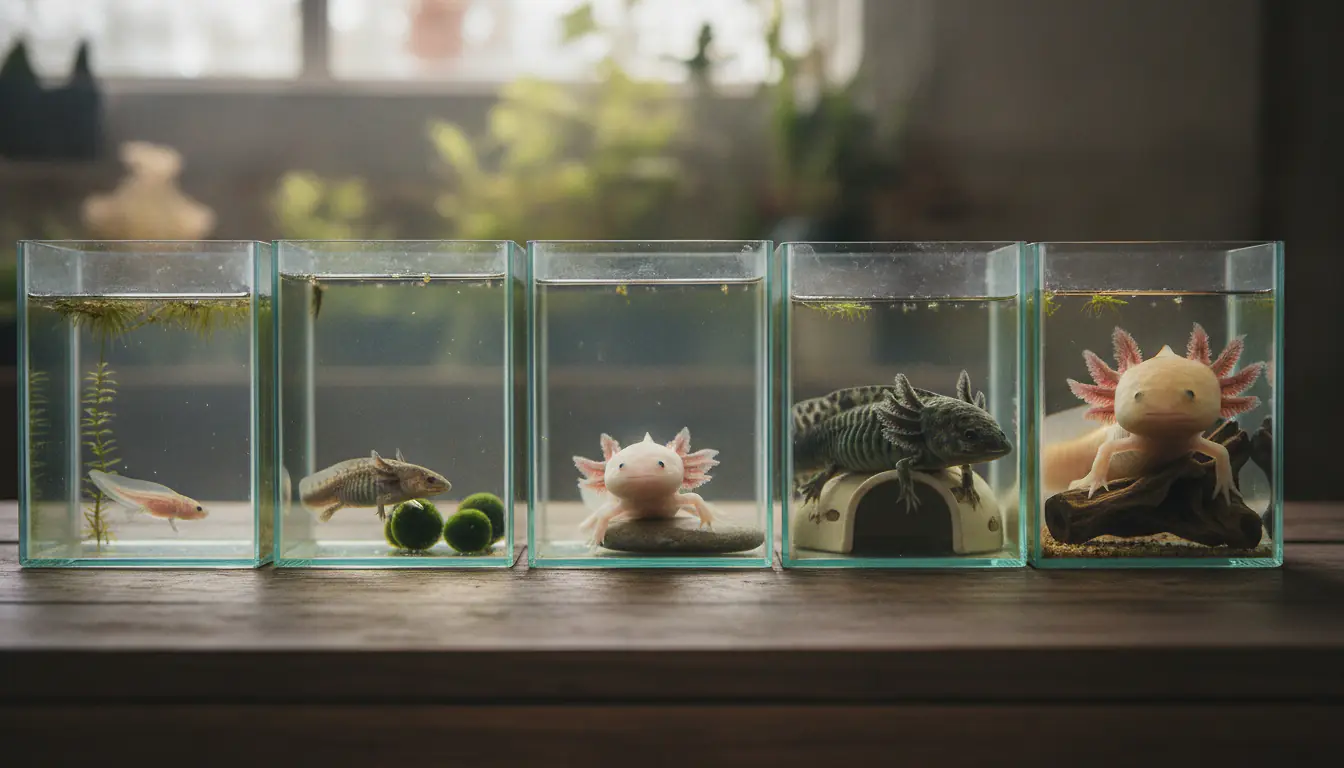
This table places your axolotl in a developmental stage based on what you see in the tank. Only hatching and adulthood have numerical benchmarks: between the two, the move from one stage to the next depends mostly on rearing conditions.
| Stage | What you observe | What it indicates |
|---|---|---|
| Larva without legs | Thin, translucent body, visible gills, no legs | Recent hatching, which occurs 10 to 14 days after egg laying according to the Animal Diversity Web, very fragile animal |
| Larva with front legs | Two front legs formed, hind legs absent | Intermediate larval stage, live food needed |
| Larva with four legs | Hind legs have appeared, miniature adult silhouette | End of the larval stage, rapid growth |
| Juvenile | Four complete legs, size well under 30 cm, sex not readable | Young animal, most often less than a year old |
| Adult | Swollen cloaca in the male or wider body in the female, slowed growth | Sexual maturity reached, generally around 1 year or more |
Larva without legs
What you observe : Thin, translucent body, visible gills, no legs
What it indicates : Recent hatching, which occurs 10 to 14 days after egg laying according to the Animal Diversity Web, very fragile animal
Larva with front legs
What you observe : Two front legs formed, hind legs absent
What it indicates : Intermediate larval stage, live food needed
Larva with four legs
What you observe : Hind legs have appeared, miniature adult silhouette
What it indicates : End of the larval stage, rapid growth
Juvenile
What you observe : Four complete legs, size well under 30 cm, sex not readable
What it indicates : Young animal, most often less than a year old
Adult
What you observe : Swollen cloaca in the male or wider body in the female, slowed growth
What it indicates : Sexual maturity reached, generally around 1 year or more
The three larval stages fall under baby axolotl care, with frequent meals and spotless water. Beyond the adult stage, no reliable external sign can tell a three-year-old animal from an eight-year-old one.
How to tell an axolotl's age: the 5-step method
Follow the steps in order: each one refines the previous one.
Ask the seller for the egg-laying date. A reputable breeder records clutch dates: it is the only exact piece of data possible, and it beats any estimate.
Measure the animal from snout to tail tip. Photograph it in a transfer container placed on a ruler, without taking it out of the water, then compare with the adult size of 30 cm.
Count the legs. Missing or barely formed legs mean a larva; four complete legs place the animal at the juvenile stage or beyond.
Observe the cloaca and the silhouette. A clearly swollen cloaca behind the hind legs indicates a mature male; a wider belly seen from above suggests an adult female.
Note the growth rate. Measure again a few weeks later: an animal that is still growing fast remains young, while an animal whose size has stalled is probably an adult.
A readable sex, a minimum age
The signs of axolotl sexual maturity appear around 1 year according to the Natural History Museum and the Animal Diversity Web. They therefore indicate an animal of at least about one year old, and say nothing about the years that have passed since. Cooler water or poor feeding can delay their appearance by several months.
How old is a 10 cm axolotl?
A 10 cm axolotl is a third of the maximum size of 30 cm: it is a juvenile, not an adult. Its four legs have been formed for a while, but most often its sex is not yet readable.
Without a visible sexual sign, it has probably not reached the benchmark age given in the box above: in most cases, it is a juvenile under one year old.
What this juvenile needs from you
At this stage, growth is still fast: keep a close eye on meals and water quality. The curve of adult axolotl size then serves as a benchmark to check that the animal is progressing steadily across measurements.
Lifespan: how many years ahead with your axolotl?
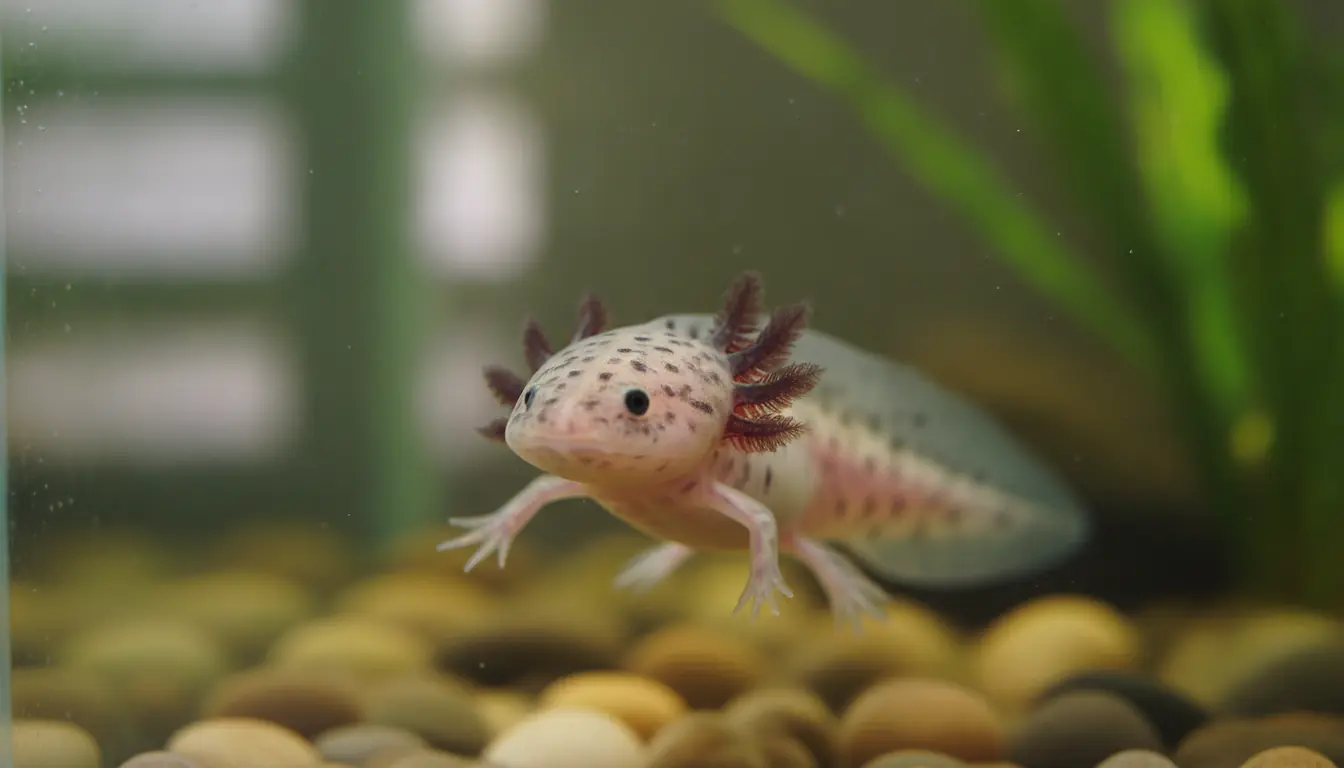
The Natural History Museum in London puts the axolotl's lifespan in the wild at 10 to 15 years, for an adult size of up to 30 cm and a weight of 50 to 200 g.
In captivity, the University of Michigan's Animal Diversity Web entry gives an average longevity of 5 to 6 years in the lab, while well-kept individuals reach 10 to 15 years. The gap comes mostly down to husbandry conditions: cold, clean water, suitable feeding and absence of stress. An adult bought from a store can therefore have many years ahead of it.
No verified record
No record age for an axolotl is documented by a scientific institution or a zoo. On the species' longevity, the Ambystoma Genetic Stock Center at the University of Kentucky, which breeds axolotls for research, remains the most qualified authority.
Keep exploring
Axolotl care essentials: tank setup, feeding schedule, water parameters, health monitoring, and daily maintenance routines for beginners and experienced keepers.
Frequently Asked Questions
Is an axolotl that stops growing necessarily an adult?
Is sex as easy to read in males as in females?
Can you know an axolotl's exact age?
Related Articles
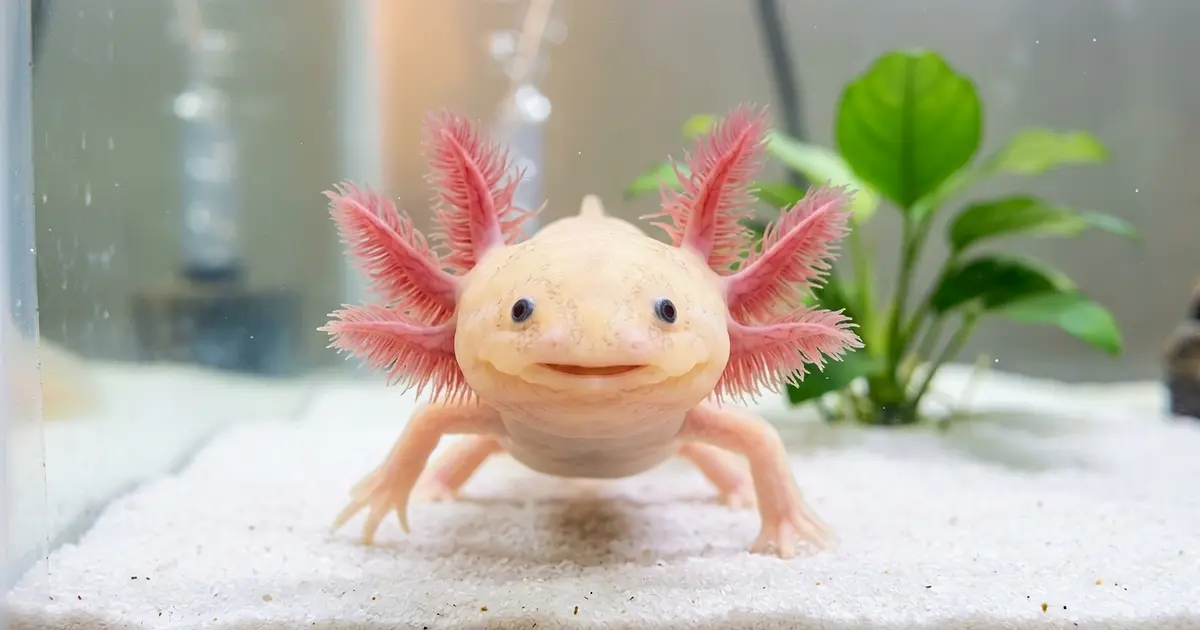
What Is an Axolotl? Facts, Origin & Why They're Special
The axolotl (Ambystoma mexicanum) is a fully aquatic neotenic salamander from Mexico. Species classification, anatomy, cultural significance, and basic facts.
Read more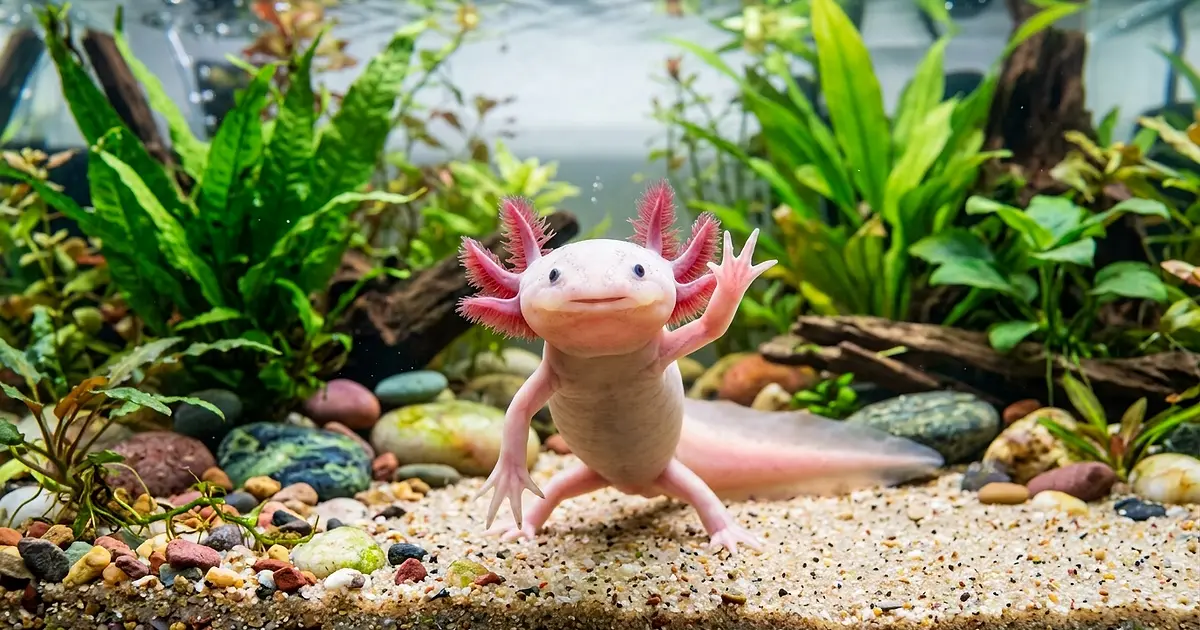
Axolotl Facts: Biology, Habitat & Abilities
Key axolotl facts covering biology, regeneration, Aztec origins, diet, conservation status, and what makes these aquatic salamanders unique among amphibians.
Read more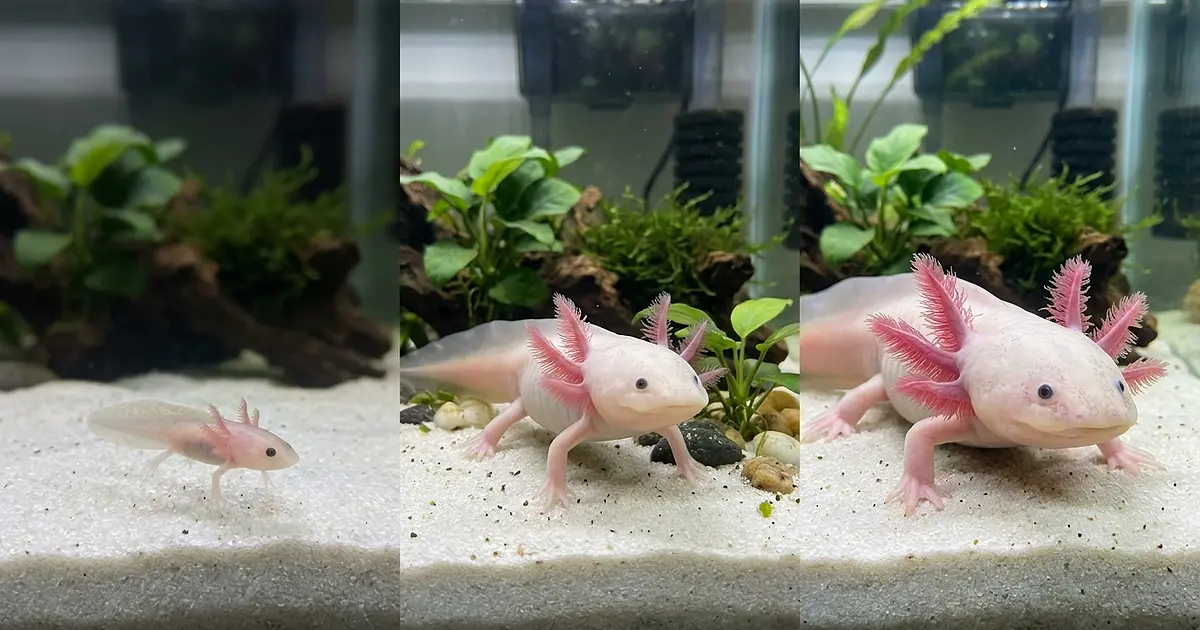
How Long Do Axolotls Live? Lifespan Guide
Axolotl lifespan in captivity averages 10-15 years. Learn what affects their longevity and how to maximize your axolotl's life expectancy.
Read more