Substrate Is a Safety Issue
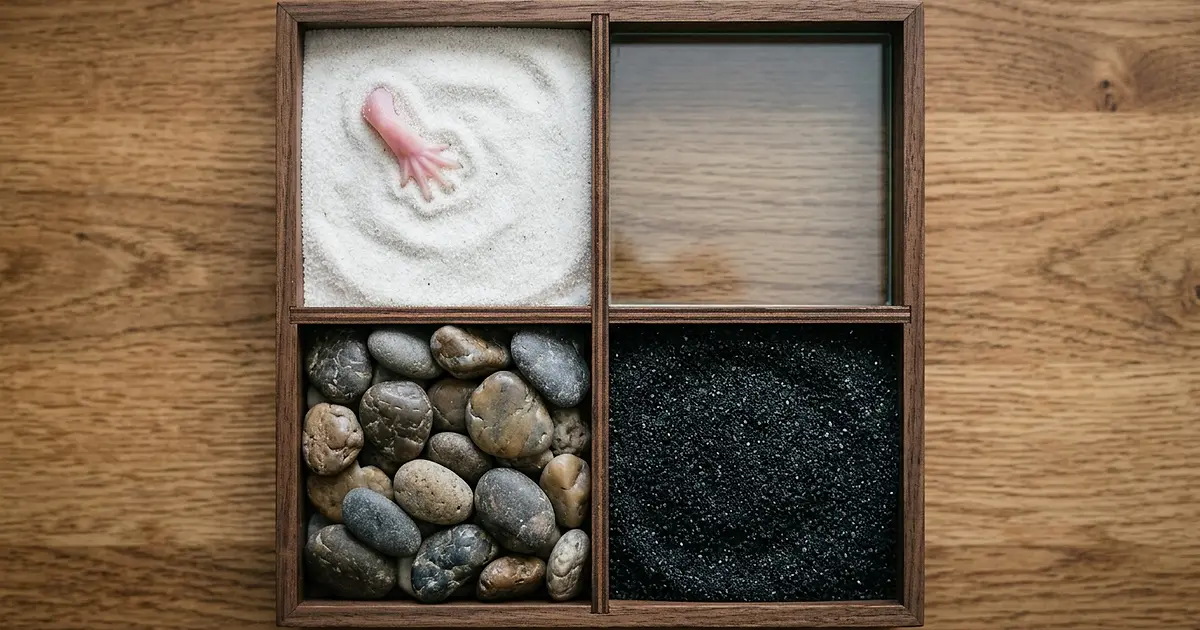
Substrate choice is a safety issue for axolotls, not just an aesthetic one. The wrong substrate can cause a life-threatening condition called impaction.
Substrate Options Compared
| Substrate | Safe? | Pros | Cons |
|---|---|---|---|
| Bare bottom | Safest | Easy to clean, zero impaction risk | Less natural look, less grip |
| Fine sand (< 1mm) | Safe | Natural look, passes through safely | Harder to clean, can trap waste |
| Large river rocks | Safe (if too big to eat) | Natural, good for beneficial bacteria | Traps food and waste underneath |
| Gravel | DANGEROUS | None for axolotls | Causes fatal impaction |
| Plant/soil substrate | DANGEROUS | None | Toxic, impossible to clean |
| Crushed coral | Not recommended | N/A | Raises pH too high, sharp edges |
Bare bottom
Safe? : Safest
Pros : Easy to clean, zero impaction risk
Cons : Less natural look, less grip
Fine sand (< 1mm)
Safe? : Safe
Pros : Natural look, passes through safely
Cons : Harder to clean, can trap waste
Large river rocks
Safe? : Safe (if too big to eat)
Pros : Natural, good for beneficial bacteria
Cons : Traps food and waste underneath
Gravel
Safe? : DANGEROUS
Pros : None for axolotls
Cons : Causes fatal impaction
Plant/soil substrate
Safe? : DANGEROUS
Pros : None
Cons : Toxic, impossible to clean
Crushed coral
Safe? : Not recommended
Pros : N/A
Cons : Raises pH too high, sharp edges
Why Gravel Is Dangerous
Axolotls feed by suction: they open their mouth rapidly, creating a vacuum that pulls food (and anything nearby) in. When the substrate is gravel-sized (2-10mm), they swallow stones along with their food. Swallowed gravel accumulates in the digestive tract, causing impaction: a blockage that prevents eating and defecation. If untreated, impaction is fatal. This is not a minor risk. It is one of the most common causes of axolotl death in captivity.
Fine Sand: The Popular Choice
Fine sand (grain size under 1mm) is safe because grains are too small to cause blockage, sand passes through the digestive tract if ingested, it provides a natural appearance, and axolotls can grip and walk on it comfortably.
Recommended Sand Types
Always Rinse Sand
Always rinse sand thoroughly before adding to the tank to remove dust. Rinse in a bucket with running water until the water runs clear.
Bare Bottom: The Safest Choice
Many experienced keepers, especially breeders, prefer bare-bottom tanks. Zero impaction risk, easiest to clean (waste is visible and easy to siphon), best for hospital/quarantine tanks, and simplifies water quality management. The trade-off is purely aesthetic. Axolotls do perfectly fine on glass bottom.
How to Clean Substrate
Cleaning Sand
Use a gravel vacuum held just above the surface. Gently swirl the sand to release trapped waste, then siphon the debris. Do not plunge the vacuum deep into the sand.
Cleaning Bare Bottom
Simply siphon visible waste directly. The easiest substrate to maintain. All debris is visible and accessible.
Complete Your Tank Setup
Substrate is just one piece of the puzzle. Get the full setup guide.
Frequently Asked Questions
Frequently Asked Questions
Can axolotls live on bare bottom?
What sand is safe for axolotls?
Related Articles
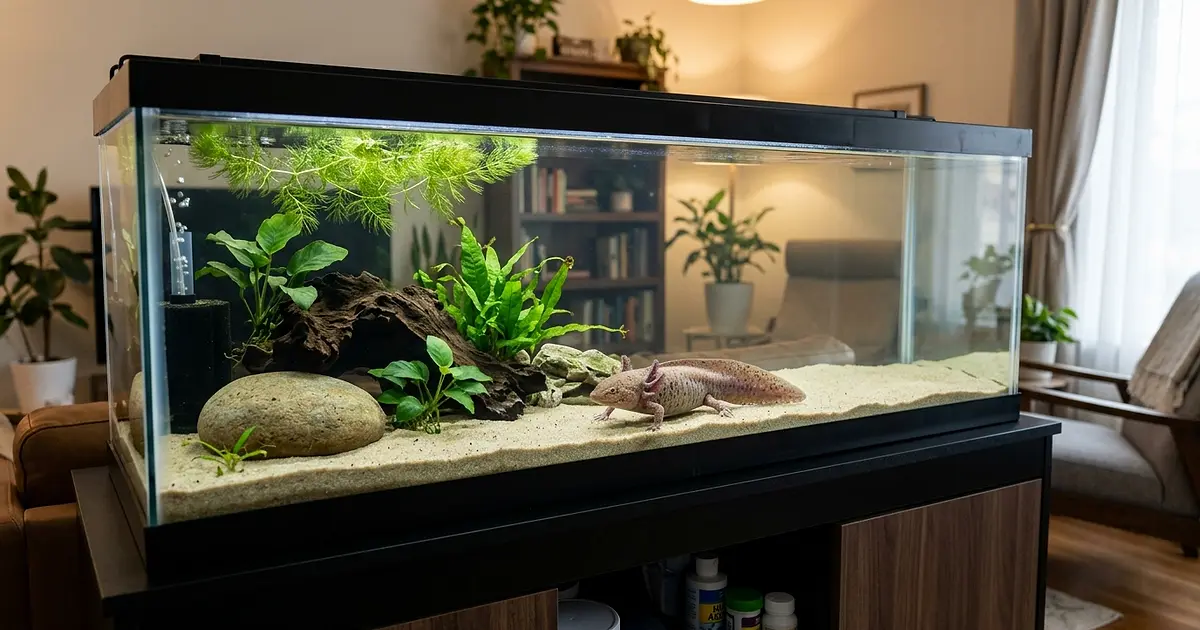
What Size Tank Does an Axolotl Need?
Minimum tank size for axolotls is 20 gallons (75L) for one. Learn the ideal dimensions, why bigger is better, and how to choose the right tank.
Read more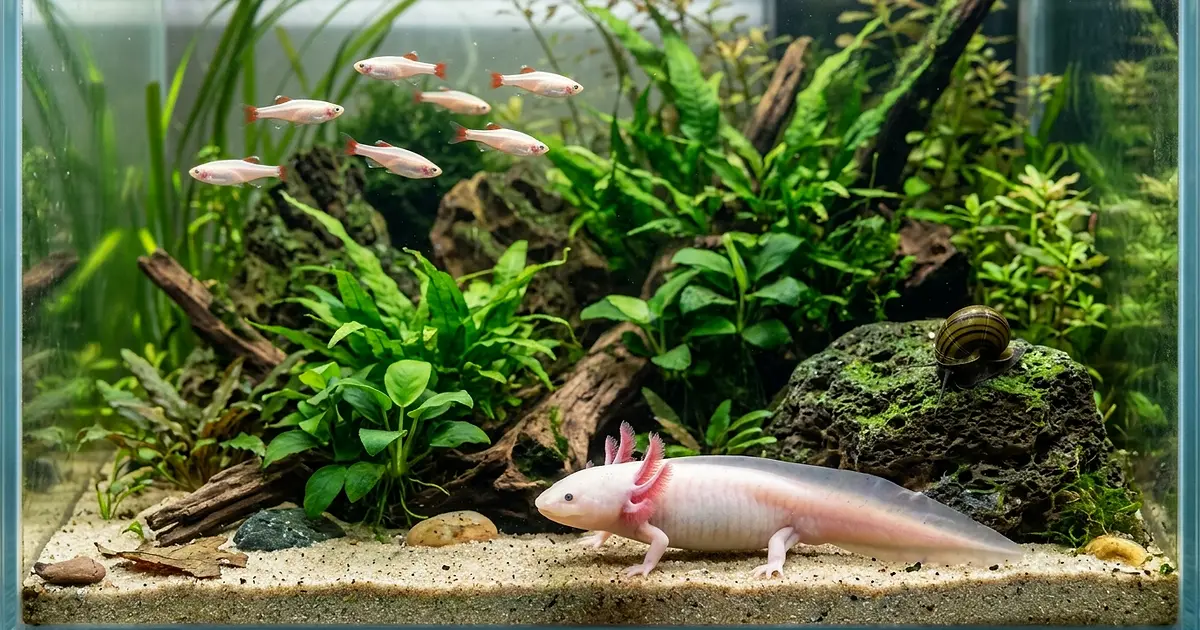
Axolotl Tank Mates: What Can Live With Axolotls?
Can axolotls live with fish? Learn which tank mates are safe, which to avoid, and why most axolotls are best kept with their own kind.
Read more
Best Plants for Axolotl Tanks
Top aquatic plants safe for axolotl tanks: java fern, anubias, java moss, and more. Low-light, axolotl-proof plants that improve water quality.
Read more