
Never Skip This Step
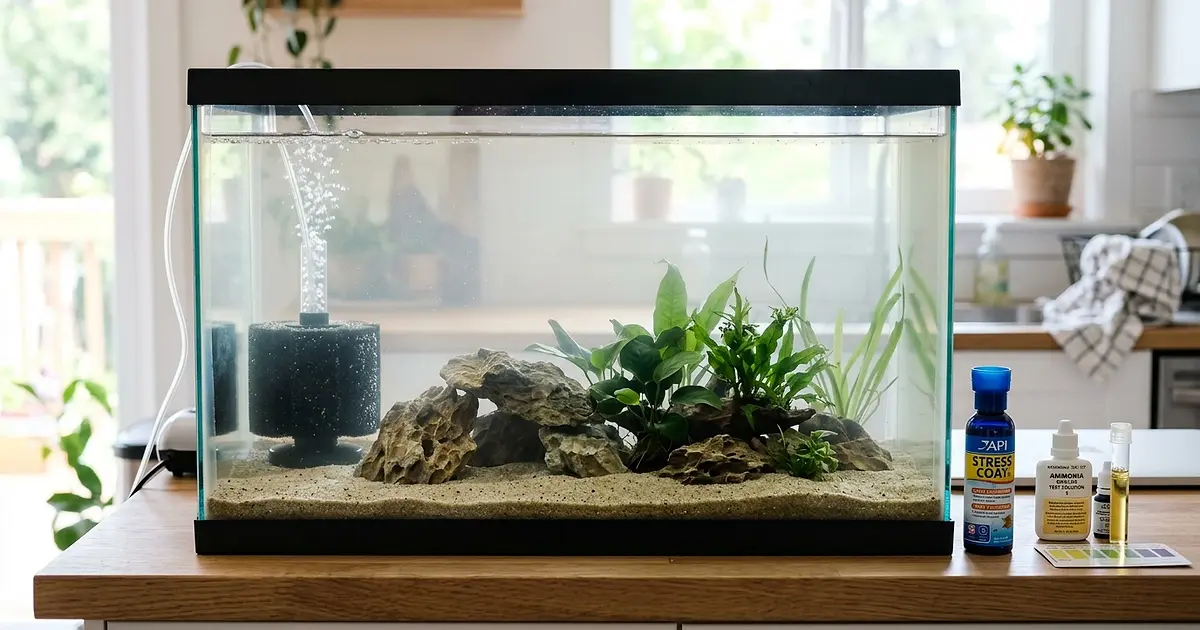
Cycling is the most important step in setting up an axolotl tank. It establishes the colonies of beneficial bacteria that convert toxic waste into safer compounds. An uncycled tank will have ammonia and nitrite spikes that can severely harm or kill your axolotl.
The Nitrogen Cycle Explained
💩Stage 1: Ammonia
Axolotl waste produces ammonia (NH3), which is highly toxic to aquatic life even in small amounts.
🦠Stage 2: Nitrite
Nitrosomonas bacteria convert ammonia into nitrite (NO2), which is also toxic but less so than ammonia.
✅Stage 3: Nitrate
Nitrobacter bacteria convert nitrite into nitrate (NO3), which is only mildly toxic and removed by regular water changes.
What You Need
Step-by-Step Fishless Cycling
2️⃣Week 2-3: Ammonia Processing Begins
Test daily for ammonia, nitrite, and nitrate. When ammonia drops below 1 ppm, redose back to 2-4 ppm. Nitrite will start appearing as bacteria grow. Nitrite may spike very high (40+ ppm), this is normal.
3️⃣Week 3-5: Nitrite Processing Develops
Ammonia should process quickly now (drops to 0 within 24 hours). Keep redosing ammonia when it hits 0. Nitrite will remain high then start dropping. Nitrate will appear and climb.
4️⃣Week 4-6: Cycle Complete
The cycle is complete when ammonia drops from 2-4 ppm to 0 ppm within 24 hours, nitrite drops to 0 ppm within 24 hours, and nitrate is present (usually 10-40 ppm).
5️⃣Final Step: Water Change
Do an 80-90% water change to reset nitrate levels. Then add your axolotl.
Timeline Overview
| Week | What Happens | Ammonia | Nitrite | Nitrate |
|---|---|---|---|---|
| 1 | Dosing, bacteria colonizing | High | 0 | 0 |
| 2-3 | Ammonia bacteria established | Dropping | Rising | Trace |
| 3-5 | Nitrite bacteria developing | 0 within 24h | High then dropping | Rising |
| 4-6 | Fully cycled | 0 within 24h | 0 within 24h | Present |
1
What Happens : Dosing, bacteria colonizing
Ammonia : High
Nitrite : 0
Nitrate : 0
2-3
What Happens : Ammonia bacteria established
Ammonia : Dropping
Nitrite : Rising
Nitrate : Trace
3-5
What Happens : Nitrite bacteria developing
Ammonia : 0 within 24h
Nitrite : High then dropping
Nitrate : Rising
4-6
What Happens : Fully cycled
Ammonia : 0 within 24h
Nitrite : 0 within 24h
Nitrate : Present
Common Mistakes to Avoid
Using test strips: inaccurate, use the API liquid kit.
Cleaning the filter during cycling: you will kill the bacteria you are trying to grow.
Turning off the filter: bacteria need constant water flow and oxygen.
Relying on quick-start products alone: bacterial supplements can help but are not a substitute for testing and confirming the cycle.
Ready to set up the full tank?
Cycling is just one step. Learn everything about axolotl tank setup, from substrate to filtration.
Cycle Coach
Detect your tank cycle stage from your latest measurements
Frequently Asked Questions
Frequently Asked Questions
How long does it take to cycle an axolotl tank?
Can I add my axolotl before the tank is cycled?
Related Articles
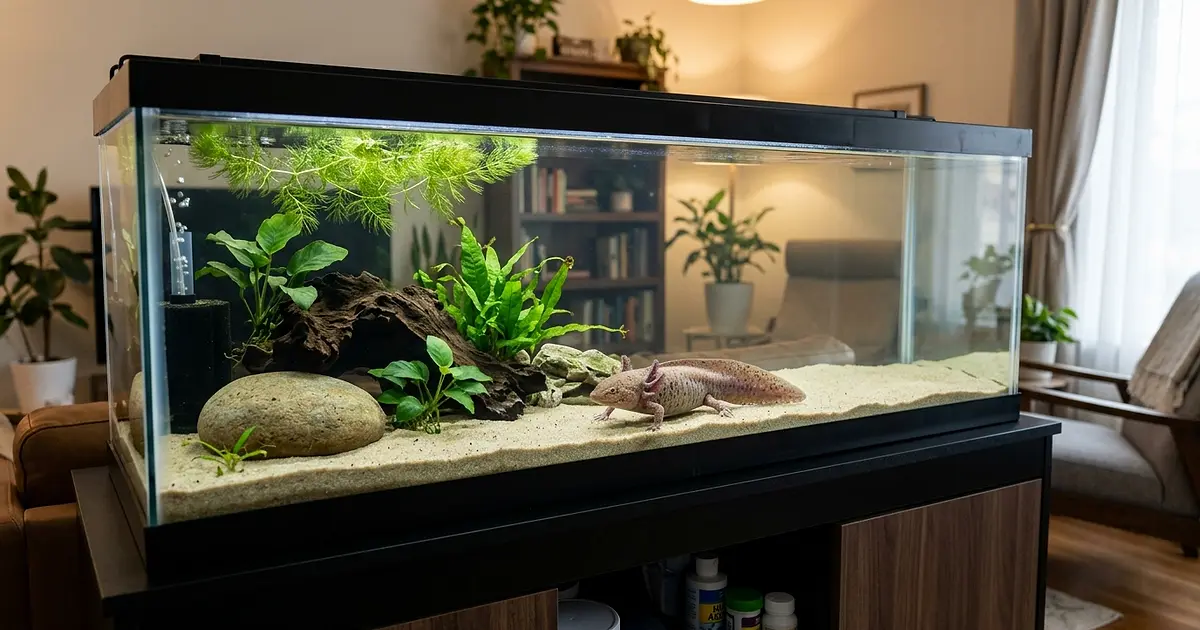
What Size Tank Does an Axolotl Need?
Minimum tank size for axolotls is 20 gallons (75L) for one. Learn the ideal dimensions, why bigger is better, and how to choose the right tank.
Read more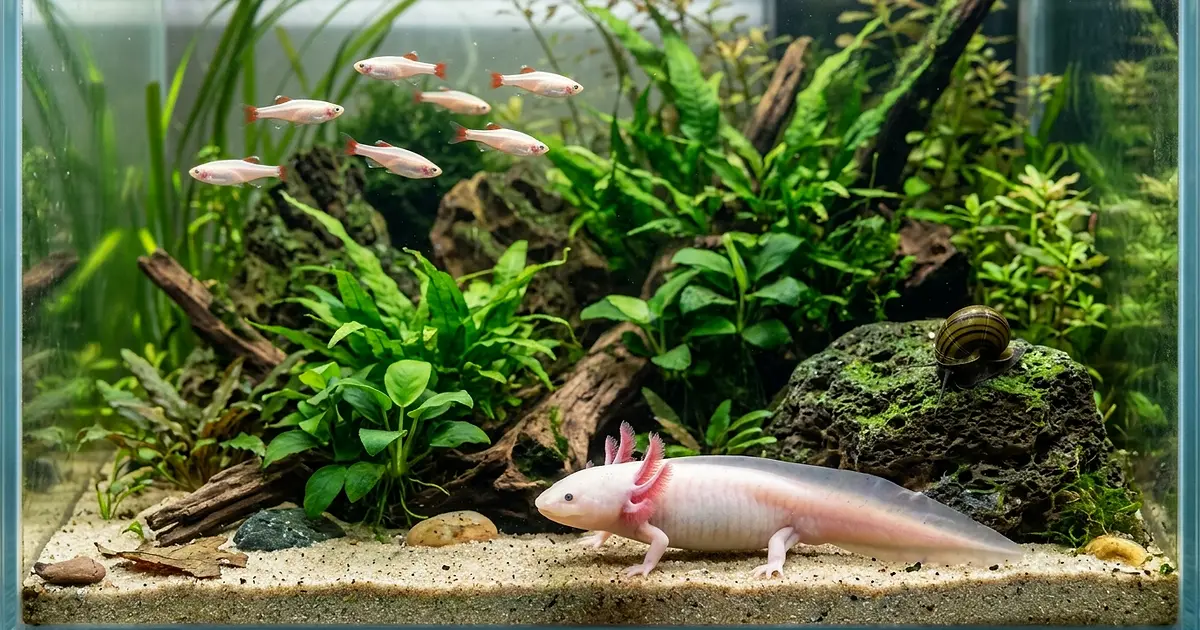
Axolotl Tank Mates: What Can Live With Axolotls?
Can axolotls live with fish? Learn which tank mates are safe, which to avoid, and why most axolotls are best kept with their own kind.
Read more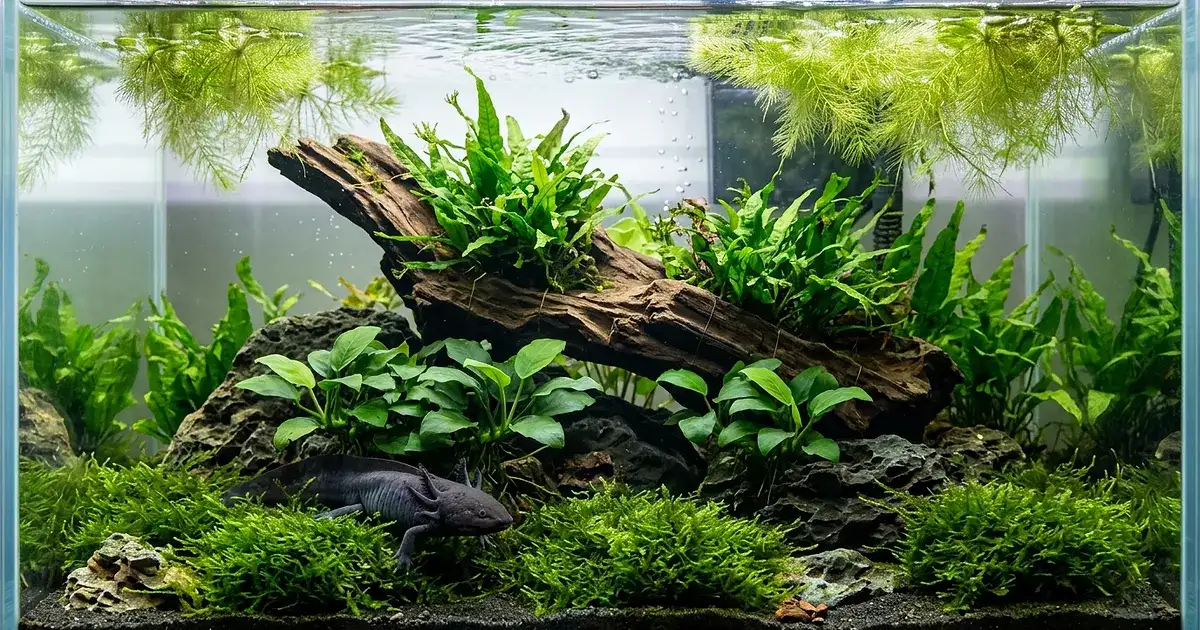
Best Plants for Axolotl Tanks
Top aquatic plants safe for axolotl tanks: java fern, anubias, java moss, and more. Low-light, axolotl-proof plants that improve water quality.
Read more