
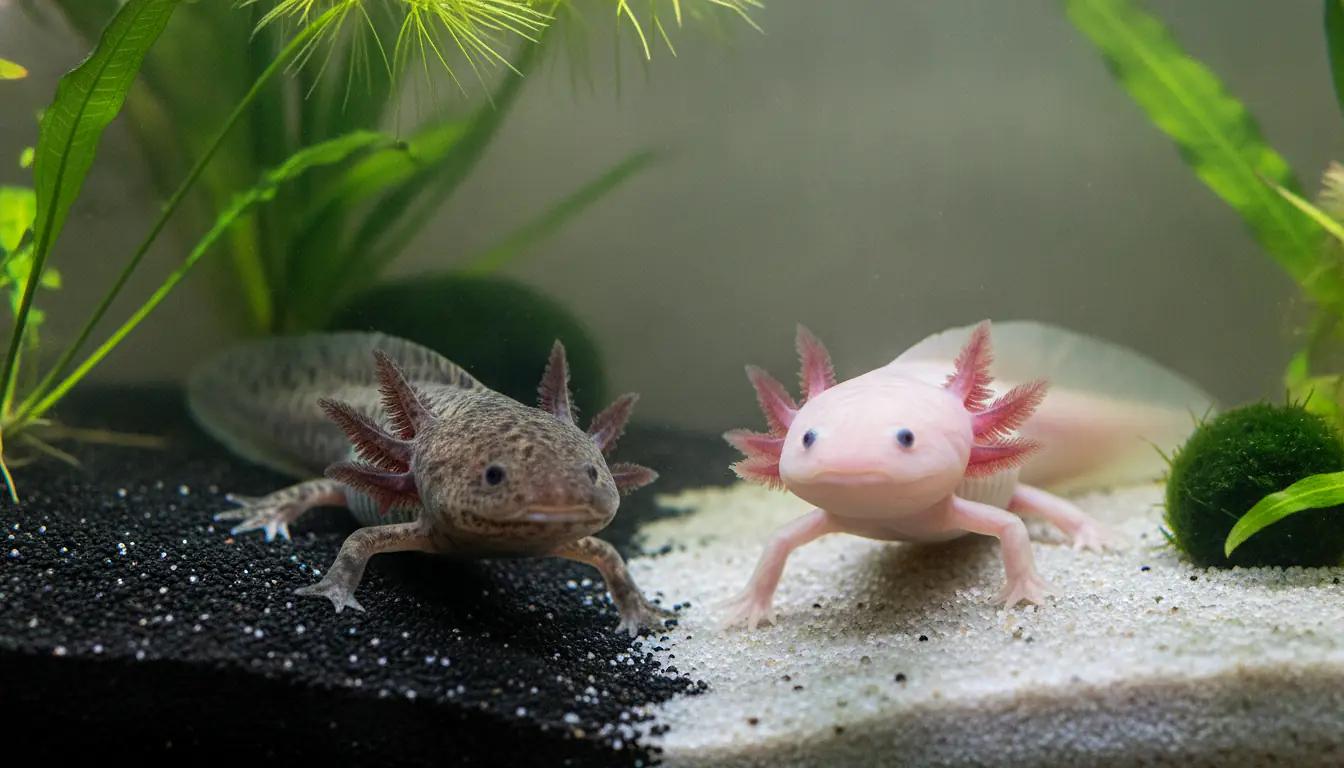
An axolotl changing color often worries its owner, yet most of these variations are harmless: an animal that darkens on dark substrate, turns paler under a bright lamp or develops spots as it grows stays healthy. Color loss becomes a warning sign when it comes with other symptoms: cottony tufts, redness, skin coming off in shreds, loss of appetite. Here is how to tell the difference, then what to check, in order.
Where an Axolotl’s Colors Come From
Skin shade depends on pigment cells called chromatophores. Melanophores contain eumelanin, a black-brown pigment; xanthophores carry the yellow pigments, and iridophores produce the golden or shiny reflections. The number of these cells, how they are distributed and the state of their pigment add up to the color you see.
The wild type is marbled brown-gray, while the albino is whitish pink, and breeding has produced a whole range of varieties in between: leucistic, melanoid, golden, copper, mosaic. Each axolotl color morph is fixed by its genetics: a leucistic will never become melanoid. The changes you observe stay within the palette of the base color, simply lighter or darker.
Normal Causes of an Axolotl Turning Paler or Darker
Light and Background Color
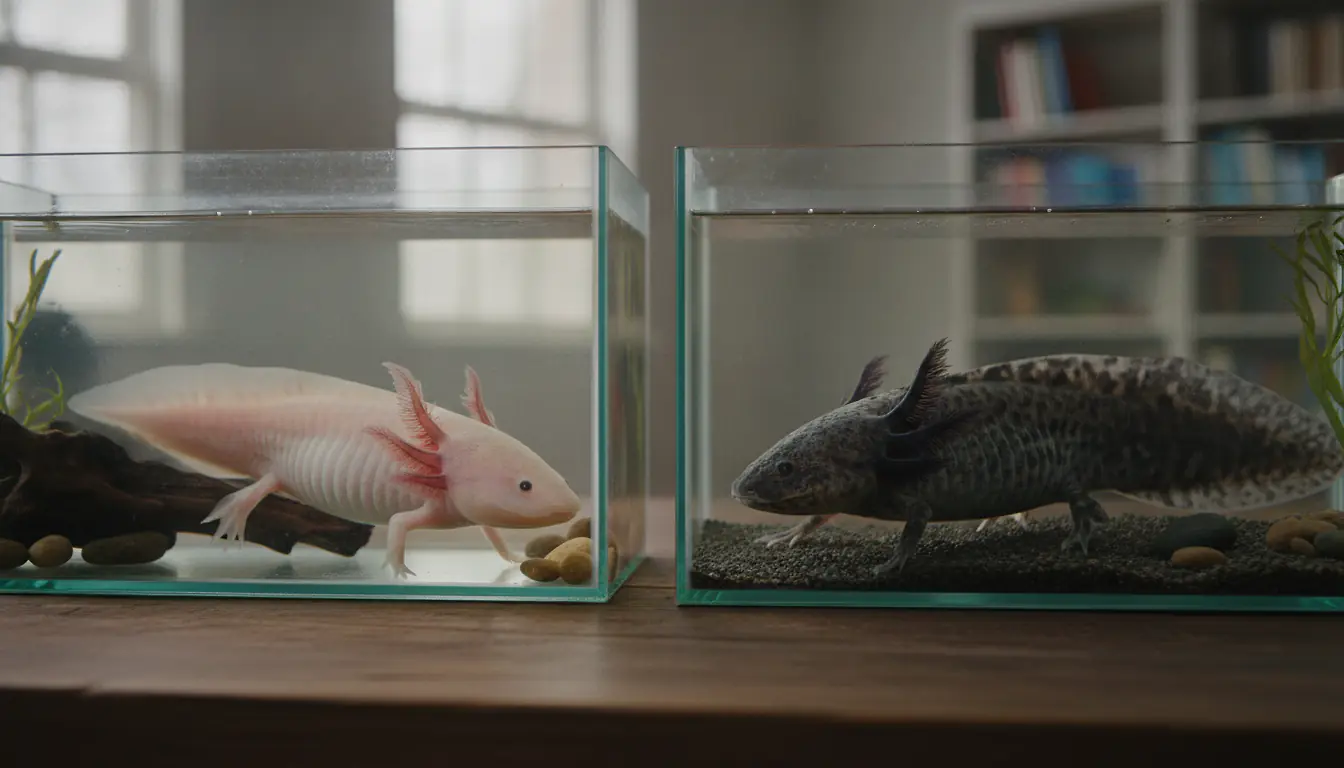
In pigmented varieties (wild type, melanoid, copper), the melanophores can concentrate or spread their pigment. On dark sand and under subdued lighting, the animal darkens; in a tank with a light bottom or under a powerful lamp, it looks paler. This adjustment is reversible: it follows the surroundings, not the animal's health.
Albinos and leucistics, which have almost no visible melanin, vary much less. In them, what seems to change is mostly the gills, which are more or less red depending on blood flow at the moment. This has nothing to do with discolored axolotl skin.
Mood and Stress
An axolotl stressed by handling, transport, a filter current that is too strong or a new tank may turn paler or darker temporarily. The other signs of stress in axolotls confirm the diagnosis: gills curled forward, tail tip curled up, restless swimming. Once the cause is removed, the shade returns on its own.
Growth: A Color That Sets With Age
A juvenile does not yet have its final coat. Many young leucistic axolotls develop small dark spots on the head and back, goldens take on a deeper shade and wild types darken. The coat stabilizes around sexual maturity, reached at about 1 year, although a few spots sometimes appear later.
Shedding: A Temporary Whitish Veil
The axolotl regularly renews the thin outer layer of its skin. During shedding, some areas look dull or grayish, then translucent shreds come off and float in the tank. A healthy shed is a one-time event: the animal eats, swims normally, and its skin quickly returns to normal.
Axolotl Discoloration: Signs of Illness
Discoloration becomes suspicious when it is localized, when it spreads or when it comes with a change in behavior. Three patterns come up most often.
Fluffy White Tufts
Fluffy-looking white patches, often on the gills, head or a wound, point to an infection by an aquatic fungus (most often Saprolegnia). The difference from shedding is visible to the naked eye: a shed comes off as a smooth film, while the fungus forms filaments that stay attached and grow from one day to the next.
Redness or Constantly Peeling Skin
Redness on the legs, belly or tail, red dots under the skin, or skin that keeps coming off point to a bacterial infection or a chemical burn from the water: ammonia, nitrites, unneutralized chlorine. Unlike shedding, the problem does not stop by itself.
General Paleness With Lethargy
An axolotl that suddenly turns pale, refuses food, floats or stays prostrate with reduced, discolored gills is most often suffering from degraded or overly warm water. This paleness is not a pigment matter: it is one of the symptoms of a sick axolotl, and its cause must be treated before the color.
Normal or Worrying: The Sorting Chart
| What you observe | Context | Other signs | Verdict |
|---|---|---|---|
| The whole body darkens or turns paler | New sand, changed lighting | None, normal appetite | Normal: adapting to the background |
| Small dark spots appearing | Leucistic or golden juvenile | None | Normal: growth |
| Dull veil, translucent shreds | One-time episode | Eats and swims normally | Normal: shedding |
| Temporary paleness | After transport or handling | Curled gills, restless swimming | Keep an eye on it: stress, remove the cause |
| Fluffy white tufts | On a wound or the gills | The tufts are spreading | Warning: fungus |
| Redness, constantly peeling skin | Water not tested recently | Refuses to eat | Warning: water or infection |
| Sudden general paleness | Warm water, new tank | Lethargy, floating | Emergency: check the water right away |
What to Do About Discolored Axolotl Skin
When faced with suspicious discoloration, the order of checks matters: water quality explains the vast majority of skin problems, well before any illness specific to the animal.
- Test the water with a drop-based kit: ammonia and nitrites must be undetectable. A tank whose nitrogen cycle is not established remains the leading cause of skin burns.
- Measure the temperature: the axolotl lives in cool water, and heat quickly weakens its defenses.
- Photograph the animal every day under the same lighting: color should be judged under constant light, never under the morning lamp and then in the evening glow.
- Fix the water first with a partial change using conditioned water at the same temperature, then watch how things develop over several days.
- See an exotic pet vet as soon as white filaments, redness or a refusal to eat persist, rather than treating at random.
What Remains Poorly Documented About Color Changes
Several ideas circulate on forums without solid measurements behind them. The real extent of temperature's effect on shade, the role of carotenoid-rich foods (shrimp, color-enhancing pellets) on yellow intensity, the precise hormonal mechanism of background adaptation in this species, or the darkening of the fingertips at maturity rest on no reliable data that we were able to verify. These answers depend on the morph, the age and the tank conditions: for a specific case, the Caudata.org community and an exotic pet vet remain the safest sources.
The same caution applies to offspring color: the proportion of each morph in a clutch depends on the genes carried by both parents, including recessive genes that are invisible in their coat. A breeder who knows the lineage of their breeding animals will inform you better than a generic chart.
Related Articles
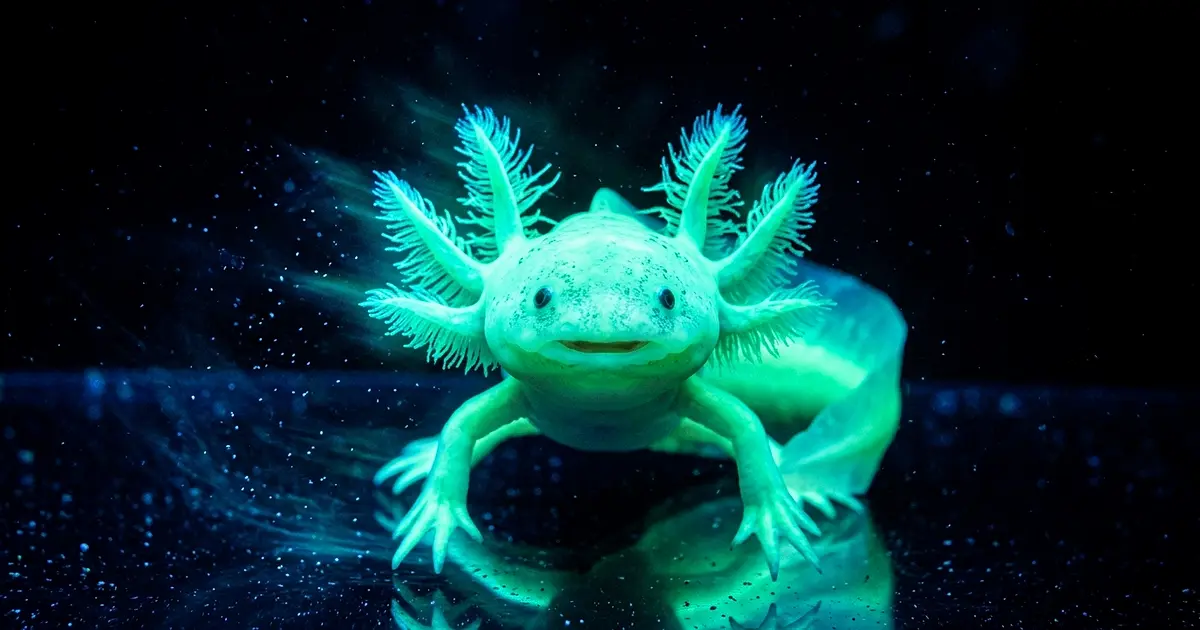
Blue Axolotl: Do They Really Exist?
The truth about blue axolotls. Learn why they appear blue in photos, what GFP means, and which axolotl morphs actually exist in real life.
Read more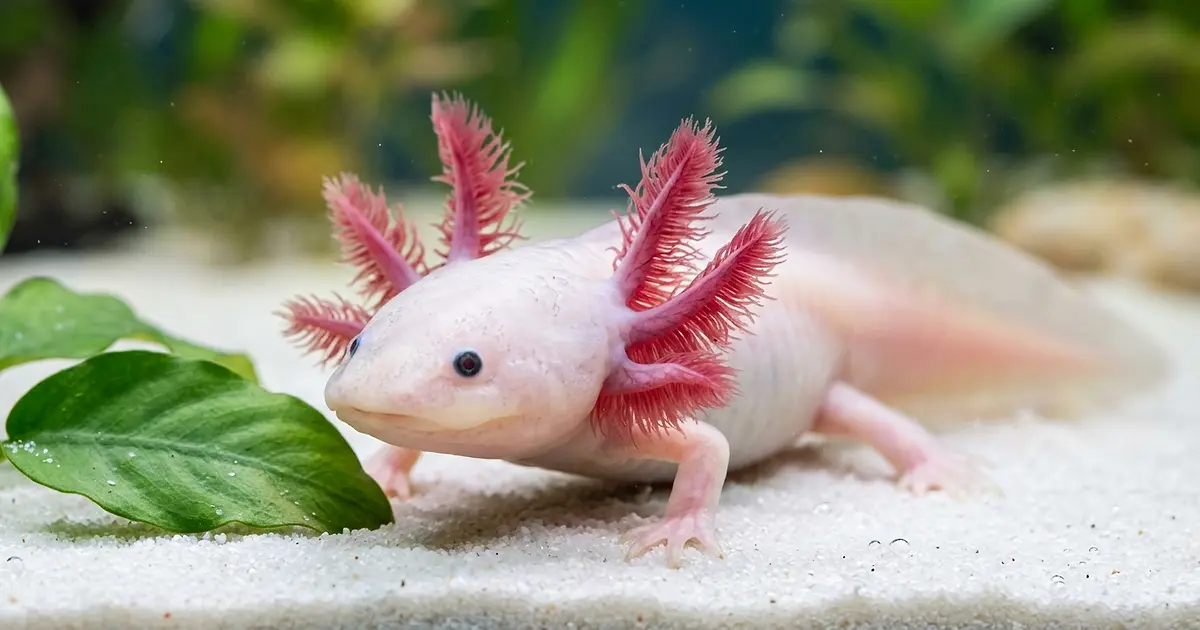
Leucistic Axolotl: The Most Popular Pet Morph
Leucistic axolotl (Lucy): the iconic pink-white morph with dark eyes. Appearance, genetics, dirty Lucy variant, albino comparison, pricing, and care tips.
Read more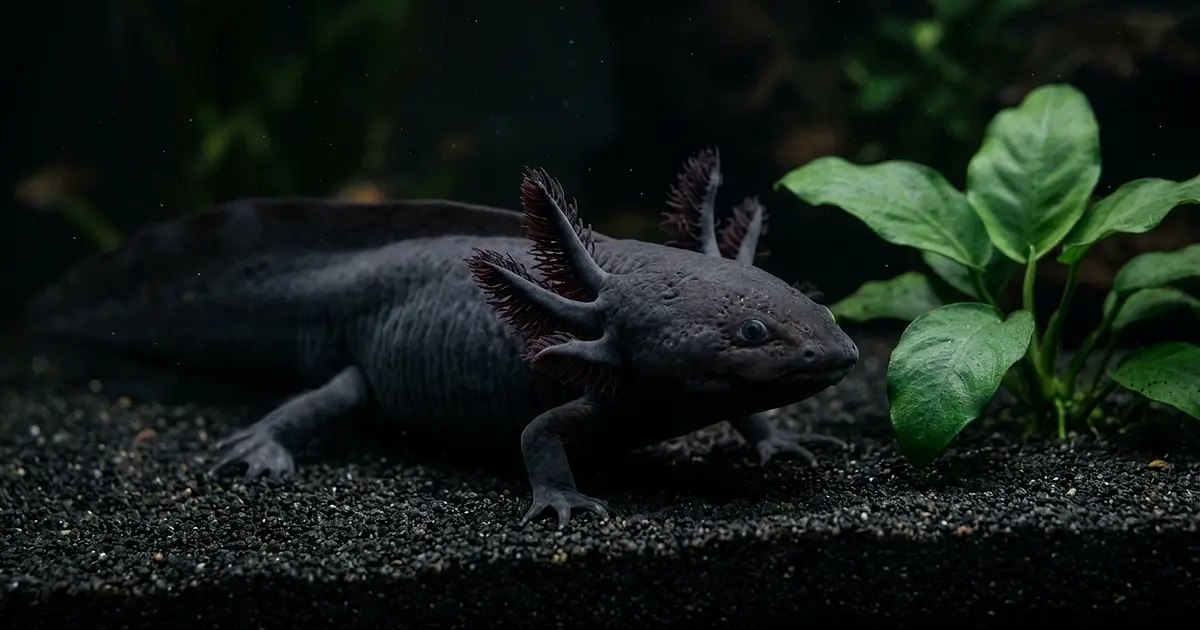
Melanoid Axolotl: The Black Morph Explained
Melanoid axolotl morph: solid black coloration without iridescent spots, melanoid genetics, matte appearance, pricing, and comparison with wild type.
Read more