
Appearance
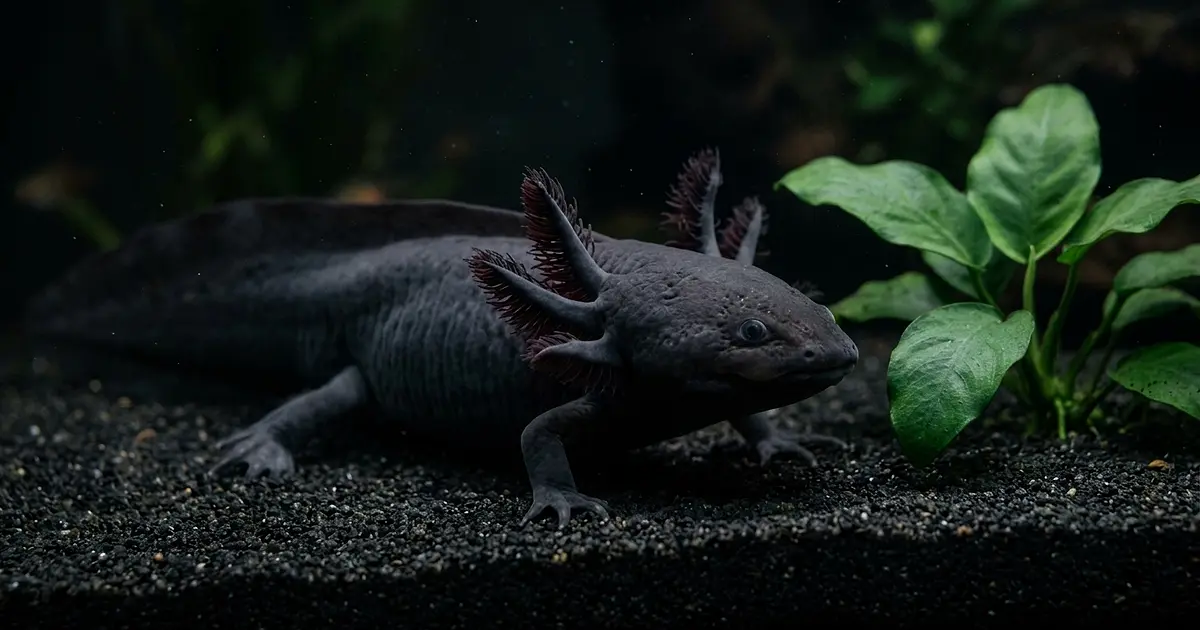
The melanoid axolotl is one of the most striking morphs available. Its solid dark coloration ranges from deep gray to jet black, creating a dramatic appearance that stands out in any aquarium.
The key visual difference from wild type axolotls is the complete absence of shiny gold or silver speckling. Where a wild type sparkles, a melanoid is uniformly dark and matte.
Physical Characteristics
Melanoid vs Wild Type
| Feature | Melanoid | Wild Type |
|---|---|---|
| Base color | Solid dark gray/black | Dark brown-green with gold speckles |
| Iridophores | Absent | Present (creates shine) |
| Melanophores | Increased | Normal amount |
| Overall look | Matte, uniform | Speckled, shiny |
| Belly | Dark | Lighter with speckling |
Base color
Melanoid : Solid dark gray/black
Wild Type : Dark brown-green with gold speckles
Iridophores
Melanoid : Absent
Wild Type : Present (creates shine)
Melanophores
Melanoid : Increased
Wild Type : Normal amount
Overall look
Melanoid : Matte, uniform
Wild Type : Speckled, shiny
Belly
Melanoid : Dark
Wild Type : Lighter with speckling
Genetics
The melanoid trait is controlled by the "m" gene. It is autosomal recessive, meaning both parents must carry the gene to produce melanoid offspring.
Breeding two melanoids produces 100% melanoid babies. A melanoid bred with a non-carrier produces 0% melanoid offspring (but all carry the gene).
Melanoid can combine with other genes. A melanoid albino (melanoid + albino genes) creates an interesting dark-eyed white axolotl. A melanoid copper produces a very dark brownish animal.
Health Observation Tip
Price and Availability
| Variant | Typical Price |
|---|---|
| Standard melanoid | $35-70 |
| GFP melanoid | $60-120 |
| Melanoid copper | $50-100 |
Standard melanoid
Typical Price : $35-70
GFP melanoid
Typical Price : $60-120
Melanoid copper
Typical Price : $50-100
GFP Melanoid Is Spectacular
GFP melanoid axolotls are particularly popular because the green fluorescence contrasting against the dark body creates a spectacular visual effect under UV light. The dark background makes the glow far more dramatic than on lighter morphs.
Explore all axolotl morphs
Compare melanoid with leucistic, wild type, golden, and other popular color morphs.
Frequently Asked Questions
Frequently Asked Questions
What makes melanoid axolotls black?
Are melanoid axolotls rare?
Related Articles
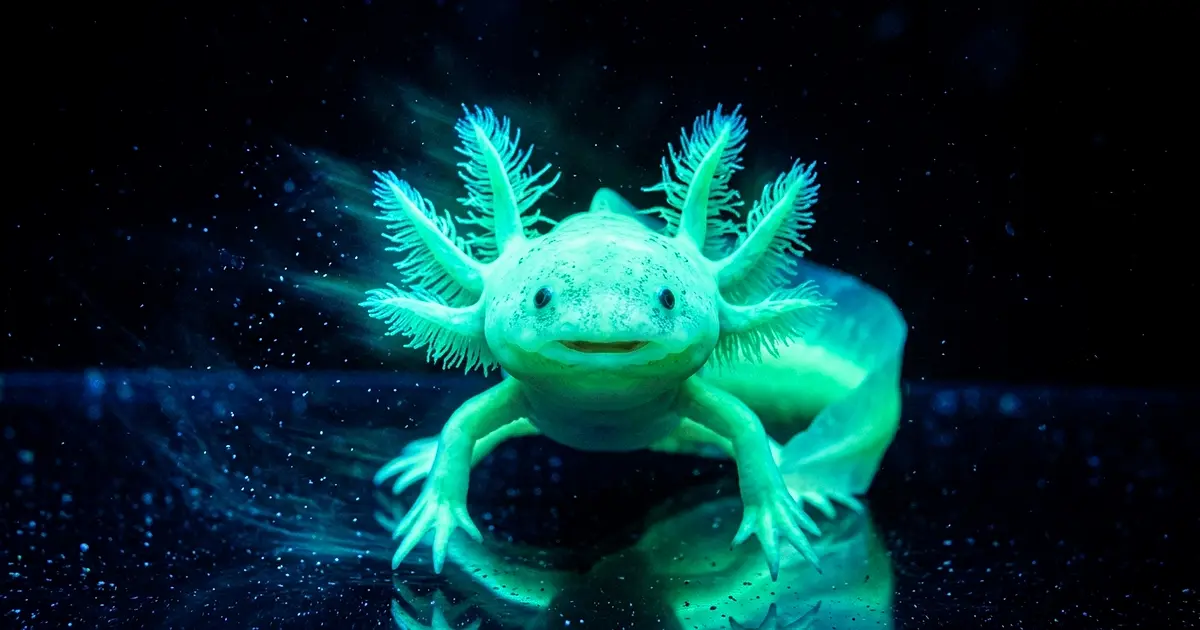
Blue Axolotl: Do They Really Exist?
The truth about blue axolotls. Learn why they appear blue in photos, what GFP means, and which axolotl morphs actually exist in real life.
Read more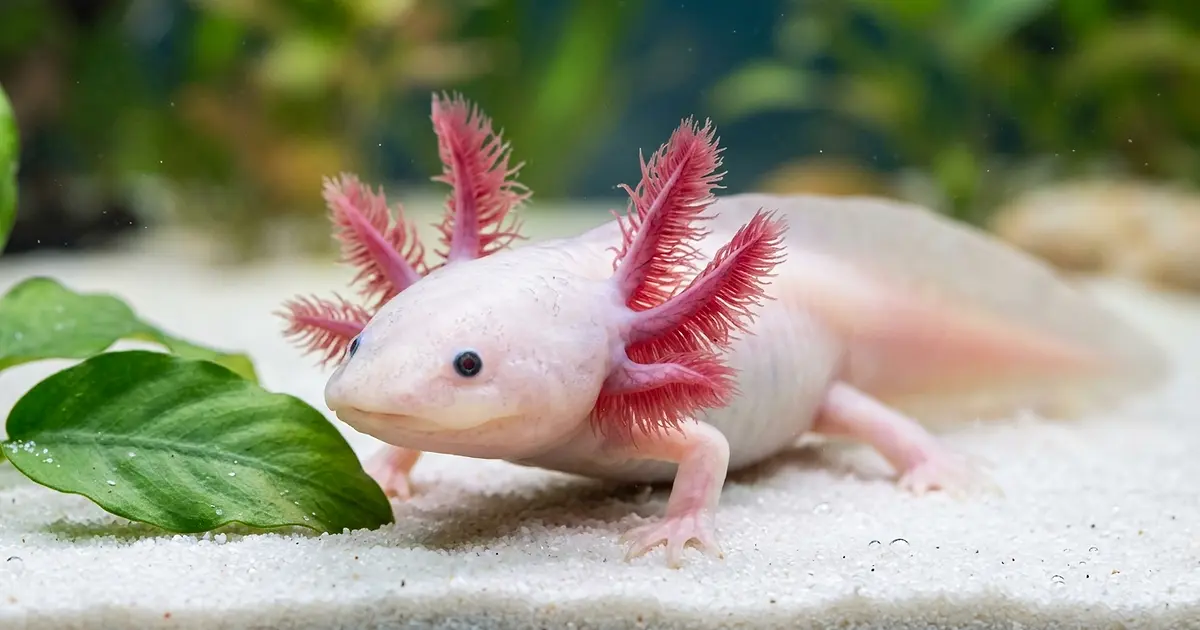
Leucistic Axolotl: The Most Popular Pet Morph
Leucistic axolotl (Lucy): the iconic pink-white morph with dark eyes. Appearance, genetics, dirty Lucy variant, albino comparison, pricing, and care tips.
Read more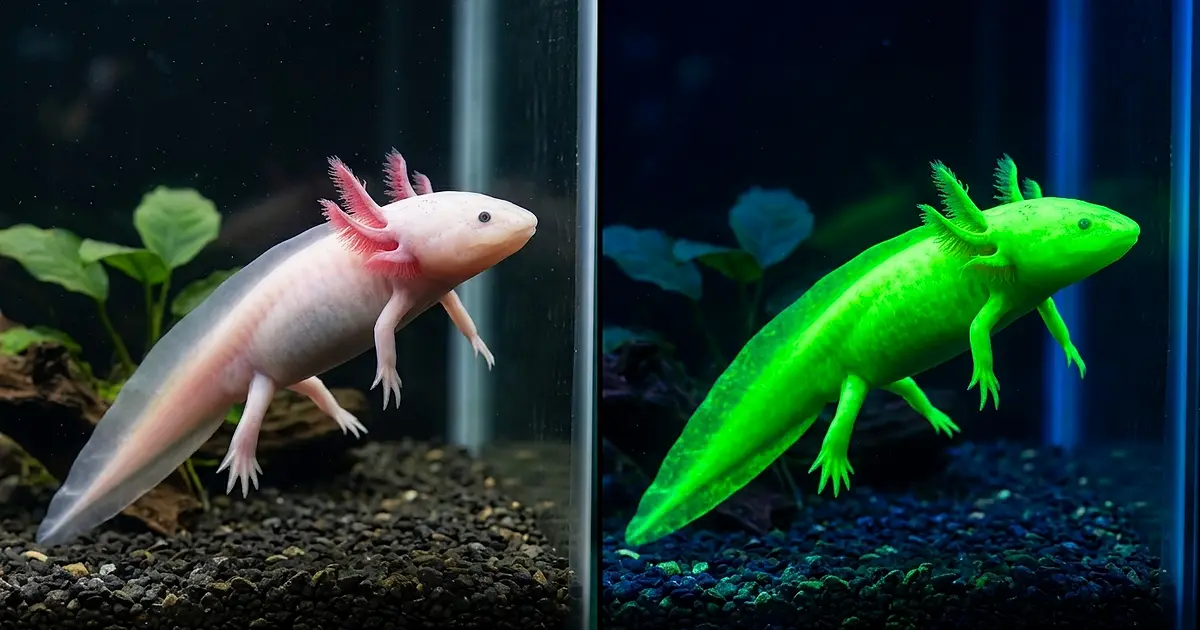
GFP Axolotl: How the Fluorescent Gene Works
GFP axolotls carry a jellyfish gene that makes them glow green under UV light. How it works, which morphs look best, safe UV viewing, and pricing by variant.
Read more