
Axolotls Are Salamanders, But Not Like Others
People often confuse axolotls with other salamanders, newts, or even fish. While axolotls technically belong to the salamander family Ambystomatidae, they stand apart from every other species in a fundamental way: they never grow up.
This phenomenon, called neoteny, means axolotls retain their larval features (external gills, aquatic lifestyle, fin-like tail) for their entire lives. Every other salamander species transforms into a terrestrial adult. Axolotls skip that step entirely.
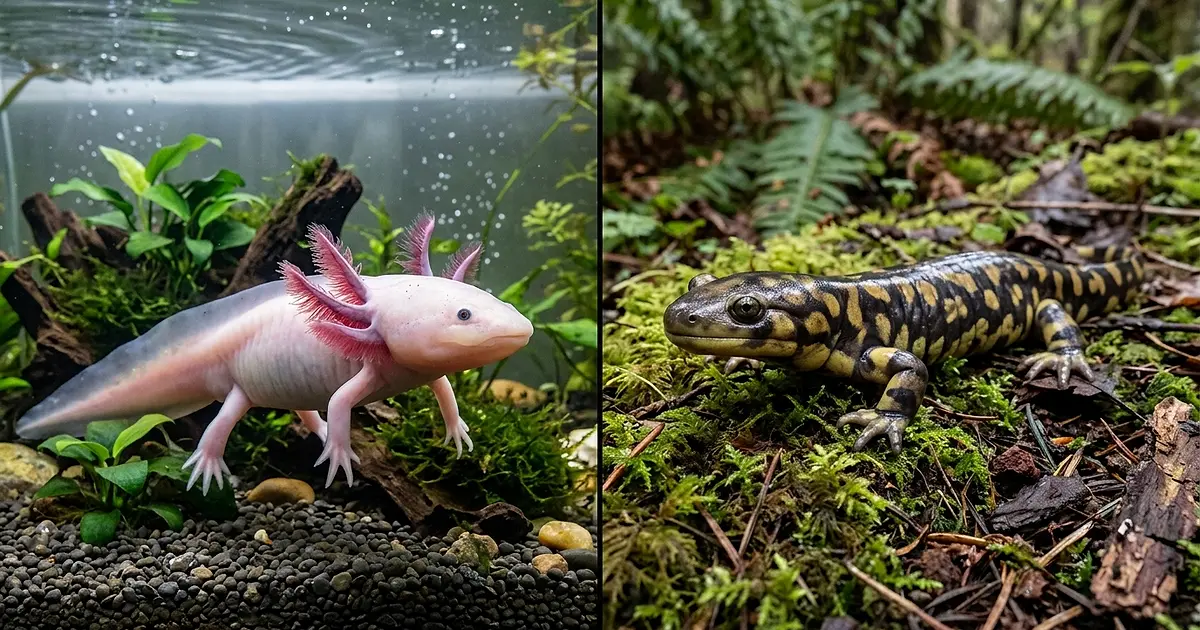
Axolotl vs Salamander
| Feature | Axolotl | Most Salamanders |
|---|---|---|
| Habitat | Fully aquatic (lifetime) | Aquatic as larvae, terrestrial as adults |
| Gills | External gills (permanent) | Gills absorbed during metamorphosis |
| Metamorphosis | Does not occur naturally | Normal part of lifecycle |
| Eyelids | No eyelids | Eyelids develop after metamorphosis |
| Skin | Smooth, slimy, permeable | Drier, thicker in adults |
| Reproduction | Breeds in aquatic form | Most breed on land |
| Regeneration | Extraordinary (limbs, organs, brain) | Some regeneration, but limited |
Habitat
Axolotl : Fully aquatic (lifetime)
Most Salamanders : Aquatic as larvae, terrestrial as adults
Gills
Axolotl : External gills (permanent)
Most Salamanders : Gills absorbed during metamorphosis
Metamorphosis
Axolotl : Does not occur naturally
Most Salamanders : Normal part of lifecycle
Eyelids
Axolotl : No eyelids
Most Salamanders : Eyelids develop after metamorphosis
Skin
Axolotl : Smooth, slimy, permeable
Most Salamanders : Drier, thicker in adults
Reproduction
Axolotl : Breeds in aquatic form
Most Salamanders : Most breed on land
Regeneration
Axolotl : Extraordinary (limbs, organs, brain)
Most Salamanders : Some regeneration, but limited
Axolotl vs Newt
| Feature | Axolotl | Newt |
|---|---|---|
| Family | Ambystomatidae | Salamandridae |
| Habitat | Fully aquatic | Semi-aquatic (water + land phases) |
| Gills | External (permanent) | Absorbed in land phase |
| Skin toxicity | Not toxic | Many species are toxic |
| Size | 20-30 cm | 7-15 cm (most species) |
| Native | Mexico only | Europe, Asia, North America |
Family
Axolotl : Ambystomatidae
Newt : Salamandridae
Habitat
Axolotl : Fully aquatic
Newt : Semi-aquatic (water + land phases)
Gills
Axolotl : External (permanent)
Newt : Absorbed in land phase
Skin toxicity
Axolotl : Not toxic
Newt : Many species are toxic
Size
Axolotl : 20-30 cm
Newt : 7-15 cm (most species)
Native
Axolotl : Mexico only
Newt : Europe, Asia, North America
Axolotl vs Mudpuppy
| Feature | Axolotl | Mudpuppy |
|---|---|---|
| Scientific name | Ambystoma mexicanum | Necturus maculosus |
| Native | Mexico (Lake Xochimilco) | Eastern North America |
| Size | 20-30 cm | 20-45 cm (larger) |
| Color | Many morphs | Brown with spots |
| Gills | Feathery, can be very large | Bushy, maroon-red |
| Head shape | Wide, flat, rounded | More elongated |
| Pet trade | Very common | Rare, mostly wild-caught |
| Conservation | Critically Endangered | Least Concern |
Scientific name
Axolotl : Ambystoma mexicanum
Mudpuppy : Necturus maculosus
Native
Axolotl : Mexico (Lake Xochimilco)
Mudpuppy : Eastern North America
Size
Axolotl : 20-30 cm
Mudpuppy : 20-45 cm (larger)
Gills
Axolotl : Feathery, can be very large
Mudpuppy : Bushy, maroon-red
Head shape
Axolotl : Wide, flat, rounded
Mudpuppy : More elongated
Pet trade
Axolotl : Very common
Mudpuppy : Rare, mostly wild-caught
Axolotl vs Olm
| Feature | Axolotl | Olm |
|---|---|---|
| Habitat | Lake Xochimilco | European cave systems |
| Color | Many morphs | Pale pink (cave-adapted) |
| Eyes | Small but functional | Vestigial (nearly blind) |
| Lifespan | 10-15 years | 50-100+ years |
| Size | 20-30 cm | 20-30 cm |
Habitat
Axolotl : Lake Xochimilco
Olm : European cave systems
Color
Axolotl : Many morphs
Olm : Pale pink (cave-adapted)
Eyes
Axolotl : Small but functional
Olm : Vestigial (nearly blind)
Lifespan
Axolotl : 10-15 years
Olm : 50-100+ years
Size
Axolotl : 20-30 cm
Olm : 20-30 cm
What Makes Axolotls Special Among All Salamanders
Neoteny
One of very few species that naturally remain in larval form for their entire lives, keeping gills, aquatic lifestyle, and juvenile features.
Regeneration
The most complete regeneration of any vertebrate: limbs, organs, spinal cord, and even parts of the brain.
Genetic diversity
Over 20 color morphs bred in captivity, from pure white to jet black, golden, copper, and GFP glowing.
Scientific importance
One of the most studied animals in biology, with a fully sequenced genome 10 times larger than the human genome.
Cultural significance
Named after the Aztec god Xolotl, featured on Mexican currency, and a symbol of Mexico City.
Can Axolotls Be Forced to Metamorphose?
Fascinated by axolotl biology?
Discover how axolotls regenerate limbs, organs, and even parts of their brain.
Frequently Asked Questions
Frequently Asked Questions
Is an axolotl a salamander?
Can you keep a salamander like an axolotl?
Related Articles
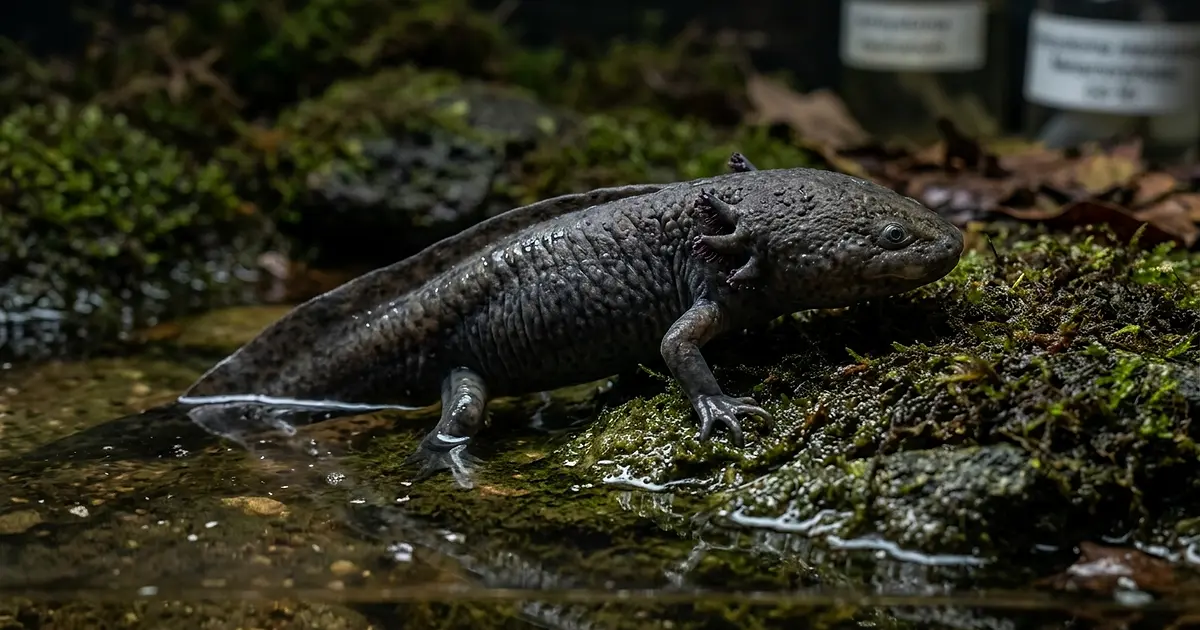
Axolotl Metamorphosis: When Axolotls Turn Into Salamanders
Can axolotls transform into land salamanders? What triggers metamorphosis, why it is dangerous, and what a morphed axolotl looks like.
Read more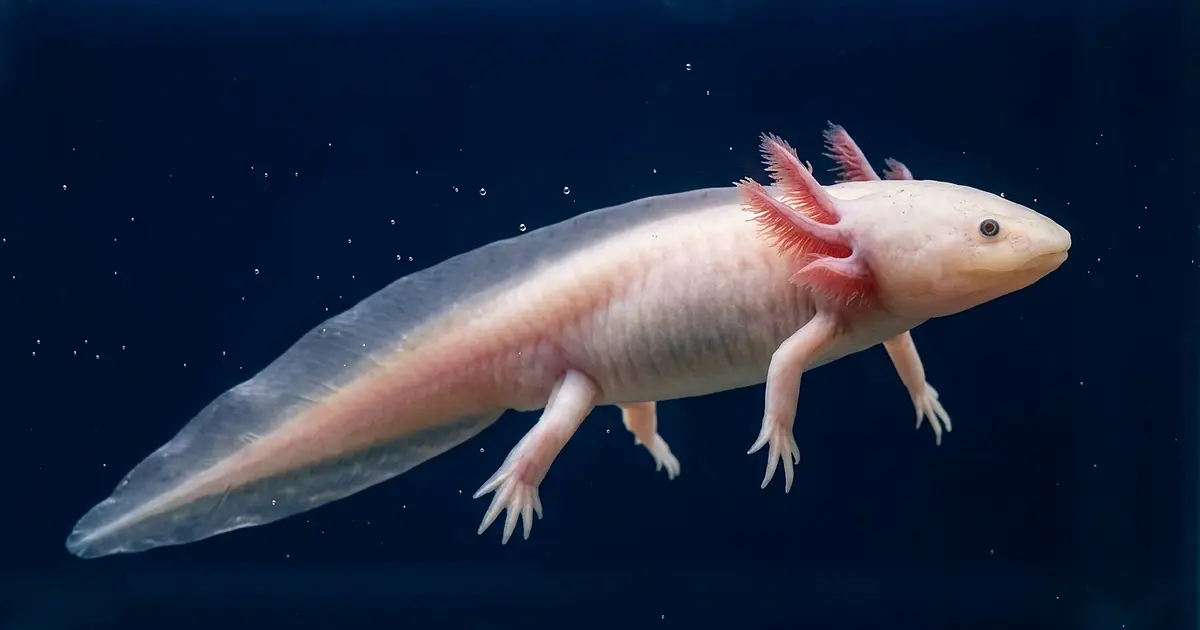
Axolotl Anatomy: Gills, Teeth, Eyes & Body Parts
Detailed look at axolotl anatomy: external gills, teeth, eyes without eyelids, limbs, skin, and internal organs. How their body works.
Read more