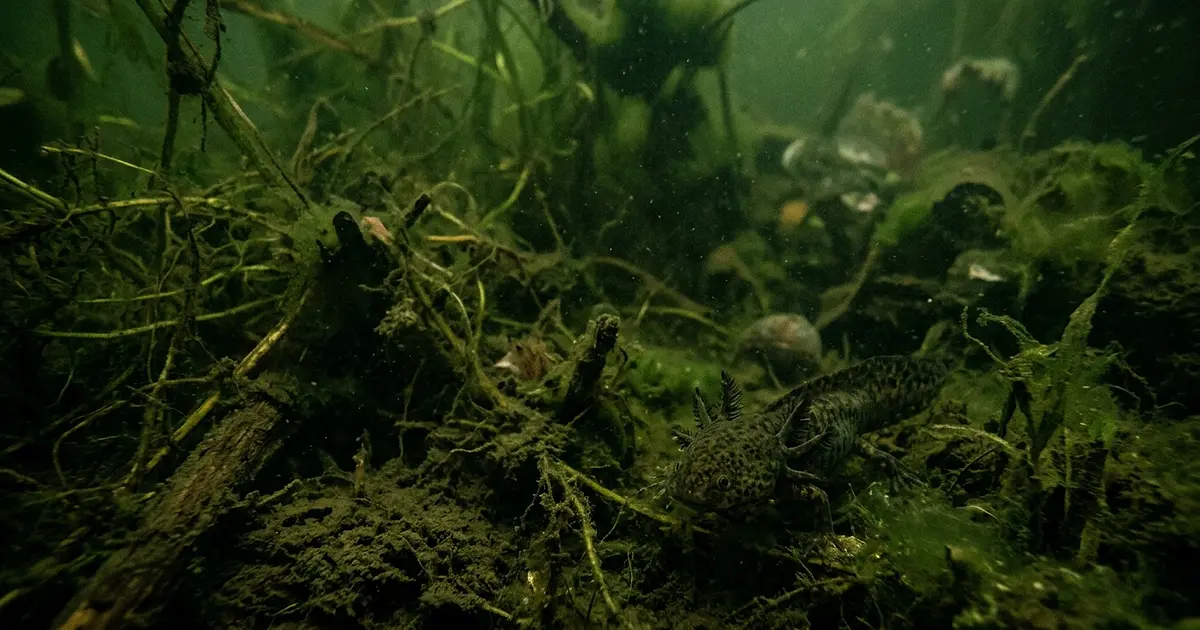
From Top Predator to Prey
In their natural habitat, axolotls were once top predators in the shallow canals of Lake Xochimilco. Today, introduced predators are one of the main reasons they are critically endangered.
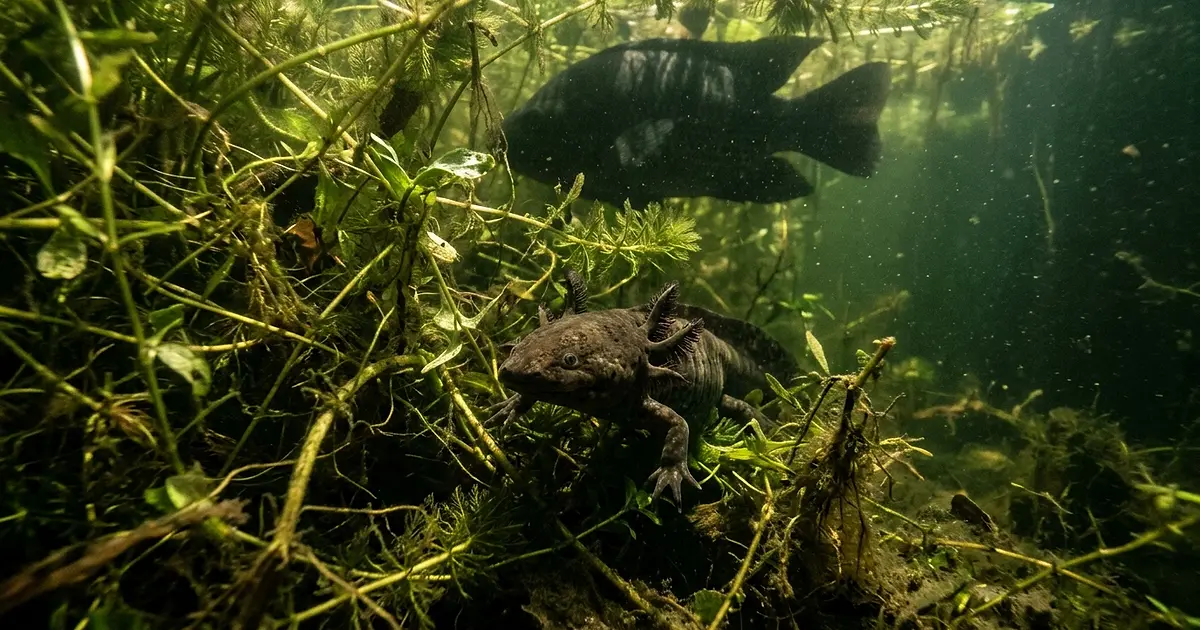
Invasive Fish: The Biggest Threat
Tilapia and Asian carp were introduced to the Xochimilco canal system in the 1970s-80s for aquaculture. These invasive species eat axolotl eggs deposited on plants, prey on larvae and juveniles (easy targets), compete with adult axolotls for food (insects, small invertebrates), and have no natural predators in the canal system to control their numbers.
Scientists consider invasive fish the single most damaging threat to wild axolotl populations.
Bird Predators
Cannibalism Among Axolotls
Predators in Captivity
| Threat | Risk to Axolotl |
|---|---|
| Large fish (cichlids, goldfish) | Can bite and injure |
| Small fish (guppies, tetras) | Nip at gills constantly |
| Crayfish | Aggressive, will attack |
| Turtles | Will bite and injure |
| Cats | Can reach into uncovered tanks |
| Other axolotls (larger) | Cannibalism, limb biting |
Large fish (cichlids, goldfish)
Risk to Axolotl : Can bite and injure
Small fish (guppies, tetras)
Risk to Axolotl : Nip at gills constantly
Crayfish
Risk to Axolotl : Aggressive, will attack
Turtles
Risk to Axolotl : Will bite and injure
Cats
Risk to Axolotl : Can reach into uncovered tanks
Other axolotls (larger)
Risk to Axolotl : Cannibalism, limb biting
Prevention in Captivity
Keep axolotls with same-sized axolotls only, use a secure tank lid, and never house with fish or other species.
Axolotl Defense Mechanisms
Nocturnal behavior
Most active at dusk and night when visual predators are less effective.
Rapid gulp feeding
Can snap at small threats with lightning-fast suction.
Hiding
Spend daylight hours under rocks, roots, and vegetation.
Defenses Fail Against Invasive Species
These defenses evolved against natural predators like birds. They are largely ineffective against invasive fish that share the same underwater habitat 24 hours a day. This mismatch between evolved defenses and new threats is a major reason wild axolotl populations have collapsed.
Learn About Axolotl Conservation
Understand why axolotls are critically endangered and what is being done to save them.