
What Is GFP?
GFP stands for Green Fluorescent Protein. It was originally discovered in the jellyfish Aequorea victoria in 1962 and has since become one of the most important tools in biological research. The scientists who developed its use won the Nobel Prize in Chemistry in 2008.
GFP was introduced into axolotl populations in laboratory settings for research purposes. When cells containing GFP are illuminated with UV or blue light (wavelength ~395-475 nm), they emit a bright green fluorescence (peak emission ~509 nm).
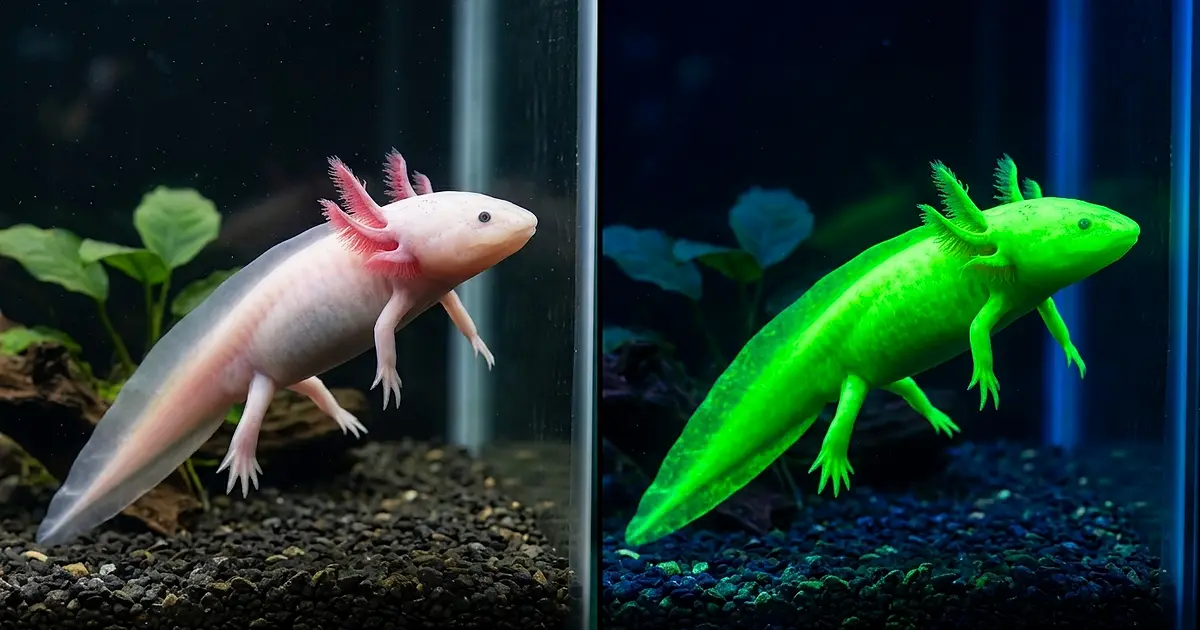
Normal Light vs UV Light
Under UV/blue LED light: the entire body glows bright green. The gills, limbs, and tail tend to glow most intensely because the skin is thinnest there.
GFP Glow Effect by Base Morph
| Base Morph + GFP | Glow Effect |
|---|---|
| GFP Leucistic | Brilliant green all over (most dramatic) |
| GFP Wild Type | Green glow visible through darker skin |
| GFP Albino | Intense green, very bright |
| GFP Melanoid | Green highlights against dark body (striking contrast) |
GFP Leucistic
Glow Effect : Brilliant green all over (most dramatic)
GFP Wild Type
Glow Effect : Green glow visible through darker skin
GFP Albino
Glow Effect : Intense green, very bright
GFP Melanoid
Glow Effect : Green highlights against dark body (striking contrast)
Safe UV Viewing Guidelines
Keep sessions brief
Only use UV/blue light for a few minutes at a time. Extended exposure stresses axolotls.
Use a separate light source
Use a separate UV strip or flashlight rather than replacing the tank lighting.
View in darkness
Turn off all other lights for the most vivid glow effect. Blue LED strips mounted outside the tank work well.
Important
The GFP gene is completely harmless and does not affect the axolotl's health, behavior, or lifespan. However, constant bright UV light is stressful for all axolotls. Never leave UV lights on permanently.
GFP Price Premium by Morph
| Morph | Without GFP | With GFP |
|---|---|---|
| Leucistic | $30-60 | $50-100 |
| Wild Type | $25-45 | $45-85 |
| Melanoid | $35-70 | $60-120 |
| Albino | $35-65 | $55-100 |
Leucistic
Without GFP : $30-60
With GFP : $50-100
Wild Type
Without GFP : $25-45
With GFP : $45-85
Melanoid
Without GFP : $35-70
With GFP : $60-120
Albino
Without GFP : $35-65
With GFP : $55-100
GFP Inheritance and Breeding
GFP is inherited and breeds true. If both parents are GFP, all offspring will be GFP. If only one parent carries GFP (heterozygous), approximately 50% of offspring will be GFP.
GFP axolotls require exactly the same care as non-GFP morphs. The gene does not change any aspect of their biology. Standard water parameters, diet, and tank setup all apply.
Learn about all available axolotl colors and morphs to find the right one for you.
Curious about the blue glow?
Find out why blue axolotls do not really exist and how GFP creates the illusion.
Frequently Asked Questions
Frequently Asked Questions
Does the GFP gene harm the axolotl?
Do GFP axolotls glow all the time?
Related Articles
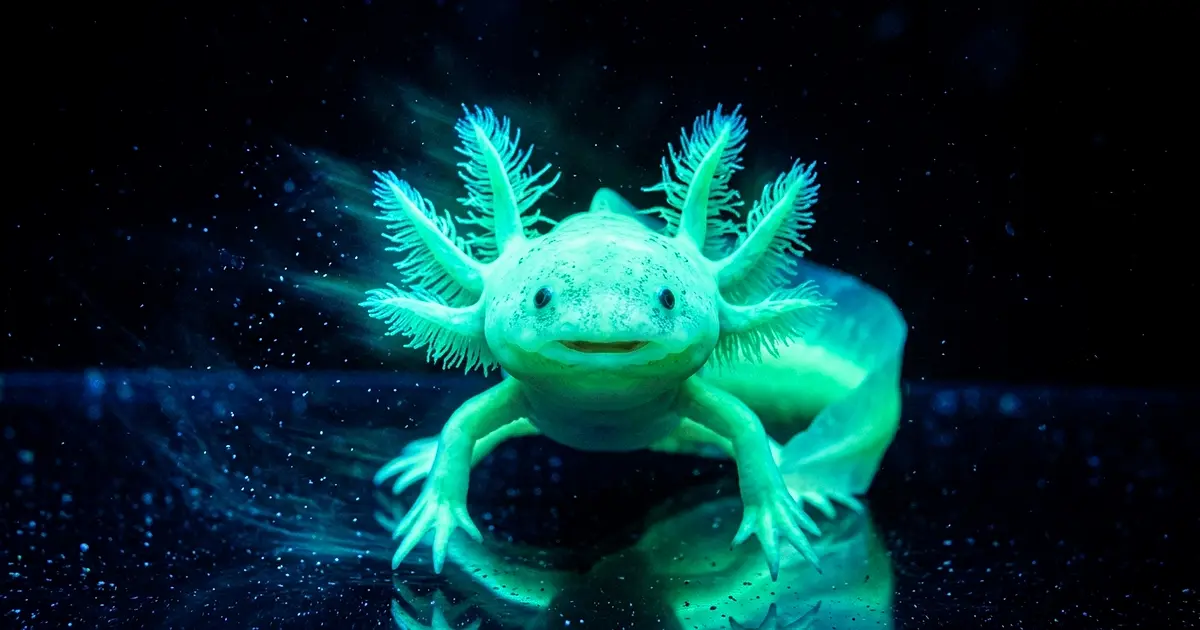
Blue Axolotl: Do They Really Exist?
The truth about blue axolotls. Learn why they appear blue in photos, what GFP means, and which axolotl morphs actually exist in real life.
Read more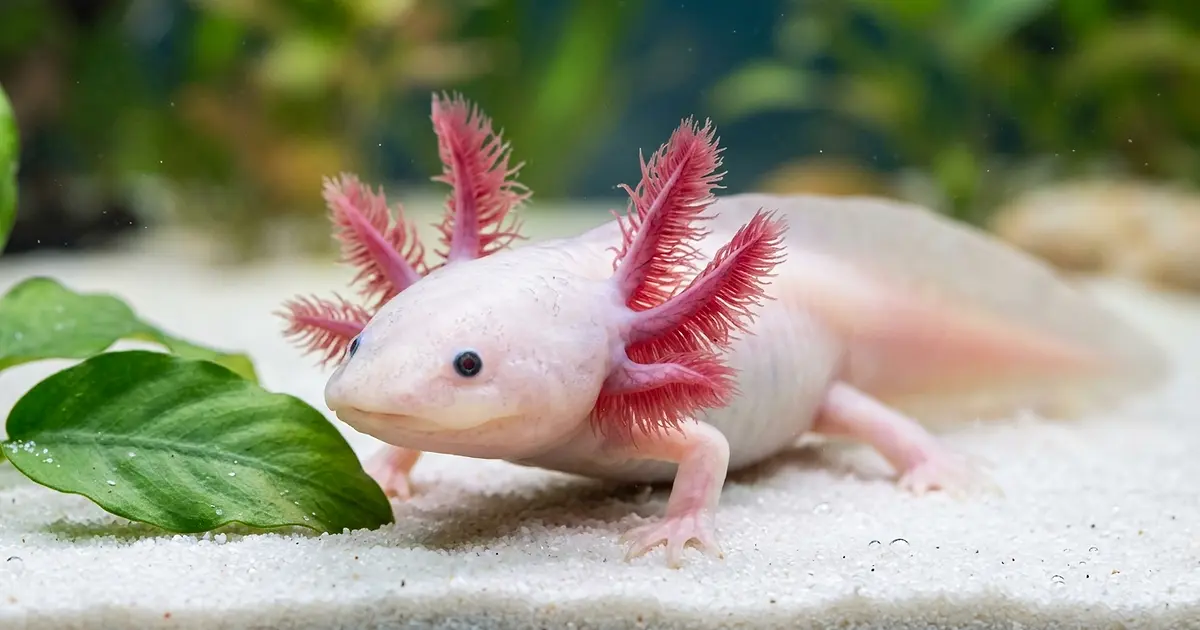
Leucistic Axolotl: The Most Popular Pet Morph
Leucistic axolotl (Lucy): the iconic pink-white morph with dark eyes. Appearance, genetics, dirty Lucy variant, albino comparison, pricing, and care tips.
Read more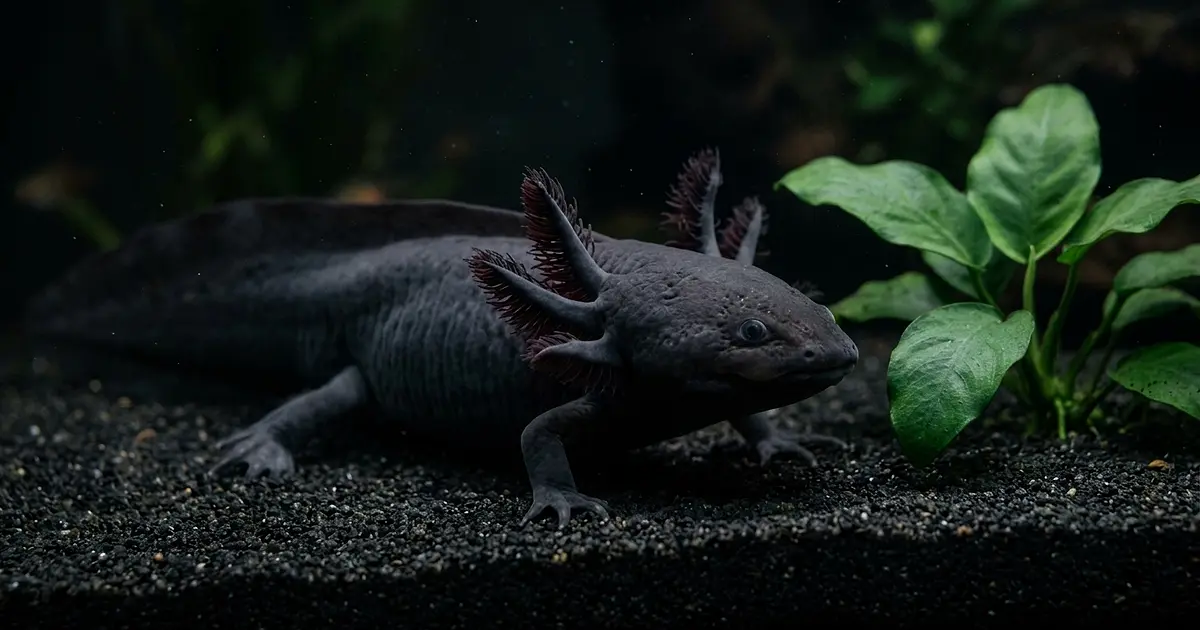
Melanoid Axolotl: The Black Morph Explained
Melanoid axolotl morph: solid black coloration without iridescent spots, melanoid genetics, matte appearance, pricing, and comparison with wild type.
Read more