
Axolotls Are Illegal in California
Owning, buying, selling, or transporting an axolotl in California is illegal under California Code of Regulations, Title 14, Section 671. There are no permits available for private individuals. This page explains why and what alternatives exist. If you live in a state where axolotls are legal, check our axolotl price guide.
Why Axolotls Are Banned in California
Axolotls are illegal in California, and the ban has been in place for decades. If you are searching for whether you can own an axolotl in California, the answer is a clear no. The California Department of Fish and Wildlife (CDFW) classifies axolotls as a restricted species under Title 14, Section 671 of the California Code of Regulations.
The primary reason is the California Tiger Salamander (Ambystoma californiense), a native species that is federally listed as endangered. Axolotls belong to the same genus (Ambystoma) and can hybridize with California Tiger Salamanders if released or escaped into the wild. This interbreeding threatens the genetic integrity of an already vulnerable species.
Beyond hybridization, escaped axolotls pose additional risks. They are efficient aquatic predators that could compete with native species for food and habitat. They can also carry chytrid fungus (Batrachochytrium dendrobatidis), a devastating disease that has caused mass amphibian die-offs worldwide.
Specific Reasons for the California Ban
No Permit Available for Private Owners
Unlike some other restricted animals in California, there is no permit pathway for private axolotl ownership. The CDFW issues restricted species permits only to:
Accredited research institutions (universities, labs) conducting approved scientific research, accredited zoos and aquariums with appropriate facilities, and educational facilities with specific authorization. Private individuals, pet stores, and breeders in California cannot obtain a permit to keep axolotls under any circumstances.
Penalties for Owning an Axolotl in California
Getting caught with an axolotl in California carries real consequences. Penalties include confiscation of the animal (the axolotl will likely be euthanized), fines that can reach several hundred dollars or more, and potential misdemeanor charges on your record.
Online sellers who ship to California addresses also risk penalties. If a package containing a live axolotl is intercepted, both the seller and the buyer may face legal consequences. It is simply not worth the risk to yourself or the animal.
Legal Alternatives in California
If you love amphibians and aquatic pets, several fascinating species are legal in California:
Fire-bellied toads (Bombina species) are colorful, active, and relatively easy to keep. African dwarf frogs are fully aquatic and entertaining to watch. Newts and salamanders from legal species lists (check CDFW) can be kept with proper care. Fish such as bettas, fancy goldfish, and community tropical fish offer engaging aquatic pet experiences.
For the axolotl-like experience, African dwarf frogs share many qualities: they are fully aquatic, fun to feed, and relatively low-maintenance.
Living Near the Border?
Nevada, Arizona, and Oregon all allow axolotl ownership. However, you cannot legally transport an axolotl across state lines into California, even temporarily. If you move to California, you must rehome your axolotl before relocating. Check our full state-by-state legality guide for details on every US state.
Legal in Your State?
Check the full state-by-state legality map before considering an axolotl purchase.
Frequently Asked Questions
Frequently Asked Questions
Can you own an axolotl in California?
Why are axolotls illegal in California?
Can I get a permit to own an axolotl in California?
What happens if I get caught with an axolotl in California?
What states near California allow axolotl ownership?
Related Articles
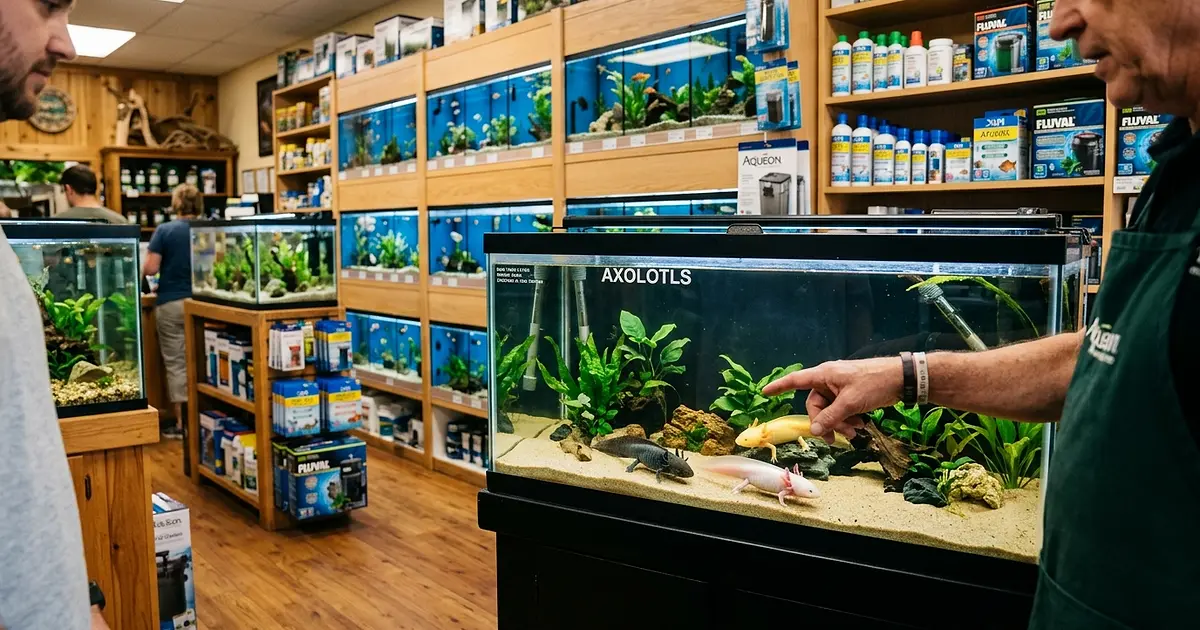
Where to Buy Axolotls: Trusted Breeders & Shops
Find reputable axolotl sellers: online breeders, pet stores, and local sources. Red flags to watch for and how to verify a seller's reputation.
Read more
Where Are Axolotls Legal? State-by-State Guide 2026
Check if axolotls are legal in your state. Complete US legality map plus international laws. California, New Jersey, Virginia, and more.
Read more Axolotl Laws in New Jersey: Legality and Bans
Are axolotls legal in New Jersey? No. Learn why NJ bans axolotls, what penalties apply, and what exotic pet alternatives are available.
Read more